
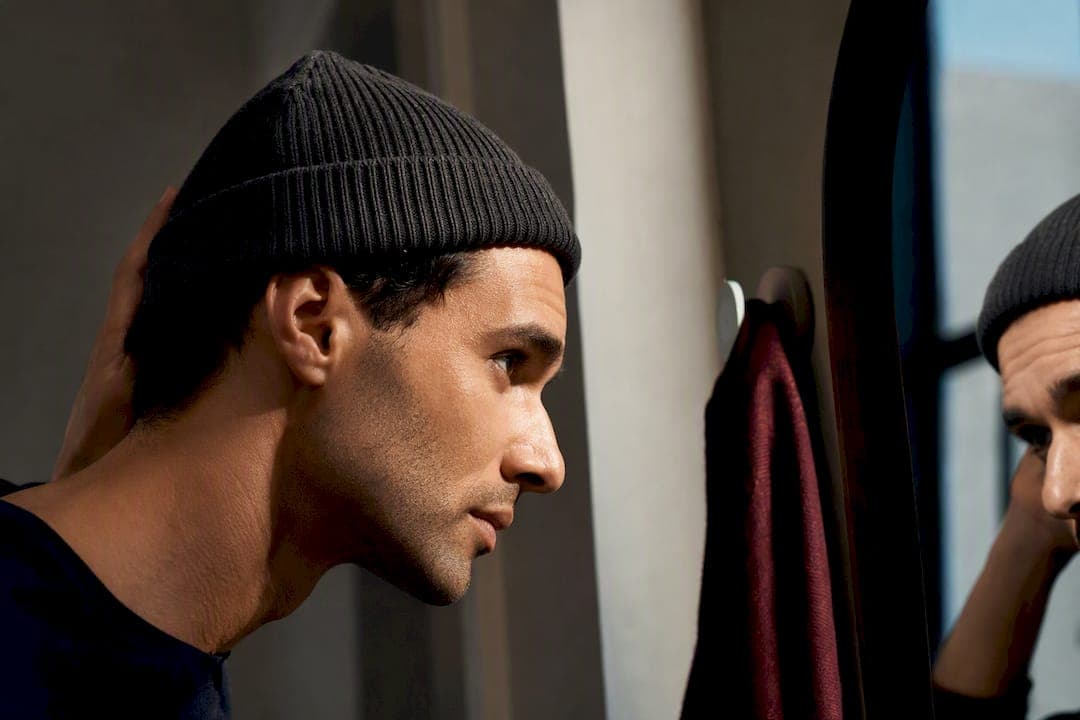
Yes, beanies can absolutely look sharp on men, but only when two things line up: the fit sits right and the knit matches the outfit's formality. Sit the beanie about one inch above your eyebrows, keep half your forehead showing, and skip the ones that swallow your face. From there, the outfit formulas below, the four core beanie types, and a few color and material rules will get you dressed correctly in under a minute every time.
TL;DR:
- Men should position their beanie about one inch above the eyebrows to ensure a flattering fit that frames the face without casting shadows.
- Neutral-colored beanies like black, navy, charcoal, or camel are versatile and match nearly any outfit, especially when made from natural fibers like merino wool or cashmere.
- The four main beanie styles—cuffed, fisherman, slouchy, and bobble—serve different face shapes and hair types, with fit and shape varying for optimal flattering results.
- Chunky knits work best with heavy outerwear like parkas, while fine-knit beanies complement tailored coats and smart-casual looks.
- Matching knit weight to outerwear and checking profile views helps prevent common styling errors, ensuring the beanie accentuates rather than detracts from the outfit.
Table of Contents
- Beanie Outfits for Men: 8 Formulas Worth Copying
- Beanie Types and When to Wear Each One
- Fit, Positioning, and Proportion: Getting the Seat Right
- Colors and Materials: Building a Beanie That Fits Your Wardrobe
- Face Shape and Hair: Pick the Silhouette That Actually Flatters You
- Dos and Don'ts: A Quick Checklist to Skip the Common Mistakes
- Seasonal Appropriateness and Temperature Considerations
- Footwear and Accessory Coordination
- Kenny Wade's Perspective: How We Think About Beanie Styling
- Shop the Looks: Kenny Wade's World
- Sources
- FAQ
Beanie Outfits for Men: 8 Formulas Worth Copying
You don't need ten beanies to look put together. You need a handful of combinations you can repeat without thinking too hard about it. Here are the ones that consistently work.
- Hoodie, slim jeans, cuffed beanie, sneakers. This is the default weekend uniform. A cuffed beanie in a neutral tone keeps the whole thing from looking like you just rolled out of bed.
- Denim jacket, crew tee, cuffed or ribbed beanie, white sneakers. The clean sneakers do the heavy lifting here, balancing out the ruggedness of the denim.
- Puffer or bomber jacket, black beanie. Technical outerwear already has a lot of visual noise, so a sleek, low-profile beanie anchors the look instead of adding to the clutter.
- Wool overcoat, fine-knit merino beanie, dark trousers. This is the smart-casual move. A fitted, fine-knit beanie can dress down a suit or coat without wrecking the proportion, as long as it stays snug and neutral rather than slouchy.
- Overshirt, boots, fisherman beanie. Heritage workwear pairings like this lean on chore jackets, denim, and boots to build a rugged, put-together silhouette.
- Slouchy beanie, relaxed denim. If you have longer hair or a rounder face, a slouchy fit adds visual length instead of squashing your features.
- Performance beanie, shell jacket, trail shoes. For anything outdoors, function comes first. A merino or merino-blend cap holds warmth without overheating your head on a hike or a cold commute.
- Overcoat swapped for a shell, hoodie under a technical jacket. Layer a lightweight beanie under a hood for genuinely cold days. It sounds fussy, but it's the difference between comfortable and miserable at 20 degrees.
For safe, works-with-everything colors, stick to black, navy, charcoal, or camel. Those four will match nearly anything already in your closet, which is more than you can say for a neon orange bobble hat.
Pro Tip: Keep one all black fine knit beanie in rotation. It works with joggers, it works with a wool coat, and it never fights with whatever else you're wearing.
Beanie Types and When to Wear Each One
Not every beanie serves the same purpose, and picking the wrong silhouette for the occasion is a common misstep. Style editors generally point to four practical beanie types: cuffed, fisherman, slouchy, and bobble.
- Cuffed beanie: The most versatile option. A rolled edge gives it a clean, everyday look that pairs naturally with denim jackets, hoodies, and casual coats.
- Fisherman beanie: Shorter and closer to the head, with roots in workwear. It leans into the streetwear and heritage register, especially with overshirts and boots.
- Slouchy or high-top beanie: Extra fabric on top adds height, which flatters longer or thicker hair and works well with relaxed, oversized outfits.
- Bobble or pom-pom beanie: Playful and casual, best saved for weekends or ski-lodge settings. Keep the color muted if you want it to still read as grown-up.
Thickness matters as much as shape. A thin cotton or fine merino version works indoors or in mild weather, while a chunky wool knit is built for genuine cold. Match the one you grab to the actual temperature, not just the outfit.
Fit, Positioning, and Proportion: Getting the Seat Right
The single biggest mistake men make with beanies is pulling them too low. A beanie should sit around one inch above your eyebrows, leaving at least half your forehead visible. Push it down past that line and it casts a shadow across your eyes that ages your whole face instead of framing it.
Proportion works both ways, too. Pair a high-volume, slouchy beanie with a relaxed, roomier outfit, and save low-profile, fitted styles for structured pieces like tailored coats or slim denim. Mixing a bulky knit with a sharp blazer usually looks like a mistake rather than a choice.
- Check your side profile in a mirror, not just the front view. A beanie that looks fine head on can still be sitting too far back or too low from the side.
- Match knit weight to your coat: chunky wool with a heavy parka, fine rib with anything tailored.
- If you have thick or curly hair, size up slightly so the beanie doesn't perch awkwardly on top instead of sitting flush.
Pro Tip: A quick side-profile mirror check catches the "pulled too low" mistake faster than staring at yourself head on ever will.
Colors and Materials: Building a Beanie That Fits Your Wardrobe
Stick to a core palette and you'll never have a beanie that clashes with what's already in your closet. Black, navy, charcoal, olive, and camel cover almost every outfit you own. Save brighter colors for one accent piece at a time, not the whole fit.
Material changes the outfit's register just as much as color does. Chunky knits pair best with heavy outerwear, while fine merino or cashmere reads more refined next to a tailored coat.
- Merino wool: Breathable, doesn't itch, resists odor. The best daily pick for city wear and commuting.
- Cashmere blends: Softer and dressier, suited to smart-casual or elevated winter looks.
- Acrylic: Budget-friendly and holds bold colors well, though it runs warmer and less breathable than natural fibers.
- Blended knits: A durable middle ground when you want a beanie that survives daily wear without babying it.
Texture should track your outerwear. Chunky cable knits belong with parkas and puffers; fine rib knits belong with coats and anything close to tailoring.
Face Shape and Hair: Pick the Silhouette That Actually Flatters You
A few quick rules save you from buying the wrong shape twice. If you have a round face, a slouchy or high-top beanie adds height and breaks up the roundness. Square faces benefit from a looser, softer knit that takes the edge off strong jaw angles. Oval faces have the most latitude and can wear nearly any silhouette. Heart-shaped faces tend to look best with a lower fold that balances a narrower chin.
Hair type matters just as much as face shape:
- Curly or thick, medium-length hair usually looks bulky under a thin skull cap, so size up or choose a slouchy fit instead.
- Long hair pairs naturally with slouchy or high-top styles that give the hair room to fall.
- Short hair or a shaved head almost always looks cleanest in a fitted, cuffed beanie.
Run a three-step mirror check before you commit: front view for overall shape, side profile for positioning, and a quick look with your coat on to confirm the proportions actually work together.
Dos and Don'ts: A Quick Checklist to Skip the Common Mistakes
- Do check your side profile before you leave the house. Don't pull the beanie down over your brow just because it feels warmer.
- Do match knit weight to coat weight. Don't pair a chunky cable knit with a tailored wool overcoat.
- Do default to neutral colors for maximum versatility. Don't try to match your beanie's exact shade to your jacket, your shoes, and your gloves. One coordinated accent is enough.
Seasonal Appropriateness and Temperature Considerations
A beanie isn't strictly a deep-winter accessory anymore, but the material and thickness should shift with the season. In late fall and early winter, a mid-weight merino or wool blend covers most temperature swings without overheating you the moment you step indoors. Once temperatures drop hard, a chunky wool or cashmere blend earns its keep, especially paired with a heavier parka or puffer.
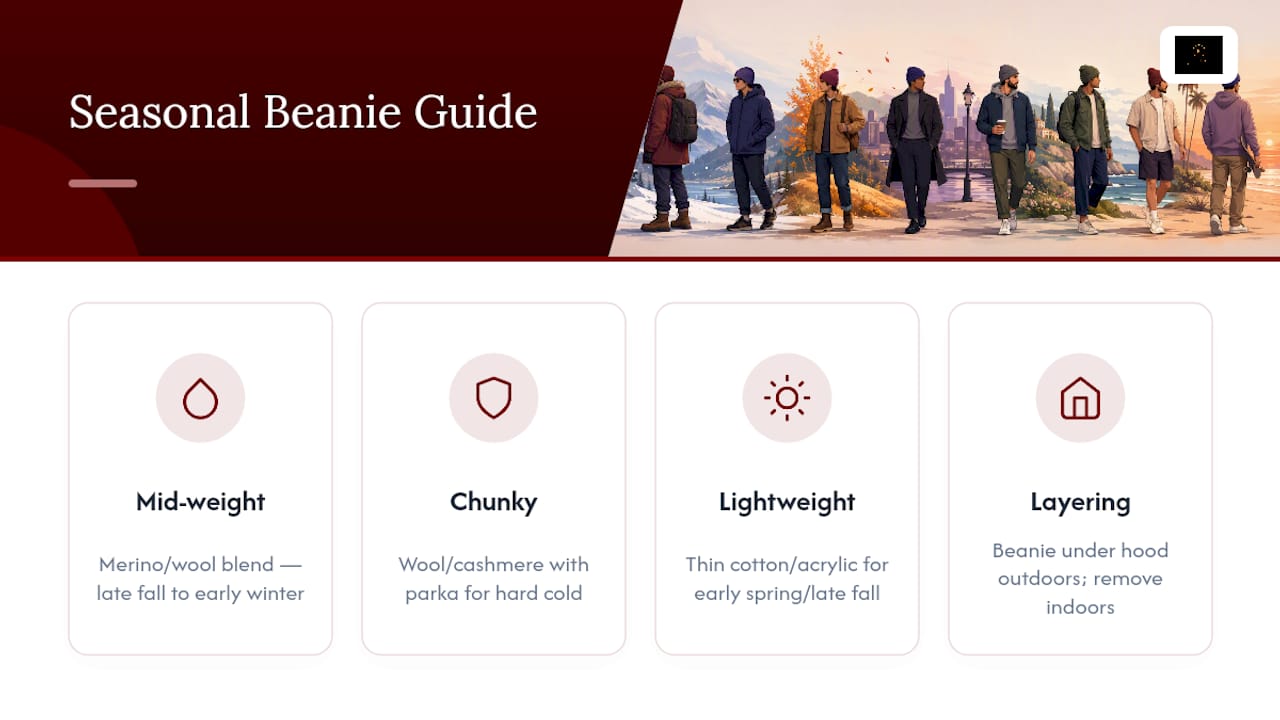
Early spring and late fall call for something lighter. A thin cotton or fine-knit acrylic beanie adds a style element without the sweat factor once daytime temperatures climb past the point where you actually need serious insulation. Some guys skip beanies entirely once real spring hits, and that's fair, but a thin, low-profile knit still works on cool mornings or evening walks even when the afternoon is mild.
Layering underneath matters too. In genuinely cold weather, a beanie under a hood adds a second layer of warmth without bulk, particularly useful on ski trips or long outdoor commutes. Indoors, swap it out. A beanie worn inside a warm office or restaurant reads as either forgetful or affected, so treat it as an outdoor piece and take it off once you're inside for more than a few minutes.
Footwear and Accessory Coordination
Your shoes carry more visual weight in a beanie outfit than people expect, since the beanie draws attention upward and the shoes anchor the look at the other end. Clean white sneakers balance a casual beanie-and-hoodie combo, while boots (chukkas, work boots, or chelsea boots) round out a fisherman beanie paired with an overshirt or denim jacket.
Scarves and beanies can absolutely coexist, but match their weights. A chunky scarf with a chunky beanie can look bulky around the neck and head at once, so if your beanie is heavy knit, choose a slimmer scarf, and vice versa. Gloves are the easiest accessory to get right: leather gloves lean smart-casual, while knit gloves match a casual beanie-and-hoodie fit better than they match a wool overcoat.
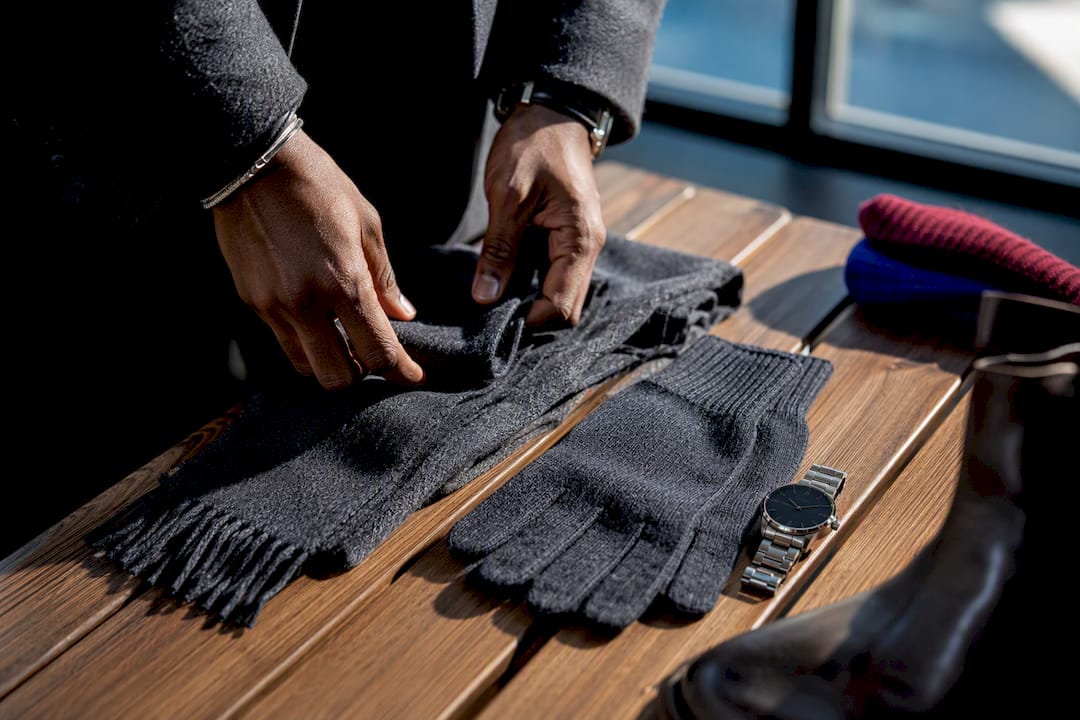
Bags matter more than most guys give them credit for. A structured backpack or crossbody bag complements a streetwear-leaning beanie outfit, while a slimmer leather bag suits the smart-casual coat-and-fine-knit combination. Keep metal accents (buckles, zippers, watch cases) consistent in tone, silver or gold, across your beanie outfit's accessories. It's a small detail, but mismatched hardware is one of those things people notice even if they can't say why an outfit feels slightly off.
Kenny Wade's Perspective: How We Think About Beanie Styling
I've always believed the best cold-weather pieces do two jobs at once: keep you warm and still look intentional. A beanie is the easiest example of that balance, which is exactly why it's a staple in how we approach casual dressing at Kenny Wade's World. If you want more copyable looks in this vein, our streetwear outfit guide and our sweatpants outfit breakdown both build on the same idea: comfort first, styled second.
— Kenny
Shop the Looks: Kenny Wade's World
Reading about outfit formulas is one thing. Actually having the pieces on hand to build them is another. A curated selection of casual, beanie-friendly staples, hoodies, denim jackets, and layering pieces is designed to work with the exact formulas covered above, so you're not hunting across multiple stores to piece together one outfit.
If you're building out a cold-weather rotation for 2026, our current fashion trends roundup is a good starting point for what pairs well with a beanie this season. Browse the full site to see what's in stock right now and start putting a look together before the temperature drops any further.
Sources
- How to Wear a Beanie? 30 Outfit Ideas for Men
- 4 Beanies for Men Trends in 2026
- How To Wear A Beanie In 9 Stylish & Modern Ways
FAQ
How should a guy wear a beanie?
Sit it about one inch above your eyebrows so half your forehead stays visible, and match the knit weight to your outerwear, chunky with heavy coats, fine knit with anything tailored.
How do you wear a beanie in 2026?
The four core styles, cuffed, fisherman, slouchy, and bobble, still dominate, but the current trend leans toward fitted, fine-knit beanies in neutral tones that work across both streetwear and smart-casual outfits.
Do beanies look good on guys?
Yes, when the fit and silhouette match your face shape and hair type. A slouchy style adds height for round faces and longer hair, while a fitted cuffed beanie suits shorter hair and square or angular faces.
Why do guys wear beanies?
Beanies combine practical warmth with a low-effort style statement that reads as relaxed and put-together, bridging the gap between workwear roots and modern streetwear.