
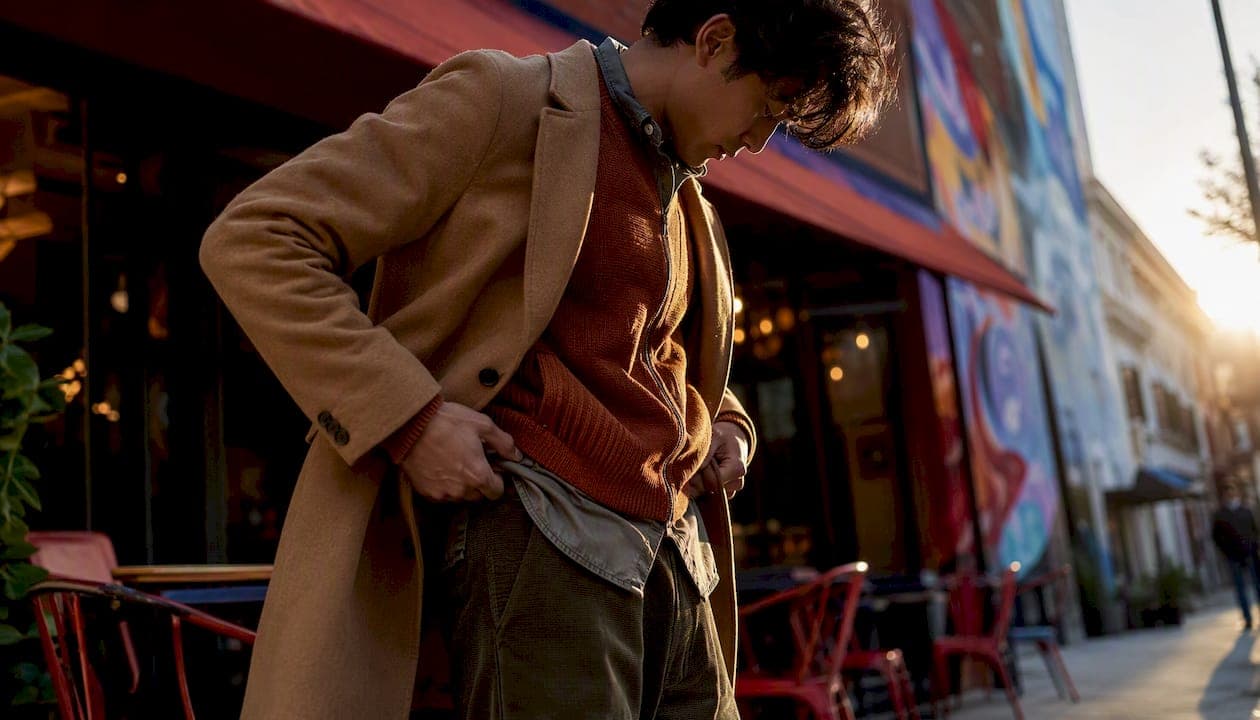
Earth tone streetwear pairs oversized silhouettes and functional streetwear pieces with a nature-inspired neutral palette: terracotta, olive, camel, rust, chocolate, and sand. It works because these colors mix easily and never look dated, which is exactly why they showed up so heavily in designers' 2025 to 2026 collections, with camel, rust, moss green, and clay driving a lot of the palette.
You don't need a closet overhaul to get this look right. Three things matter more than anything else:
- Pick one anchor tone first. Chocolate, olive, or rust, whichever you already own the most of, becomes the base every other piece has to match.
- Use the three-tone rule. One warm neutral, one cool neutral, one deep anchor color per outfit keeps things from looking accidental.
- Treat texture and hardware as style, not just function. A canvas cargo pocket or a suede panel does more visual work than another color would.
The Pantone Color Institute has been tracking this shift for a while, noting that modern neutrals now carry more depth and warmth than the flat beiges of a decade ago. That's part of why a look built around terracotta and camel reads as intentional rather than boring.
Pro Tip: Before you buy anything new, lay out three pieces you already own in different earth tones. If they clash, it's almost always an undertone mismatch, not a color problem.
Key Takeaways
Earth tone streetwear works because a consistent neutral palette, applied through the three-tone rule, makes oversized silhouettes look intentional instead of accidental.
| Point | Details |
|---|---|
| Start with one anchor tone | Choose chocolate, olive, or rust as your base and build every other piece around it. |
| Use the three-tone rule | Combine one warm neutral, one cool neutral, and one anchor tone per outfit. |
| Prioritize texture over color variety | Suede, corduroy, and canvas add depth to a palette that stays otherwise minimal. |
| Adjust fabric weight by season | Linen and cotton in warm months, wool and suede accents in cold months, same palette either way. |
| Shop with the anchor-first method | Kenny Wade's World's earth-tone collection is built around the same anchor-and-layer approach covered throughout this guide. |
Table of Contents
- Earth Tone Palette Guide: Core Shades and Undertones
- The Three-Tone Rule for Cohesive Earth Tone Outfits
- Streetwear Silhouettes That Carry Earth Tones Best
- Mixing Textures, Prints, and Layers Without Losing Cohesion
- Shoes and Accessories That Ground an Earth Tone Look
- Seasonal Fabric Swaps for Year-Round Earth Tones
- Ten Earth Tone Streetwear Outfits You Can Copy Today
- Why Stylists Keep Coming Back to Earth Tones
- A Founder's Take on Building Earth Tone Looks
- Shop the Look at Kenny Wade's World
- Sources
Earth Tone Palette Guide: Core Shades and Undertones
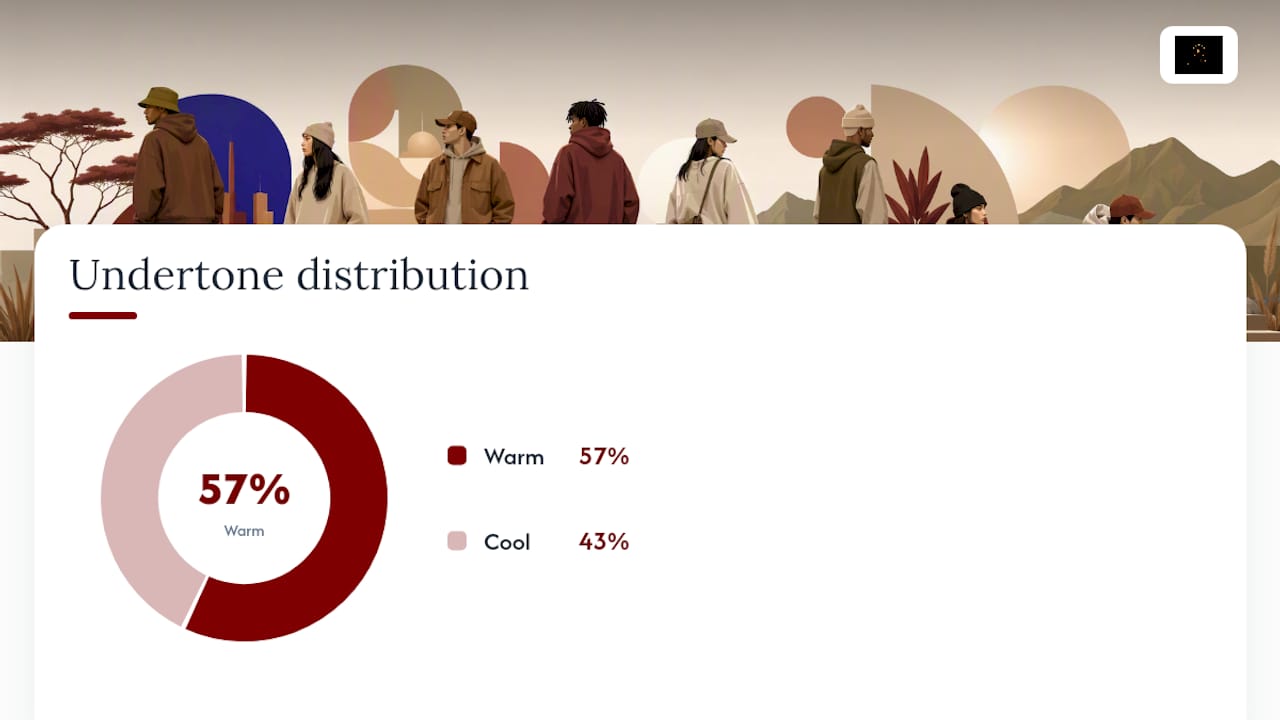
Seven shades do most of the heavy lifting in earth tone streetwear: terracotta, olive, camel, rust, chocolate (sometimes called cognac), sand, and sage. Each one reads slightly warm or slightly cool, and that distinction matters more than the color name itself.
- Terracotta: warm, clay-based orange-red, strong as an anchor piece.
- Olive: cool-leaning green, works as a mid-tone or base for outerwear.
- Camel: warm tan, the most versatile neutral in the entire palette.
- Rust: warm, deeper than terracotta, great for knitwear.
- Chocolate/cognac: warm brown, reads elevated even on baggy fits.
- Sand: cool-neutral beige, the lightest tone in most outfits.
- Sage: cool, muted green, a softer alternative to olive.
Undertone matching is the single most useful skill here. Warm neutrals (camel, rust, chocolate) have a yellow or orange base. Cool neutrals (sand, sage, some olives) lean gray or green. Hold two pieces next to each other in daylight: if one looks slightly pink or ashy against the other, they're fighting undertones, not colors.
| Shade | Undertone | Best Role in an Outfit |
|---|---|---|
| Terracotta | Warm | Anchor piece (jacket, knit) |
| Olive | Cool | Mid-tone (pants, overshirt) |
| Camel | Warm | Light neutral (coat, trousers) |
| Rust | Warm | Anchor piece (sweater, cap) |
| Chocolate | Warm | Anchor or mid-tone |
| Sand | Cool | Light neutral (tee, shorts) |
| Sage | Cool | Mid-tone (accent layer) |
Accent colors have a place too, just a small one. Mustard, dusty mauve, and deep navy work as single accents (a cap, laces, a bag strap) without pulling the outfit away from its earthy base. Keep the accent to one item; two competing accents will fight each other for attention.
Pro Tip: If you're not sure whether a piece is warm or cool, check it under a plain white sheet of paper in natural light. Cheap indoor lighting distorts undertones more than people realize.
The Three-Tone Rule for Cohesive Earth Tone Outfits
The three-tone rule is the fastest way to stop overthinking outfit combinations: one warm neutral, one cool neutral, one anchor or deep tone, and nothing else competing for attention. This works because mixing three tones with consistent undertones creates outfits that look pulled together instead of thrown on.
Building a look this way takes three steps.
- Choose your anchor. This is usually the heaviest or most visually dominant piece: a chocolate overshirt, an olive utility jacket, a rust knit sweater.
- Add a mid-tone. Something that bridges the anchor and the lightest piece, often your pants or a layering top. Olive cargos under a rust jacket, or a sand shirt under a camel coat.
- Finish with a light neutral. Sand, cream, or a washed camel piece closest to your skin, usually a tee or base layer, to keep the outfit from feeling heavy.
The most common mistake is mixing opposite undertones without noticing, like pairing a cool sage jacket with warm rust pants. It's not wrong on paper, but it reads slightly off in person. The fix is simple: swap one piece for something in the same temperature family, or add a third neutral piece that bridges the two.
The second mistake is over-accessorizing. Piling on a patterned scarf, two contrasting bags, and colored laces all at once turns a clean three-tone outfit into visual noise. Pick one accent item and let the rest of the outfit stay quiet.
Pro Tip: When in doubt, drop the anchor piece to its most muted version. A washed-out olive reads more expensive than a saturated one, even though it's the same color family.
Streetwear Silhouettes That Carry Earth Tones Best
Streetwear runs on proportion, and earth tones look their best in silhouettes with volume: oversized tees, baggy cargos, slouchy knits, matching co-ord sets, and boxy outerwear. The color palette does the quiet work while the shape does the loud work, and that balance is what separates earth tone streetwear from a plain neutral outfit.
- Oversized tee: Sand or camel tees anchor almost any bottom half without competing for attention.
- Baggy cargo pants: Olive or chocolate cargos with functional pockets add texture and utility detail at once.
- Slouchy knit sweaters: Rust or sage knits soften the streetwear edge and layer well under jackets.
- Co-ord sets: Matching terracotta or olive sets simplify the three-tone rule since both pieces share an undertone automatically.
- Boxy utility jackets and trenches: Camel or chocolate outerwear reads elevated even over the baggiest fits underneath.
- Sweater vests: Layered over a tee in a contrasting mid-tone, these add texture without adding bulk.
| Silhouette | Best Earth Tones | Styling Note |
|---|---|---|
| Oversized tee | Sand, camel | Tuck one side into cargos for shape |
| Baggy cargo pants | Olive, chocolate | Cuff at the ankle to show off footwear |
| Slouchy knit | Rust, sage | Layer under an open jacket, not zipped |
| Co-ord set | Terracotta, olive | Skip a belt to keep the line clean |
| Utility jacket/trench | Camel, chocolate | Roll sleeves to break up bulk |
| Sweater vest | Rust, sand | Wear over a long-sleeve base layer |
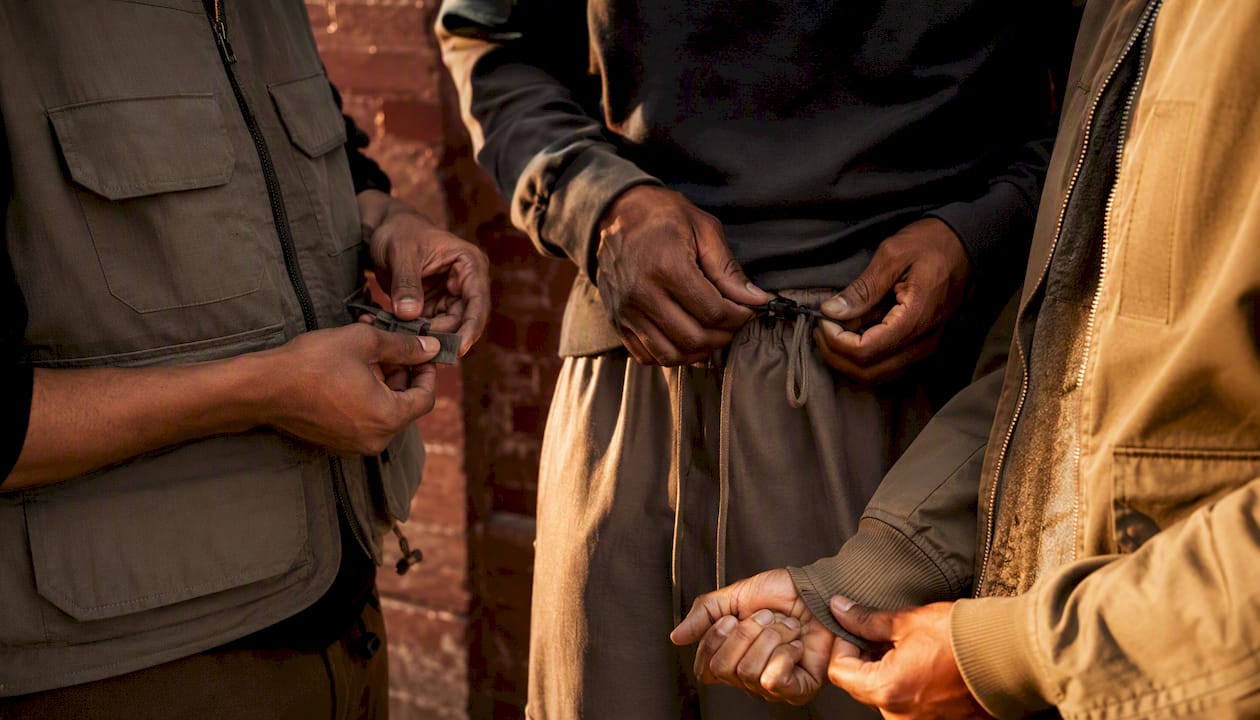
Functional details deserve more credit than they usually get. Zippers, drawstrings, and reinforced seams aren't just practical, they're visible style elements that give an earth-toned piece a structural, industrial edge instead of looking like plain basics in a muted color.
Mixing Textures, Prints, and Layers Without Losing Cohesion
Texture is what keeps an all-neutral outfit from looking flat, and it matters as much as color choice in earth tone streetwear. Suede, corduroy, rib knit, canvas, and washed denim all reflect light differently, so even a monochrome olive-on-olive outfit reads dimensional instead of one-note.
- Suede: Best on boots, jackets, or small accessories for a rugged texture contrast.
- Corduroy: Adds visible ridges and depth, especially good on pants or a chore jacket.
- Rib knit: Softens a look and works well as a base layer under something structured.
- Canvas: Reinforces the utility feel of cargos, totes, and workwear-inspired jackets.
- Washed denim: A useful neutral bridge, especially in faded tan or olive washes.
Print should stay minimal. One printed piece, whether it's a muted camo cargo, a tonal stripe knit, or a small geometric scarf, works as a focal point precisely because everything else stays quiet. Two printed pieces in the same outfit usually compete rather than complement.
Layering is where silhouette and proportion come together. A shorter cropped jacket over a longer tee creates visual balance in a baggy outfit, while a long trench over slim pants does the opposite, adding volume up top to offset a leaner bottom half. Either direction works as long as one half of the outfit stays roomier than the other.
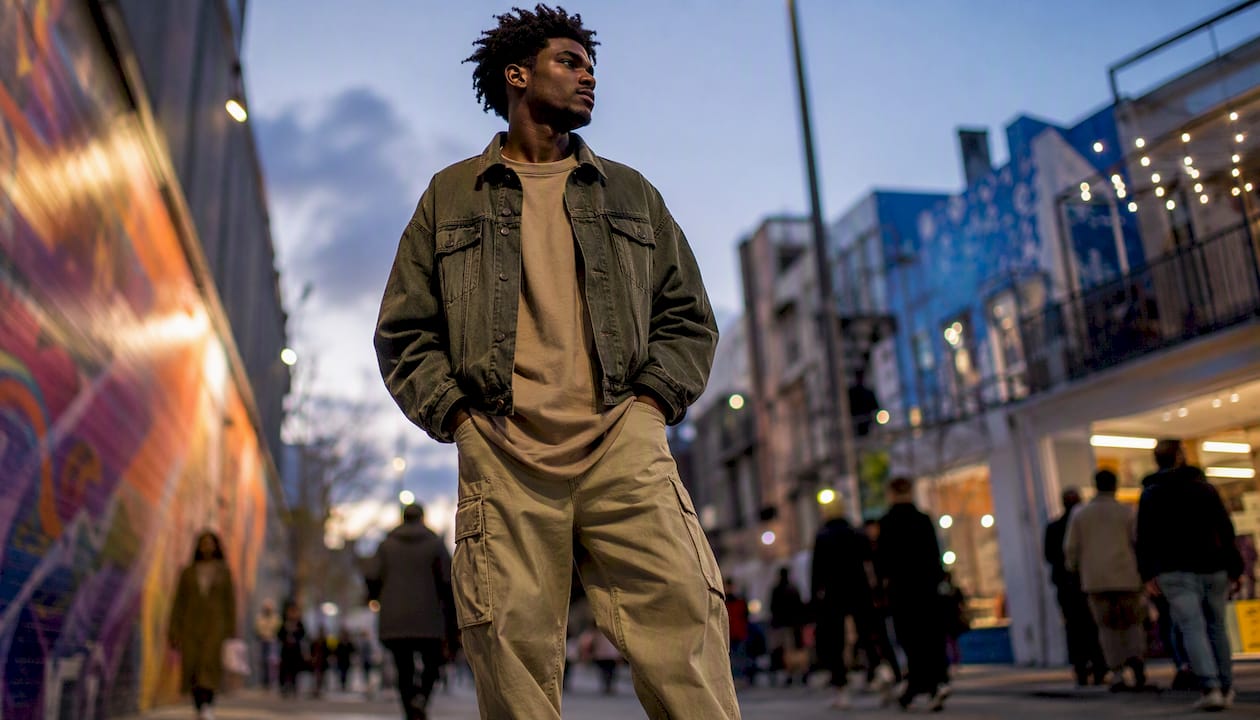
Pro Tip: If your outfit feels flat in photos, it's almost never the color, it's the lack of texture contrast. Swap one piece for suede or corduroy before you touch the palette.
Shoes and Accessories That Ground an Earth Tone Look
Footwear and accessories finish the outfit, and in earth tone streetwear they carry more weight than people expect. White leather sneakers act as a clean break from a heavy neutral palette, while brown suede boots deepen the earthy feel when the rest of the outfit leans lighter.
- White leather sneakers: The easiest contrast point against camel, olive, or rust outfits.
- Brown suede boots: Best when the outfit already leans warm and you want to reinforce it.
- Tan sandals: A warm-weather option that keeps the palette intact without adding bulk.
- Tonal chunky trainers: Match the trainer color to your anchor tone for a monochrome streetwear finish.
- Leather crossbody bags: Cognac or chocolate leather adds a small structured element to baggier outfits.
- Canvas totes: A utility-leaning alternative to leather, especially in sand or olive.
- Amber sunglasses and gold jewelry: Warm-toned accessories reinforce warm palettes better than silver does, since gold jewelry adds warmth that matches earthy undertones.
- Belts: A leather belt in chocolate or camel defines proportion on oversized silhouettes.
Small contrast injections work too, and they're the easiest way to keep an outfit from feeling too safe. A deep navy cap or a single accent piece against an otherwise all-earth outfit reads as intentional rather than random, as long as it stays limited to one item.
Seasonal Fabric Swaps for Year-Round Earth Tones
Earth tones don't need to disappear in summer or feel heavy in winter, the fabric and weight are what change, not the palette itself.
In warmer months, lean into linen, lightweight cotton, and breathable blends. Lighter shades within the same family, like sand, warm cream, and a lighter-weave terracotta, keep the outfit from trapping heat while staying true to the earth tone aesthetic. Shorter outerwear (a light overshirt instead of a full jacket) fits the season better than heavier layering pieces.
Cold-weather months call for the opposite adjustment: heavier knits, wool blends, and suede or leather accents. Deeper shades like chocolate, deep olive, and cognac read richer in heavier fabrics, and a longer trench or wool coat replaces the summer overshirt as the outer layer. This is also where core capsule pieces like a camel oversized blazer or a trench coat earn their keep, since they transition between seasons better than trend pieces do.
- Summer: linen shirts, lightweight cotton cargos, sand and cream tones, shorter outerwear.
- Fall/winter: wool knits, suede jackets, chocolate and deep olive tones, longer coats.
- Shoulder seasons: mix a lightweight base layer with one heavier piece, like a linen tee under a wool overshirt.
Proportions shift with fabric weight too. A bulky winter knit under a trench needs roomier pants to balance it, while a lightweight summer tee can pair with slimmer cargos without looking unbalanced.
Ten Earth Tone Streetwear Outfits You Can Copy Today
Each of these prompts follows the three-tone rule: an anchor, a mid-tone, and a light neutral, built around real streetwear pieces.
- Olive cargo pants + rust knit sweater + cream overshirt + tan trainers. Swap the overshirt for a denim jacket if you want a rougher edge.
- Chocolate utility jacket + sand tee + olive cargos + white sneakers. Drop the jacket for warmer days and the outfit still holds together.
- Terracotta hoodie + camel cargo pants + white trainers. A simple two-piece build for anyone who wants minimal effort.
- Camel oversized blazer + rust knit + straight-leg trousers. A slightly fitted option for readers who prefer tailoring over baggy fits.
- Sage sweater vest + cream long-sleeve + olive pants + suede boots. Layer the vest over the sleeve for texture contrast.
- Rust co-ord set + white sneakers + tan crossbody bag. The matching set does most of the work, so keep accessories minimal.
- Trench coat in camel + sand knit + chocolate trousers. A dressier prompt that still reads streetwise thanks to the boxy trench shape.
- Olive cargo shorts + terracotta tee + canvas tote + tan sandals. The warm-weather version of prompt one.
- Chocolate sweater + rust cap + sand cargos + white trainers. Swap the cap for a beanie in colder months without changing the palette.
- Sage overshirt + cream tee + olive cargos + suede boots. For a slightly fitted look, replace the overshirt with a tailored chore jacket instead.
Every prompt can flex baggier or slimmer depending on preference; the color relationships stay the same either way. Swap shoes from sneakers to boots to dress an outfit down or up, and swap a tote for a crossbody when you need something more compact.
Why Stylists Keep Coming Back to Earth Tones
Earth tones persist in streetwear because they solve a real problem: bold trend colors date fast, but a well-matched neutral palette doesn't. The Pantone Color Institute has pointed out that modern neutrals now carry more saturation and warmth than older beige-heavy palettes, which is part of why colors like roasted russet can read red or brown depending entirely on the light and fabric they're shown on.
Earth-based palettes are seasonless and increasingly central to design because they combine mixability with a sense of depth that flatter, brighter colors often lack.
That mixability is exactly what makes neutrals read as elevated even in casual, oversized silhouettes. A baggy cargo-and-tee outfit in random bright colors looks like loungewear. The same silhouette in olive and camel looks styled, and it's the color relationship doing that work, not the cut.
Pro Tip: When you want an outfit to photograph well, add one contrasting anchor piece, like a deep chocolate jacket over a sand base, rather than adding more color variety. One strong contrast reads better on camera than five muted tones blending together.
A Founder's Take on Building Earth Tone Looks
I build every outfit anchor first. Pick the piece with the most weight, usually the jacket or the sweater, decide its undertone, and let every other piece answer to that choice. It's the same instinct I use when I'm promoting a record: find the one element that carries the most weight, then build everything else in service of it. A track needs a hook before it needs production polish. An outfit needs an anchor tone before it needs accessories.
Music and fashion cross over more than people expect. The same restraint that makes a good beat, knowing what to leave out, is what keeps an earth tone outfit from turning into a costume. Add one tone too many and the whole thing collapses the same way a beat falls apart when you stack too many samples on top of each other.
Shop the Look at Kenny Wade's World
Kenny Wade's World builds its casual wear collection around exactly this kind of palette, oversized fits in camel, olive, and rust, cut with the same streetwear silhouettes covered here, and priced for people who want to build a wardrobe piece by piece instead of all at once.
The collection leans into utility jackets, cargo-style pants, and knitwear designed to mix with pieces you already own, following the same anchor-first approach outlined above. Each piece is built to layer into the three-tone rule without needing a full outfit overhaul. Fit runs true to size across most items, and exchanges are straightforward if something doesn't sit right. Browse the current earth tone streetwear pieces and start with one anchor item, a chocolate overshirt or an olive cargo pant, then build the rest of your rotation around it.
Sources
- Neutrals Now
- 30 Earth Tone Outfit Ideas for Calm, Chic Everyday Style
- 12 Earthy Outfit Ideas for a Minimalist Capsule Wardrobe - So Many Trends
- Neutral Capsule Wardrobe: Build One You'll Actually Wear