

GSM stands for grams per square meter, the standard unit for measuring how much a piece of fabric weighs before it's cut and sewn into a garment. It's a straightforward number with real shopping consequences: low GSM (under 150) means light, breathable, and often see-through fabric; mid-range GSM (150 to 280) covers most everyday clothing; high GSM (280 and up) means heavy, dense, and built to last.
Picture a lightweight summer tee, an everyday cotton crewneck, and a heavyweight fleece hoodie, each differing significantly in fabric weight and function. Same basic garment categories, wildly different feel and function.
- Low (under 150 GSM): thin, airy, best for hot weather or layering
- Mid (150 to 280 GSM): the workhorse range for daily wear
- High (280+ GSM): structured, warm, and durable
Key Takeaways
GSM measures fabric weight in grams per square meter, and matching that weight to your garment's purpose matters more than chasing the highest number.
| Point | Details |
|---|---|
| GSM is a weight metric | It measures grams per square meter of fabric, not overall garment quality. |
| Convert easily to oz/yd² | Multiply ounces per square yard by 33.906 to get the GSM equivalent. |
| Match weight to use | Light layers stay under 150 GSM; hoodies and heavy outerwear run 280 GSM and up. |
| Check beyond the number | Fiber content, yarn quality, and finishing affect durability as much as weight does. |
| Kennywadesworld lists GSM upfront | Product spec panels show fabric weight so you know what you're buying before checkout. |
Table of Contents
- What Does GSM Mean in Clothing and How Is It Measured?
- How Does GSM Affect the Way Clothing Feels and Performs?
- What Are the Recommended GSM Ranges for Different Garments?
- Does Higher GSM Always Mean Better Quality?
- How Do You Choose the Right GSM for What You're Buying?
- How Kenny Wade's World Thinks About Fabric Weight
- See GSM on Every Product Page Before You Buy
- Frequently Asked Questions
- Sources
What Does GSM Mean in Clothing and How Is It Measured?
Mills measure GSM by cutting a fabric sample, usually a 10 by 10 centimeter circle or square, weighing it on a precision scale, then mathematically scaling that number up to what one full square meter would weigh. It sounds fussy, but it's the same logic as weighing a slice of bread and calculating what the whole loaf weighs. The result gets stamped on tech packs, product spec sheets, and sometimes right on the garment tag itself.
American suppliers and older spec sheets often use ounces per square yard instead. The conversion is simple: multiply oz/yd² by 33.906 to get GSM. A 5.0 oz shirt works out to roughly 170 GSM. A common commercial example: 6.0 oz cotton comes in around 203 GSM, while a lighter 4.5 oz fabric lands closer to 153 GSM.
You'll typically find GSM listed in places like bulk fabric spec sheets, tech packs, and product detail pages. To estimate at home, cut a small fabric square, weigh it, and scale up accordingly to approximate GSM.
How Does GSM Affect the Way Clothing Feels and Performs?
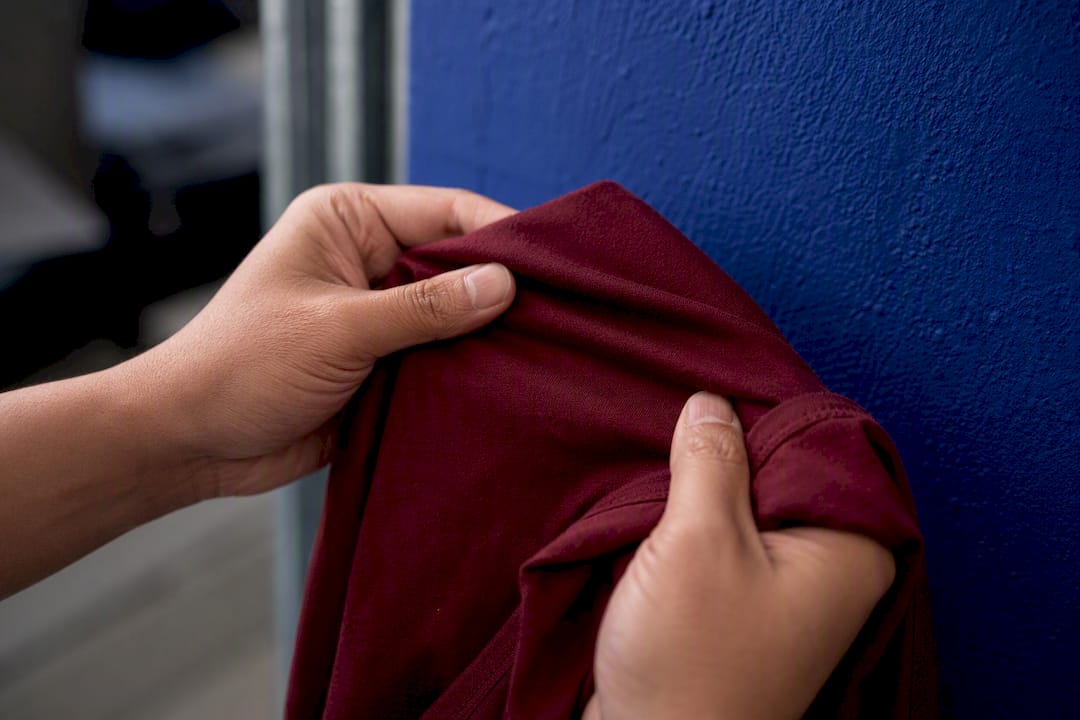
Fabric weight shapes five things you notice the moment you put a garment on: opacity, warmth, drape, structure, and how premium something feels in your hands. Heavier fabrics block more light, trap more air for insulation, and hold their shape instead of clinging or sagging.
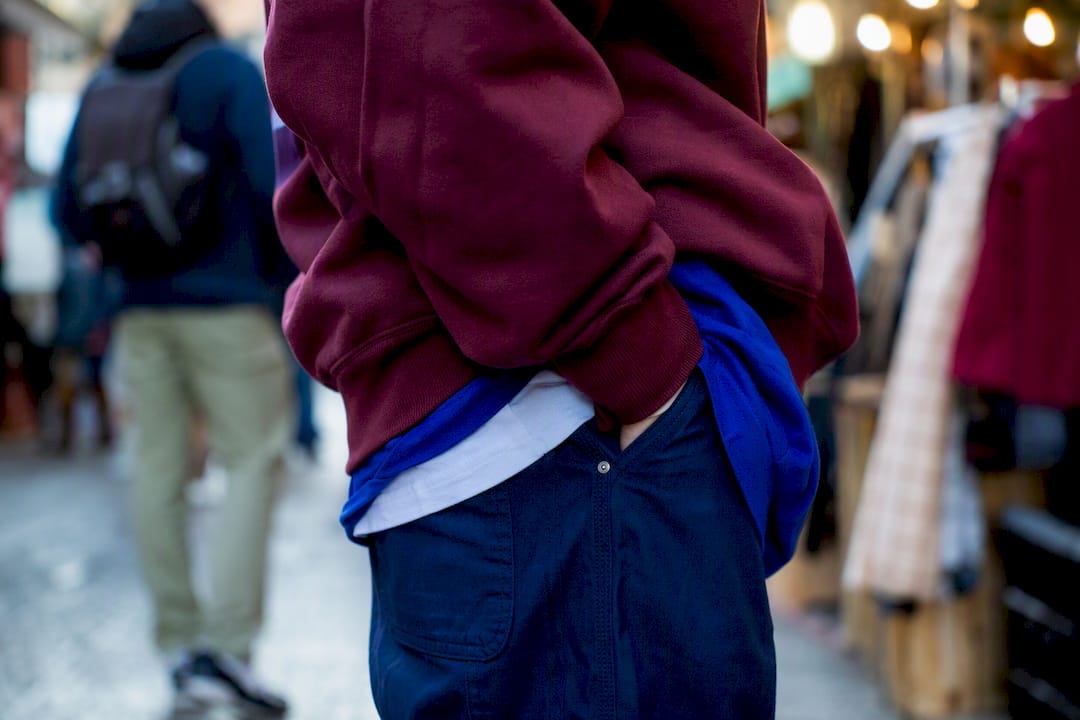
A pale gray 130 GSM tee will show your bra or undershirt through it in bright light. Bump that same shirt up to 200 GSM and the opacity problem mostly disappears. Leggings tell a similar story: anything under 220 GSM tends to develop the dreaded "squat test" transparency, which is why most quality activewear brands stay above that threshold. On the heavy end, a 400 GSM fleece hoodie has enough body to hold structured seams, but that same density adds bulk at the cuffs and hood where multiple layers stack up.
- Opacity: higher GSM blocks light better, especially in lighter colors
- Warmth: denser fabric traps more air, which means more insulation
- Drape: lighter fabrics flow and move; heavier fabrics hold shape
- Structure: heavier weights resist wrinkling and stretching out of shape
- Perceived quality: shoppers consistently rate heavier fabric as feeling more substantial, even when construction quality is identical
Decoration matters here too. Lighter cotton around 150 GSM works well for direct-to-garment printing, while dense embroidery needs a heavier, more stable base to avoid puckering.
What Are the Recommended GSM Ranges for Different Garments?
The right GSM depends entirely on what you're making or buying. A summer tank top and a winter hoodie have nothing in common except that they're both technically "clothing," and their ideal weights reflect that.
| Garment Type | Typical GSM Range | Notes |
|---|---|---|
| Lightweight tees/base layers | 100 to 150 GSM | Breathable, best for heat or layering under other pieces |
| Everyday t-shirts | 150 to 200 GSM | The most common range for casual daily wear |
| Polos and midweight tees | 200 to 280 GSM | Sturdier hand-feel, holds shape through washing |
| Hoodies and sweatshirts | 280 to 400+ GSM | Warmth and structure for cold weather or streetwear |
| Leggings/activewear | 220 to 280 GSM | Squat-proof opacity and compression without restricting movement |
| Bath towels | 400 to 700 GSM | Higher GSM absorbs more water and feels plusher |
| Denim | 400 to 700 GSM | Heavier denim resists wear better but takes longer to break in |
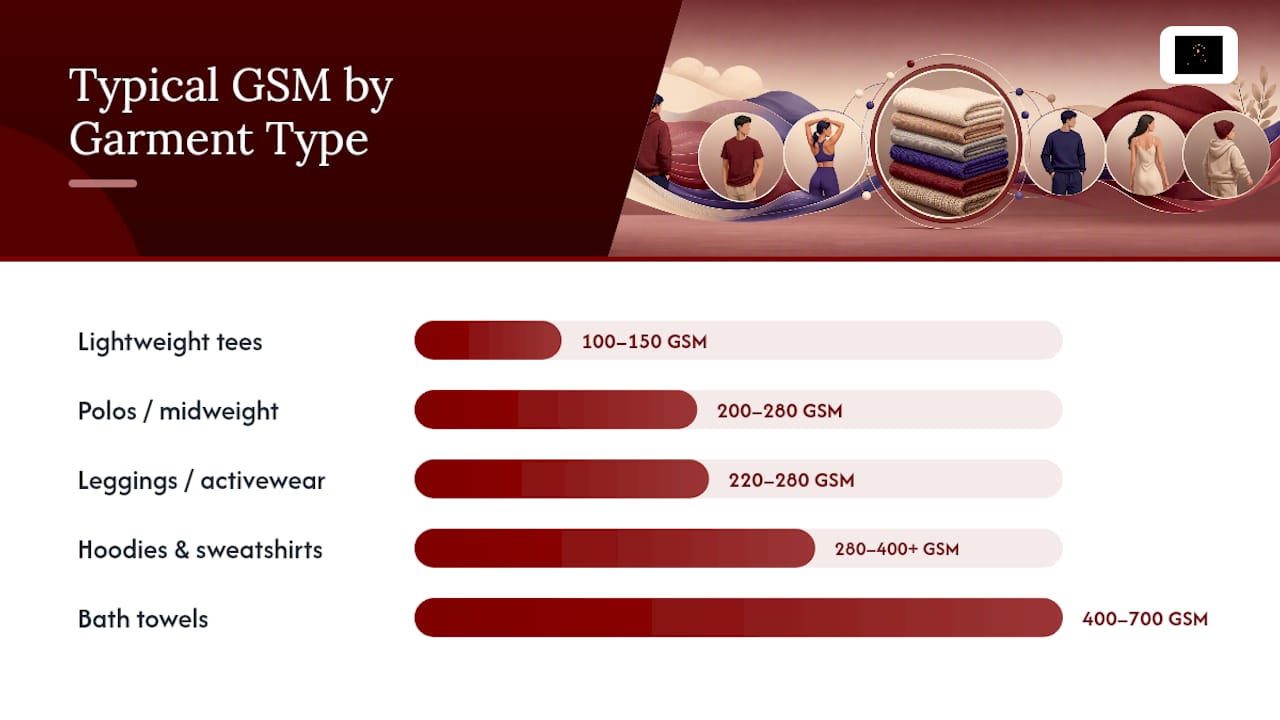
These bands line up with what most fabric guides recommend, and midweight fabric tends to be the highest-volume category across retail because it works for the widest range of climates and uses.
Match the weight to the activity, not just the garment name:
- Summer layering: stay under 150 GSM to avoid overheating
- Year-round basics: 160 to 200 GSM covers most climates without feeling flimsy
- Athletic and performance wear: 200 to 280 GSM balances stretch recovery with opacity, a principle that applies just as much to technical golf apparel as it does to everyday leggings
- Cold-weather outerwear: 300 GSM and up for real insulation
Compare two t-shirts side by side and the difference is clear. A lighter tee drapes loosely and breathes well, while a heavier tee holds its shape better, resists see-through issues, and tends to last longer through washes. Neither is "wrong." One is built for August, the other for October.
Does Higher GSM Always Mean Better Quality?
No, and this is where a lot of shoppers get tripped up. GSM measures weight, not the quality of the fiber, the tightness of the knit, or how well the garment was finished. A heavy fabric made from cheap, short-staple fiber can pill and fall apart faster than a lighter fabric woven from long-staple combed cotton. Weight and durability correlate loosely, not directly.
Before you judge a garment purely by its GSM number, check these signals too:
- Fiber content: 100% cotton, cotton-poly blends, and performance synthetics all age differently
- Knit or weave type: jersey, French terry, and ribbing behave differently even at identical weights
- Yarn quality: combed cotton resists pilling better than carded cotton at the same GSM
- Finishing: enzyme washing, brushing, and garment dyeing all change hand-feel and shrinkage
- Stitch density: tighter stitching means fewer loose threads and better seam durability
Pro Tip: When you're evaluating a sample or a product listing, look past the GSM number to the fiber content line and any mention of combed yarn or brushed finish. Those details predict long-term wear better than weight alone.
How Do You Choose the Right GSM for What You're Buying?
Start with three questions: What's the garment for, what climate will it face, and how will it be decorated or printed? Those answers narrow the GSM range fast.
If you're shopping for year-round basics, 160 to 200 GSM is the safe default. If you want a hoodie that survives a Midwest winter, look for 300 GSM or higher. If you're printing large graphics, mid-to-heavy weights hold ink better and resist show-through.
- Define the end use before you check the GSM number
- Match climate needs to the weight range (light for heat, heavy for cold)
- Confirm the decoration method suits the fabric weight
- Ask for finished-garment weight, not just greige fabric weight, on bulk orders
Brand owners specifying GSM in a tech pack should always request a range with a tolerance, not a single fixed number. A target of 220 to 240 GSM with a plus-or-minus 5 to 10 percent tolerance is standard practice and accounts for normal variation in dyeing and finishing.
How Kenny Wade's World Thinks About Fabric Weight
We pick blanks based on how they'll actually get worn, not just what looks good on a spec sheet. A tour merch tee needs to breathe through a summer show; a hoodie sold for cooler months needs enough weight to feel worth the price tag. GSM factors directly into how we price and market each drop. Check the spec panel on any product page before you buy if fabric weight matters to your decision.
See GSM on Every Product Page Before You Buy
You shouldn't have to guess what you're getting. That's why product listings across Kennywadesworld's clothing line spell out fabric weight right on the spec panel, alongside fiber content and fit notes, so you know exactly what you're buying before it ships.
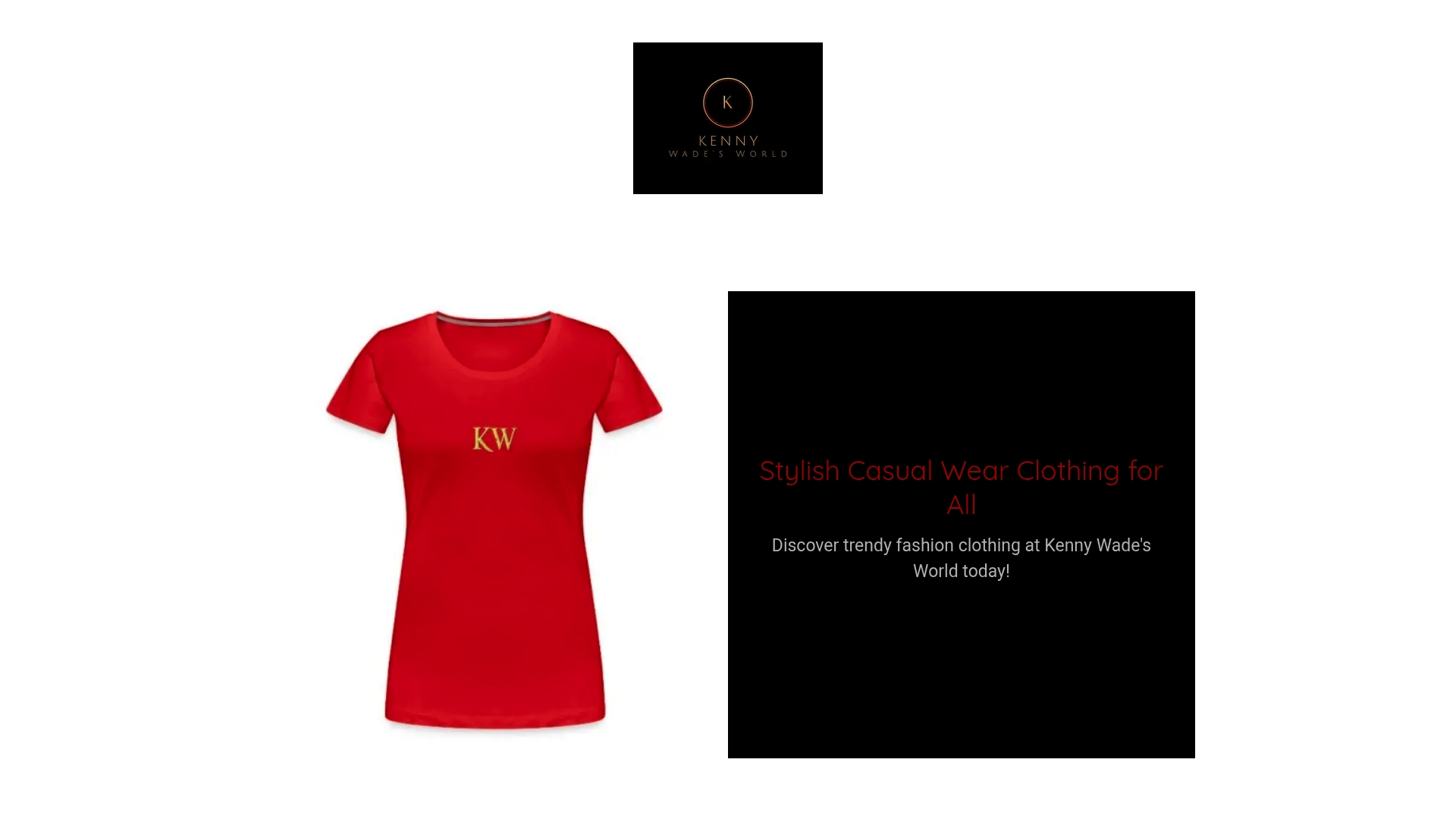
Whether you're after a lightweight tee for summer shows or a heavyweight hoodie built for cold nights at the merch table, the GSM listed on each product page tells you what to expect before you click "add to cart." No digging through vague marketing copy, no guessing whether "premium cotton" means 150 GSM or 250 GSM. Browse the full clothing lineup and check the spec details on any piece that catches your eye. If you want to see how Kenny's other projects get built out with the same level of detail, the site's music content follows the same straightforward approach.
Frequently Asked Questions
Is 200 GSM thick for clothing? 200 GSM sits at the upper end of everyday t-shirt weight. It's noticeably sturdier than a summer tee but not as heavy as a hoodie or sweatshirt. Most shoppers would call it "substantial" rather than "thick."
What's the difference between 180 GSM and 200 GSM? The gap is small but noticeable in hand-feel and opacity. A 200 GSM shirt drapes a bit less, resists see-through better, and holds up marginally longer through repeated washing than an 180 GSM version of the same cut.
Is higher GSM always better quality? No. GSM measures weight alone. A poorly finished heavy fabric can underperform a well-made lighter one. Fiber quality, knit construction, and finishing determine durability just as much as raw weight does.
What GSM is best for a t-shirt? Most everyday tees perform best between 150 and 200 GSM. Below that range, expect a sheer, lightweight feel suited to hot climates. Above 220 GSM, you're closer to a premium or structured tee.
How is GSM different for towels versus clothing? Towels run much heavier, typically 400 to 700 GSM, because absorbency and plushness matter more than breathability or drape, which drives the priorities for shirts and hoodies.
Sources
- What is Fabric GSM for Apparel Brands? | Runtang Textile
- What Is GSM in Clothing? GSM to Oz Conversion | Three Layer
- GSM Fabric Guide: What fabric weight means for your clothing brand | Blanklines
For bulk orders, ask your supplier for a GSM test report on finished fabric, not just greige goods, before production runs.