
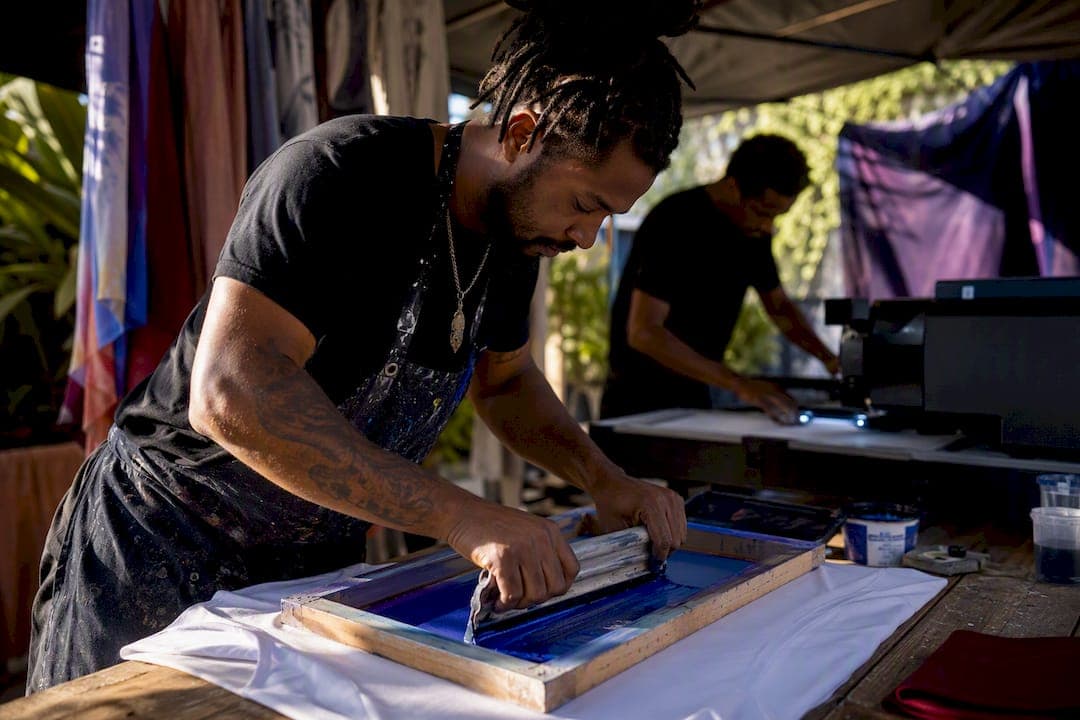
Pick direct-to-garment (DTG) for single shirts, small runs, and photo-quality multi-color art. Pick screen printing for bulk orders, spot-color logos, and specialty ink effects. The math flips somewhere between 24 and 36 pieces, depending on how many colors your design uses and how big the print area is, according to Printful's comparison. Below that range, DTG almost always wins on price. Above it, screen printing usually pulls ahead and stays ahead as quantity climbs.
A few situations break this rule:
- Dark performance fabrics and high-poly blends often need screen printing or DTF, since DTG struggles to hold color without the right pretreatment.
- Metallic, puff, or discharge effects are screen-only jobs.
- One-off gifts or samples almost never justify screen setup costs, no matter how simple the art is.
Key Takeaways
DTG wins on flexibility and photo-quality detail for small orders, while screen printing wins on durability and per-unit cost once quantity clears roughly 24 to 36 pieces.
| Point | Details |
|---|---|
| Know your crossover number | Screen printing typically becomes cheaper somewhere between 24 and 36 units, depending on color count. |
| Match method to artwork | DTG handles photos and gradients; screen printing handles spot colors and specialty effects like metallic or puff. |
| Check fabric before deciding | DTG performs best on 100% cotton; dark or high-poly fabrics often favor screen printing or DTF. |
| Weigh durability for heavy wear | DTG holds up for around 50 wash cycles; well-cured screen prints generally last longer, making them better for uniforms. |
| See both methods in practice | Kenny Wade's World uses DTG for limited-run detailed designs and screen printing for durable staple pieces. |
Table of Contents
- Screen Print vs DTG: The Core Trade-Off
- What Is DTG Printing and When Should You Choose It?
- What Is Screen Printing and When Should You Choose It?
- Screen Print vs DTG Quality Comparison Across Key Factors
- How Much Does Screen Printing Cost vs DTG at Different Run Sizes?
- How Long Do Screen Prints and DTG Prints Actually Last?
- Does Fabric Type Change Whether DTG or Screen Printing Works Better?
- Which Method Handles Complex Artwork Better?
- How Long Does Turnaround Really Take for Each Method?
- How Can You Tell If a Shirt Is Screen Printed or DTG?
- What Should You Ask Before Choosing a Print Method?
- A Working Model for Choosing Between DTG and Screen Printing
- See DTG and Screen Printing in Action on Real Merch
- Sources
Screen Print vs DTG: The Core Trade-Off
The decision comes down to two questions: how many pieces do you need, and how complicated is the artwork? Screen printing is a stencil process. Every color gets its own screen, its own setup, and its own pass under the squeegee. That setup cost is fixed whether you print 12 shirts or 1,200, which is exactly why it only pays off at volume. DTG is an inkjet process, essentially a specialized printer spraying ink directly onto fabric fibers. There's no per-color penalty, so a 12-color photograph costs the same to set up as a single logo.
That structural difference explains almost every other trade-off in this comparison. Printable Press frames it well: DTG excels at photographic detail and one-off production, while screen printing dominates bulk orders, opaque colors, and specialty inks. Neither method is objectively "better." They solve different problems, and a shop that only offers one is going to steer you toward it whether or not it's the right call for your order.
What Is DTG Printing and When Should You Choose It?
DTG works like a desktop printer scaled up for fabric. The garment gets pretreated (especially if it's dark), then an inkjet head lays down water-based ink directly onto the fibers, curing under heat afterward. No screens, no per-color charges, no minimum order.
That flexibility is DTG's whole selling point:
- Unlimited colors and gradients at no extra cost, which makes it the obvious pick for photographs, portraits, or complex illustrations.
- No minimum order size, so a single custom shirt costs roughly what shirt number 50 would.
- Fast turnaround for one-offs since there's no screen-burning or setup lag.
The catch: DTG performs best on 100% cotton, and ink costs per unit stay flat regardless of quantity, so it never gets cheaper the way screen printing does at scale.
Durability is the other asterisk. Kornit's own comparison notes that properly cured plastisol screen prints tend to hold vibrancy longer, while DTG typically holds up for around 50 wash cycles with proper care. That's a real gap, but it's shrinking. Newer ink chemistry is closing the durability distance between the two methods faster than most buyers realize, which matters if you're deciding whether DTG can handle a shirt someone will actually wear weekly.
What Is Screen Printing and When Should You Choose It?
Screen printing forces ink through a mesh stencil, one screen per color, using a squeegee to push plastisol or water-based ink onto the fabric. Each screen gets burned with the design, mounted, aligned, and run through a press. Once that setup is done, the press can crank out identical prints fast and cheap.
That upfront cost is why screen printing rewards volume:
- Superior durability and opacity, especially on dark garments where a bright underbase makes colors pop.
- Access to specialty inks and effects like metallic, discharge, and puff that DTG simply cannot replicate.
- Lower per-unit cost once you clear the setup threshold, often dramatically lower at 100+ pieces.
The trade-off is obvious once you've priced it out: screens cost money and time to build, so a 6-color design on 15 shirts can cost more per unit than the same design on 150. Minimums exist because setup costs need to be distributed, so many screen printers set order floors that reflect this reality.
Pro Tip: If your design uses more than 4-5 spot colors, ask your printer whether simulated process printing (a screen technique that mimics photographic detail using a limited color set) could get you closer to a photo-real look without switching to DTG entirely.
Screen Print vs DTG Quality Comparison Across Key Factors
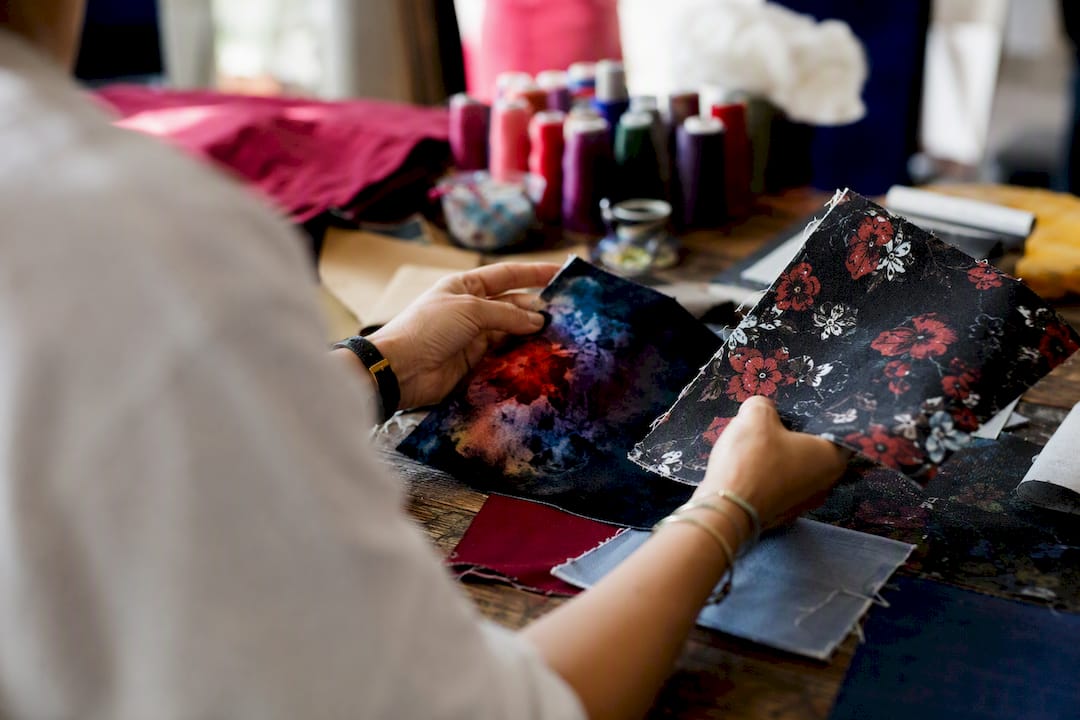
Run size decides most of this comparison before artwork complexity even enters the conversation. Here's how the two methods stack up across the factors that actually change outcomes:
| Factor | DTG | Screen Printing |
|---|---|---|
| Best for | One-offs, small batches, photo-quality art | Bulk orders, spot colors, specialty effects |
| Typical cost per unit | Higher at low volume, flat regardless of quantity | Higher setup cost, drops sharply past 24-36 units |
| Durability (wash cycles) | Around 50 washes with proper care | Generally longer-lasting when properly cured |
| Color/detail capability | Unlimited colors, gradients, fine detail | Best with limited spot colors; gradients need special techniques |
| Fabric compatibility | Best on 100% cotton | Strong on cotton, synthetics, and dark garments |
| Turnaround/setup | Instant setup, slower per-unit print speed | Setup takes time, then high-speed automated runs |
That per-unit cost gap is backed by real numbers: Arklavo's cost breakdown shows typical DTG pricing running roughly $4 to $18 per shirt depending on design complexity, while screen printing's per-unit cost falls below that range once you clear the mid-20s to 50-unit mark.
Two things shift this table. Specialty inks (metallic, puff, discharge) push you toward screen printing regardless of quantity, since DTG can't produce those effects at all. And dark polyester or high-poly athletic wear can rule out DTG entirely unless the shop has specific pretreatment for that fabric, which not every shop does.
How Much Does Screen Printing Cost vs DTG at Different Run Sizes?
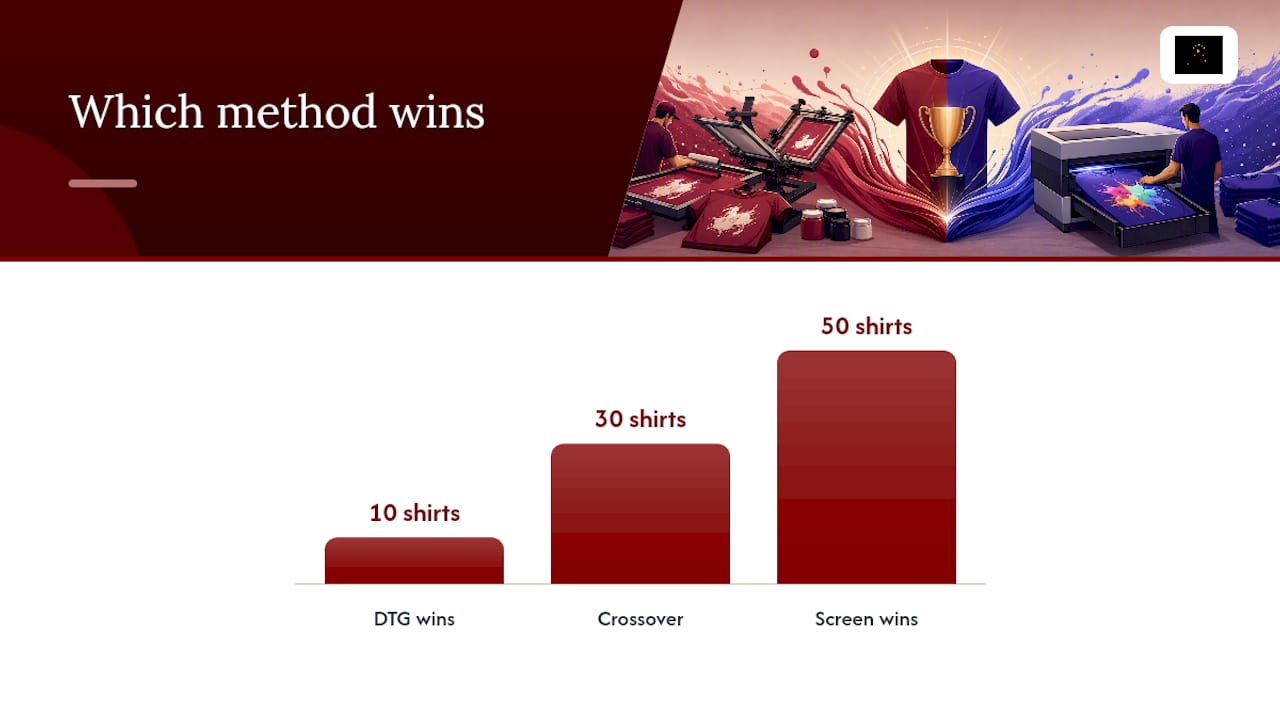
The break-even point isn't a myth invented by printers trying to upsell you. It's simple math: screen setup costs get divided across every unit you print, so more units means a lower cost per shirt. DTG ink and labor costs stay roughly flat no matter how many you order.
Here's how that plays out in practice:
- A 1-color logo on 50 shirts. Screen printing wins easily here. One screen, one setup, and the automated press runs fast. Per-shirt cost likely lands well under what DTG would charge for the same 50 pieces.
- A full-color photographic design on 10 shirts. DTG wins decisively. Ten shirts wouldn't cover the setup cost of multiple screens, and a photo-quality image would need many screens to approximate the color range DTG handles natively.
- A 3-color design on 30 shirts. This sits right in the crossover zone. Printful's guidance places the typical break-even between 24 and 36 pieces, so this order could go either way depending on your specific printer's pricing.
Print size and dark-garment underbase both push costs up for both methods, but they hit DTG harder since ink coverage on a large print area or a white underbase layer on dark cotton uses considerably more ink per unit. Ask your printer for a per-unit quote at your exact specs before assuming either method is cheaper.
How Long Do Screen Prints and DTG Prints Actually Last?
Screen prints generally outlast DTG prints in wash testing, and the reason comes down to how the ink sits on the fabric. Plastisol ink cures into a slightly raised layer that bonds to the surface fibers, while DTG ink gets absorbed into the fabric weave itself. Kornit's data puts DTG's realistic lifespan around 50 wash cycles with proper care, while well-cured screen prints tend to hold their vibrancy considerably longer.
Care habits matter more than people assume:
- Wash cold and inside out to reduce fiber abrasion against the print surface.
- Skip the dryer's high heat setting, or better, air dry when you can.
- Avoid bleach and fabric softener, both of which break down ink bonds over time.
Durability should be a deciding factor whenever the shirt is going to see heavy rotation: work uniforms, event staff shirts, or merch you expect fans to wear for years. For a one-time event shirt or a gift, the wash-cycle gap barely matters.
Does Fabric Type Change Whether DTG or Screen Printing Works Better?
Fabric composition can eliminate one method before cost or design even enters the conversation. DTG performs best on 100% cotton, where the ink absorbs cleanly into natural fibers. Push into polyester or high-poly blends and colors can look dull or patchy without specialized pretreatment, which not every print shop stocks, according to Printful.
Screen printing handles a wider range of fabrics more reliably:
- Synthetics and poly blends hold plastisol ink better than they hold DTG ink.
- Dark garments benefit from a white underbase layer that screen printing applies cleanly, keeping colors opaque and vivid.
- Performance and athletic fabrics, common in team merch, generally favor screen printing or DTF over standard DTG.
If you're printing on anything other than plain cotton, especially a dark, moisture-wicking, or heavily textured fabric, ask the printer directly about their pretreatment chemistry and request a sample run before committing to a full order. A five-minute test swatch beats discovering a faded batch after the fact.
Which Method Handles Complex Artwork Better?
DTG is built for photographs, gradients, soft shading, and small type that would be nearly impossible to separate into screens. If your design has a sunset gradient or a portrait, DTG reproduces it without extra cost or complexity, as Printable Press notes.
Screen printing is built for spot colors, exact Pantone matches, and specialty effects. When brand consistency matters, like matching a corporate logo's exact shade, screen printing's spot-color control often beats DTG's color reproduction.
Quick file prep checklist before you send artwork:
- Submit vector files (AI, EPS, PDF) for screen printing so separations can be built cleanly.
- Submit high-resolution raster files (300 DPI minimum) for DTG to avoid pixelated prints.
- Flag any Pantone colors upfront if exact color matching matters.
Pro Tip: Ask for a proof before production on any order over 20 pieces. A five-minute review catches color or placement mistakes that are expensive to fix after the run.
How Long Does Turnaround Really Take for Each Method?
DTG has essentially zero setup time. You upload art, and printing starts. But per-item throughput is slower since each shirt runs through the printer individually. Screen printing flips that: setup can take hours or days depending on screen count, but automated presses then run at high speed, producing large batches quickly once everything's dialed in, per Arklavo's comparison.
Shop minimums exist because setup costs need to be spread across enough units to make sense financially. A shop that waives its minimum on a 6-shirt order with 4 colors is likely losing money or cutting corners on quality control.
Both methods carry maintenance realities that affect turnaround. DTG printheads need regular cleaning to avoid clogs that ruin prints mid-run. Screen printing depends on precise registration (alignment between screens) and consistent cure temperatures, since undercured plastisol ink cracks and peels within a few washes.
How Can You Tell If a Shirt Is Screen Printed or DTG?
A few quick checks tell you which process you're looking at, whether you're buying merch or inspecting a sample before a bulk order.
- Feel the print. Screen prints usually have a slightly raised, tactile texture. DTG feels softer, almost woven into the fabric.
- Check opacity on dark shirts. DTG on dark cotton sometimes shows a faint halo around the white underbase layer. Screen printing's underbase tends to look cleaner and more opaque.
- Look at fine edges. Screen prints have crisp, sharp edges on spot colors. DTG edges can look slightly softer, especially on gradients.
- Stretch the fabric gently. Cracking or fading along stretch lines suggests wear or a lower-quality cure, more common with poorly cured screen prints than DTG.
If you're placing a bulk order and unsure which process a vendor uses, ask directly for a sample swatch and a plain statement of their process. Any legitimate print shop will hand one over without hesitation.
What Should You Ask Before Choosing a Print Method?
Run through this decision flow before you commit: quantity first, then design complexity, then fabric, then deadline, then how long you need the print to last. Small quantity plus complex art points to DTG. Large quantity plus simple spot colors points to screen printing. Dark or synthetic fabric with either quantity often points to screen printing or DTF.
Five questions worth asking any printer before you place an order:
- What ink type will you use, and is it appropriate for my fabric?
- What's your minimum order size, and does it change with color count?
- Can I get a physical sample before the full run?
- What cure temperature and time do you use, and how do you verify it?
- What's your realistic turnaround, including any screen-burning or file-prep delays?
Pro Tip: Watch for red flags like a printer who can't explain how they verify proper cure temperature, refuses to provide a sample, or tacks on vague "setup fees" without itemizing screen costs. Those gaps usually signal inconsistent quality control.
A Working Model for Choosing Between DTG and Screen Printing
Kenny Wade's World treats this as a practical toolkit decision, not a loyalty test. Limited drops and one-off designs with photographic detail get printed DTG, since a small run doesn't justify screen setup and the art often includes gradients or shading that screens can't easily replicate. Core staples and higher-volume merch runs get screen printed, where the durability and per-unit savings actually show up at scale.
If you're weighing the same decision for your own project, apply the same filter: let quantity and artwork complexity drive the choice, not brand loyalty to one method. The Printable Press framing of this as a toolkit problem rather than tribal allegiance holds up. Serious sellers use both, depending on the job in front of them.
See DTG and Screen Printing in Action on Real Merch
Reading about ink chemistry only gets you so far. Kenny Wade's World runs both DTG and screen printing across different pieces in the current lineup, exactly the split described above: limited-run designs with detailed artwork get printed DTG, while core pieces made for repeat wear get screen printed for the durability boost.
Browsing the storefront gives you a hands-on reference point you won't get from a spec sheet: feel the texture difference between a screen-printed graphic and a DTG piece side by side, see how color holds up on cotton versus a blended fabric, and get a sense of which finish you'd actually want on your own project. It's not a neutral survey of every method on the market, it's simply what Kenny Wade's World makes and wears. If a piece catches your eye, check the Kenny Wade's World storefront for current availability before it sells out.
Sources
- DTG Printing vs Screen Printing | Kornit Digital
- DTG vs. Screen Printing: Which One to Choose? | Printful
- Screen Printing vs DTG Printing: How to Choose the Right Method — Printable Press