
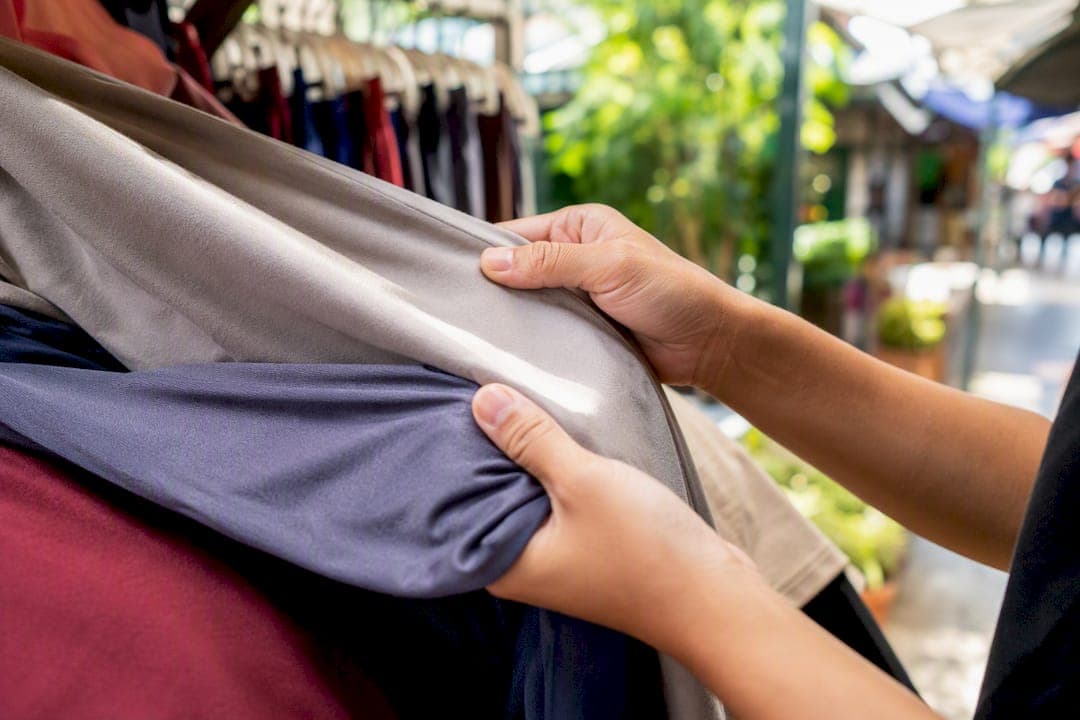
For everyday tees, combed or ring-spun cotton at 150 to 180 GSM in a single jersey knit is often recommended for everyday tees. For printing, a cotton/poly blend helps with ink sharpness and reduces shrinkage. For activewear, 100% polyester or a poly-spandex blend helps move sweat away from the skin. For a premium feel, Pima or Supima cotton, modal, or an interlock knit adds weight and drape compared to basic tees.
The formula behind every good t-shirt comes down to three variables working together: the fiber, the knit, and the weight. Get all three aligned with what you're actually using the shirt for, and the rest, comfort, durability, how it prints, mostly takes care of itself.
Quick picks by use case:
- Everyday wear: Combed or ring-spun cotton in a single jersey knit, typically considered a light to midweight range
- Printing (screen or DTG): Cotton/poly blends such as 50/50 or CVC in single jersey knit, commonly used for printing purposes
- Activewear: 100% polyester or poly/spandex, performance knit, lightweight to midweight
Key Takeaways
The right t-shirt fabric always comes down to matching fiber, knit construction, and weight to the shirt's actual job, not just its price tag.
| Point | Details |
|---|---|
| Match fiber to use | Combed cotton for everyday, polyester for performance, blends for printing. |
| Weight signals quality | 150–180 GSM suits standard tees; 180–220+ GSM feels premium and heavyweight. |
| Knit affects durability | Interlock and ponte resist curling and hold shape better than single jersey. |
| Verify sustainability claims | Look for GOTS, OEKO-TEX, or GRS certification instead of vague eco language. |
| Shop with label literacy | Kenny Wade's World designs pieces around the same fiber, knit, and weight standards covered here. |
Table of Contents
- At-a-Glance Shortlist: Best Fabric by Common Use
- Major T-Shirt Fabric Types: What Each One Actually Does
- How Knit Construction Changes a T-Shirt
- Reading the Label: Weight, Yarn Count, and Finishing Terms
- How to Choose the Right T-Shirt Fabric: A Checklist
- Care, Shrinkage, and Printing Compatibility
- Sustainability: Real Claims vs. Greenwashing
- What I've Learned Designing Around Fabric Choice
- A Faster Way to Shop by Fabric, Not Guesswork
- Frequently Asked Questions
- Sources
At-a-Glance Shortlist: Best Fabric by Common Use
Different jobs call for different combinations of fiber, knit, and weight. Here's a fast reference before you dig into the technical details.
Everyday casual: Combed cotton or a cotton/poly tri-blend in single jersey, 150 to 180 GSM. Soft, breathable, forgiving on the wallet.
Premium retail or boutique lines: Pima or Supima cotton, sometimes blended with modal, in interlock or a heavier single jersey knit to achieve a premium feel
Active or performance wear: 100% polyester or recycled polyester (rPET) with spandex for stretch, offering moisture-wicking, fast drying, and shape retention
Printing (DTG and screen): Cotton or cotton-heavy blends (50/50, CVC) with a flat, smooth single jersey surface. Ink sits better on cellulose fibers than on slick polyester.
Hot-weather or linen-style comfort: Linen or a linen/cotton blend, or lightweight modal, for breathability without polyester's clingy feel.
Baby and children's wear: Interlock knit cotton, since it doesn't curl at the edges and holds up to rougher handling and more frequent washing.
The trade-off worth remembering: fabrics that print best (natural fibers) usually aren't the fabrics that perform best in sweat (synthetics), and durability often runs counter to softness. You're rarely optimizing for everything at once.
Major T-Shirt Fabric Types: What Each One Actually Does
Cotton and its variants
Cotton remains the backbone of the t-shirt industry, and understanding its variants tells you more about quality than any marketing label. Combed cotton has gone through a process that removes short, weak fibers before spinning, leaving a smoother, stronger yarn. Ring-spun cotton is twisted and thinned during spinning, which produces a softer hand than standard carded cotton. Combined, combed ring-spun cotton is what most premium basics are built from.
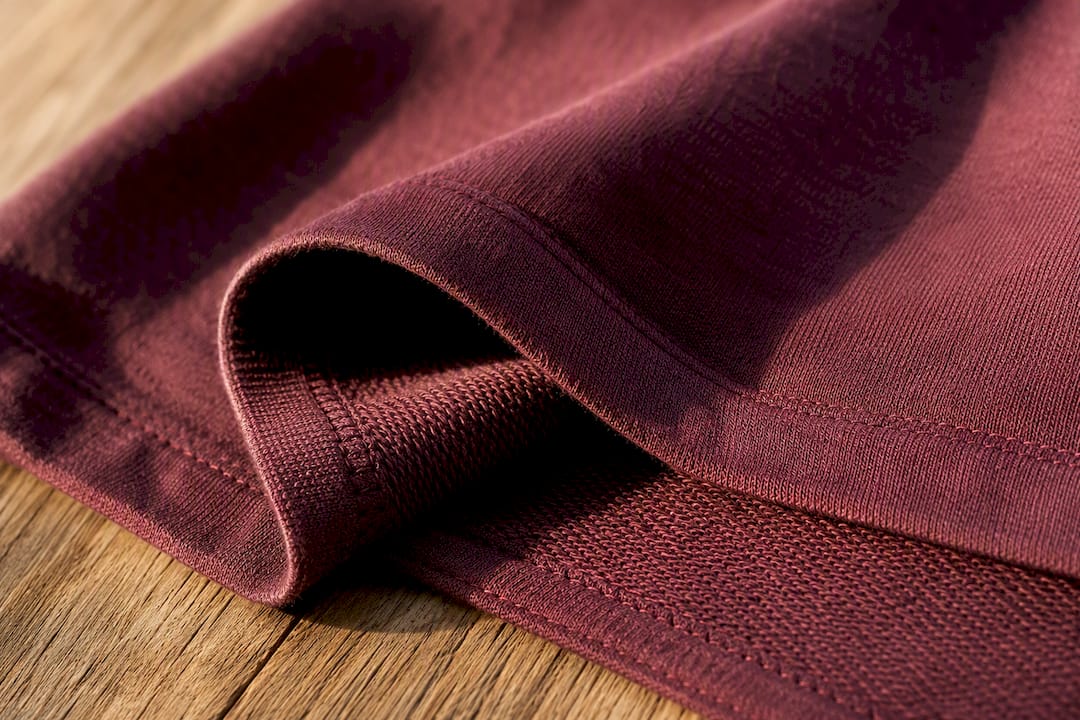
Pima and Supima cotton use extra-long staple fibers, grown mainly in the American Southwest, that create an even silkier, more durable fabric. Expect to pay more, and expect it to last. Organic cotton refers to how the fiber was grown, not how it feels. It's chemically similar to conventional cotton but produced without synthetic pesticides.
Across all its forms, cotton is prized for breathability and printing compatibility, though it shrinks more than synthetics and pills if the fiber quality is low. Typical single jersey cotton tees fall in the 150 to 180 GSM range for standard weight, climbing to 180 to 220+ GSM for heavyweight options, according to industry guidance on jersey construction.
Polyester and recycled polyester
Polyester dries fast, resists wrinkles, and holds color and shape through hundreds of wash cycles. That makes it the default for performance wear, though it traps heat and can feel clammy against skin without a moisture-wicking finish. Recycled polyester (rPET), made from post-consumer plastic like water bottles, performs almost identically to virgin polyester and has become the standard "sustainable synthetic" choice for brands trying to cut down on new plastic production.
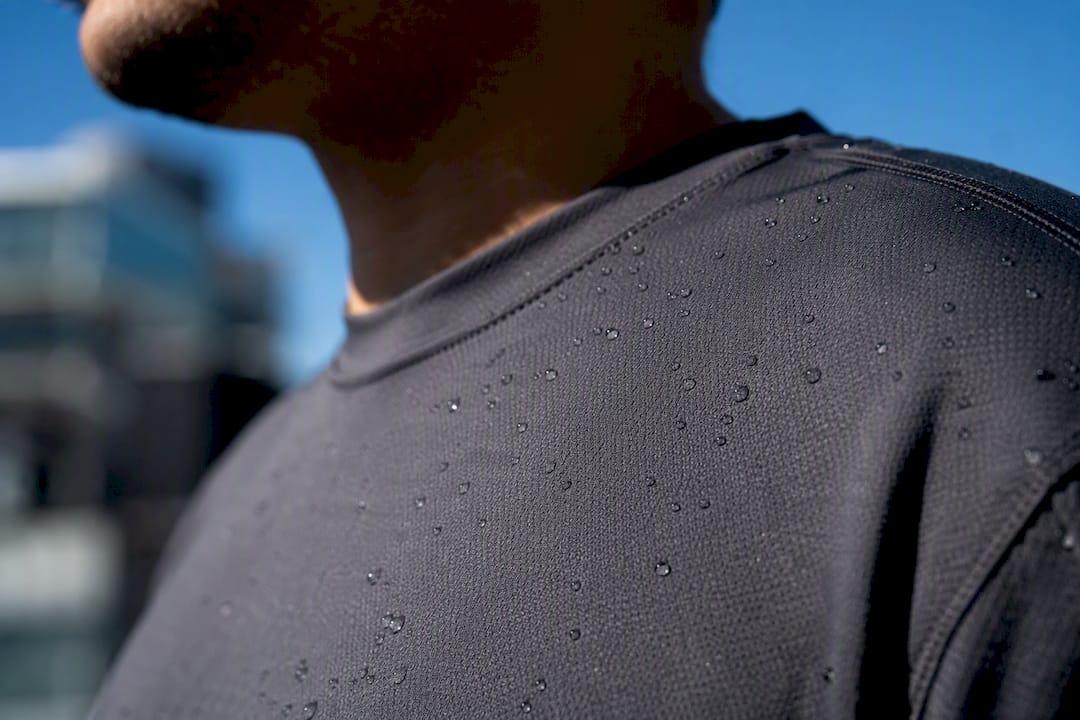
Printing on polyester is trickier. Sublimation works beautifully on it because the ink bonds with the synthetic fiber under heat, but screen printing and DTG can look chalky or fade faster than they would on cotton.
Rayon, modal, and Tencel (lyocell)
These three are regenerated cellulose fibers, made from wood pulp but processed differently. Rayon (viscose) drapes beautifully and feels silky but wrinkles easily and needs gentle washing. Modal is a step up, more durable, resistant to shrinking, and often blended with cotton for a softer everyday tee. Tencel (lyocell) uses a closed-loop solvent process that recovers most of its chemicals for reuse, making it the most sustainably manufactured of the three while still delivering a smooth, breathable hand.
Bamboo-derived rayon
"Bamboo fabric" almost always means bamboo pulp processed into viscose using the same chemical-intensive method as regular rayon. It's soft and breathable, but the "natural bamboo" marketing overstates how eco-friendly the actual manufacturing process is.
Linen, hemp, and merino
Linen and hemp are natural bast fibers valued for breathability in hot weather; both wrinkle more than cotton and cost more per yard. Merino wool shows up occasionally in performance or travel tees for its natural odor resistance and temperature regulation, though it's a niche choice for classic t-shirts rather than a mainstream one.
Blends: cotton/poly, tri-blend, and CVC
Blends exist to borrow strengths from each fiber. A 50/50 cotton/poly blend resists shrinking better than pure cotton while retaining decent breathability. Tri-blends mix cotton, polyester, and rayon, producing that famously soft, slightly heathered look popular in vintage-style tees. Blends are commonly used to balance comfort, durability, and cost in ways a single fiber often can't.
Pro Tip: Choose a double-knit like interlock or ponte over single jersey whenever the garment needs to hold its shape under stress, think collars, children's wear, or fitted premium tees. Single jersey is cheaper and drapes more, but it curls at raw edges and stretches out faster with wear.
How Knit Construction Changes a T-Shirt
Fiber gets most of the attention, but the knit structure often decides how a shirt actually behaves on your body. Single jersey is knitted on one set of needles, producing a smooth face and a looped back. That's why it curls at cut edges and why it's the standard for basic, affordable tees.
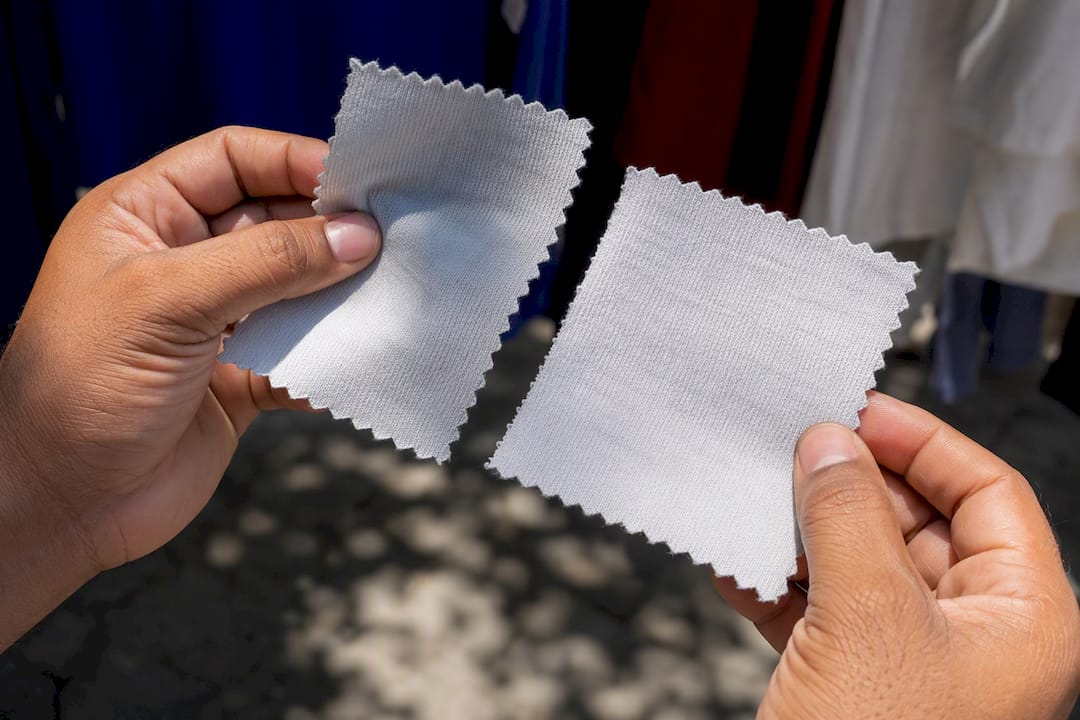
Rib knit alternates knit and purl columns, which is why it stretches significantly in the width and snaps back into place, useful for collars and cuffs. Interlock is essentially two jersey layers locked together on two needle sets, which is why it doesn't curl, offers better opacity, and lies flatter than single jersey. Ponte is a firmer double knit, similar to interlock but denser, often blended with spandex for structured, slightly stretchy garments.
Interlock and ponte trade some of single jersey's stretch for cover and stability, which is exactly why manufacturers reach for double knits when a garment needs to hold its shape through repeated wear and washing.
Pro Tip: If a listing calls a fabric "interlock" or "ponte" but doesn't state a weight or fiber content, treat it as a red flag. Construction name alone tells you nothing about how the shirt will actually perform.
Reading the Label: Weight, Yarn Count, and Finishing Terms
Weight is often listed in ounces per square yard or grams per square meter (GSM), which helps predict how a shirt feels and drapes. Lightweight fabrics are semi-sheer and drapey, midweight are typical everyday tees with moderate opacity, and heavier fabrics feel more structured and premium.
Yarn count, written as 30s or 40s, describes how fine the yarn is. Higher numbers mean thinner, finer yarn and generally a softer hand, though finer yarn alone doesn't guarantee durability if fiber quality is poor. Ring-spun and combed processes both improve smoothness and strength, as covered earlier. Mercerized cotton has been treated with a caustic solution that boosts sheen, dye uptake, and strength. Enzyme-washed fabric gets a controlled biological treatment that softens the hand and gives a slightly worn look straight off the rack.
How to Choose the Right T-Shirt Fabric: A Checklist
Before you buy in bulk or commit to a print run, run through these questions:
- What's the primary use? Everyday wear, workout, printing, or resale?
- How much stretch do you actually need, and in which direction?
- What print method will you use, and does the fiber content support it?
- Do you want a drapey, lightweight hand or an opaque, structured one?
- How much shrinkage and care fuss are you willing to tolerate?
- Does sustainability matter enough to pay more for certified materials?
- What's your per-unit budget, and does the fabric match that price point?
Watch for red flags on product pages: vague "eco-friendly" or "bamboo" claims with no certification attached, missing GSM numbers, or knit names with no fiber content listed. When sourcing from a supplier, ask directly about fiber origin, yarn count, knit construction, and any finishing or certification documents they can provide.
Care, Shrinkage, and Printing Compatibility
Polyester is thermally stable and barely shrinks at all, which is part of why it holds up so well in commercial laundering. Rayon and modal need cooler water and gentle cycles, since heat and agitation weaken the cellulose structure.
For printing, natural fibers like cotton accept water-based inks and DTG cleanly because the ink absorbs into the fiber itself. Sublimation only works on polyester or poly-heavy blends, since the process relies on heat-activated dye bonding with synthetic fibers. Wash in cold water, skip the high-heat dryer setting, and use a mild detergent to cut down on pilling and fading. The same washing discipline that extends the life of delicate garments applies just as well to your favorite tee.
Sustainability: Real Claims vs. Greenwashing
Certifications exist because fabric marketing can't be trusted on its own. GOTS (Global Organic Textile Standard) verifies organic fiber content and restricts harmful chemical processing throughout the supply chain. OEKO-TEX tests for harmful substances in the finished fabric, not how it was grown. GRS (Global Recycled Standard) and RCS (Recycled Claim Standard) verify actual recycled content and trace it through production.
Common traps to watch for: "bamboo" fabric marketed without disclosing it's processed viscose, "recycled" claims with no percentage attached, and generic "eco-friendly" language with zero certification backing it up.
Pro Tip: When a supplier's product page uses sustainability language, ask for the specific certification number or documentation. A real GOTS or OEKO-TEX claim comes with a verifiable certificate, not just a green leaf icon.
What I've Learned Designing Around Fabric Choice
Every piece we put together at Kenny Wade's World starts with the same question: does this fabric match how someone will actually wear it? Comfort and durability only show up together when fiber, knit, and weight are chosen on purpose, not picked for the lowest cost per unit.
A Faster Way to Shop by Fabric, Not Guesswork
Now that you know what combed cotton, interlock knits, and GSM numbers actually mean, shopping gets a lot less confusing. Kenny Wade's World builds every casual piece around the same fiber-plus-knit-plus-weight logic covered in this guide, so what you see on the label matches what you feel when it arrives.
Next time you're comparing tees, apply that same label-reading checklist, weight, yarn count, knit construction, before you add anything to your cart. If you want a break from fabric math altogether, check out Kenny Wade's take on pizza dough while you shop, or head straight to Kenny Wade's World to browse pieces built with the same fabric standards this guide just walked you through.
Frequently Asked Questions
What is the most breathable t-shirt fabric? Lightweight combed cotton and linen rank among the most breathable options, since natural fibers allow better airflow than tightly woven synthetics. Modal and Tencel come close while adding more drape.
Is cotton or polyester better for a t-shirt? It depends on the job. Cotton feels softer and prints better; polyester dries faster, resists wrinkles, and holds up to heavy sweat. Many everyday tees use a blend to get some of both.
What GSM is best for a t-shirt? 150 to 180 GSM suits most everyday and printing needs. Go above 180 GSM for a heavier, more premium hand, or below 150 GSM for a lighter, drapier feel.
What's the difference between jersey and interlock knit? Single jersey is a single-knit fabric that curls at cut edges and stretches more; interlock is a double knit that lies flat, resists curling, and offers better opacity.
Is bamboo fabric actually sustainable? Bamboo tees are typically processed into rayon using a chemical-intensive method, so the "natural bamboo" framing overstates the environmental benefit. Look for OEKO-TEX certification for more transparency on the finished product.
Sources
- Jersey vs Interlock Knit: Which Fabric for T-Shirts & Polo Shirts? | Apex Fashion Lab
- Knit Fabric Types: Jersey to Ponte | Minerva Patterns
- Cotton — Wikipedia
- Types Of T-Shirt Materials: Comprehensive Fabric Guide 2026