
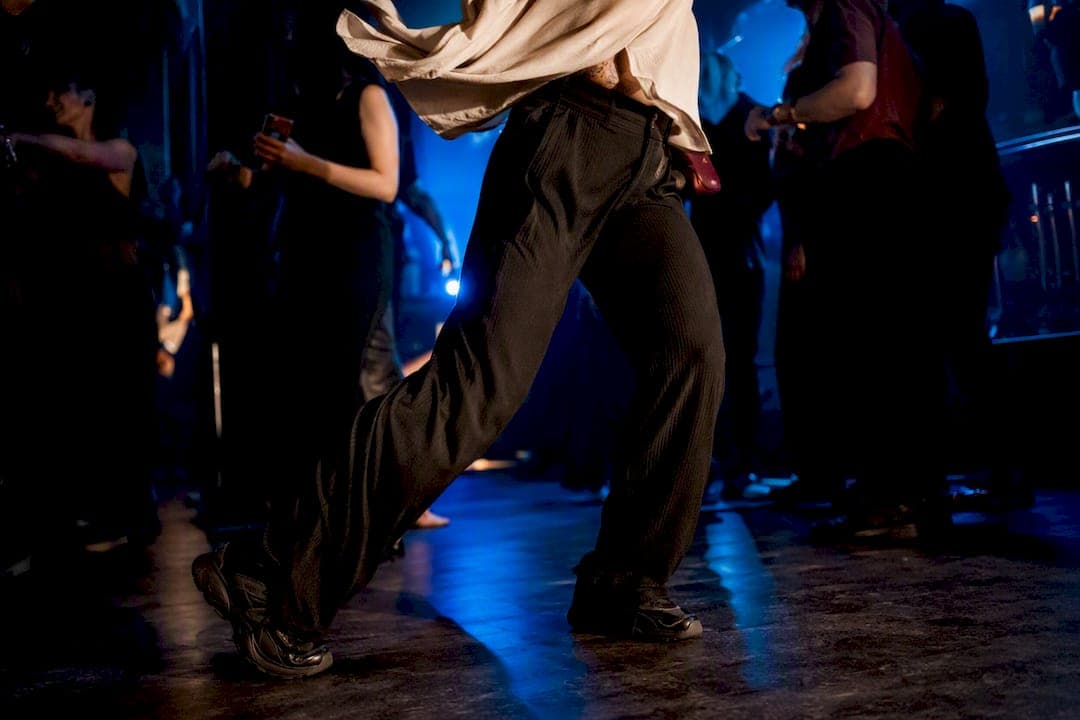
A dance-friendly outfit combines breathable or stretch fabric, a fit that stays put through spins and lifts, and shoes that split the difference between sliding for turns and gripping for stability. Beyond that, one rule matters more than any specific piece: run a movement test at home before you leave. Raise your arms, spin, sit down, lunge. If anything shifts, rides up, or pinches, it fails before the music even starts.
TL;DR:
- Fabrics should be breathable or stretchy and construction must keep the silhouette intact during spins and movement.
- Shoes must be suited to the venue, offering the right balance of grip and slide to prevent slips or stumbles.
- A quick movement test in your actual shoes and outfit is essential to ensure nothing shifts or pinches during dancing.
- Layering versatile pieces and packing a small emergency kit can help quickly address wardrobe issues mid-night.
- Outfit formulas vary by venue, with fitted tops and flexible bottoms suitable for most social dance environments.
Table of Contents
- What Makes an Outfit Actually Dance-Friendly?
- Quick Checklist: 7 Non-Negotiables to Check Before You Go
- Outfit Formulas by Venue and Vibe
- Shoes, Accessories, and Movement Safety
- Pack, Test, and Quick Fixes That Save the Night
- Kenny's Note: How Music Shaped These Outfit Picks
- Build Your Next Outfit From Kenny Wade's World
- Sources
What Makes an Outfit Actually Dance-Friendly?
"Dance-friendly" isn't really about the dance world's usual vocabulary of leotards and rehearsal gear. In the context of concerts, clubs, and parties, it means something closer to functional nightlife wear, stylish clothing engineered to survive three hours of movement without falling apart or falling off. The dance-attire industry calls this "social dance dress code" thinking, and it applies just as well to a Saturday club night as it does to a ballroom.
Three things separate a dance-friendly outfit from a merely cute one: fabric that flexes with your body, construction that holds a silhouette through motion, and shoes chosen for the floor you'll actually be on. Miss any one of the three, and you're the person adjusting a hemline every four songs instead of dancing.
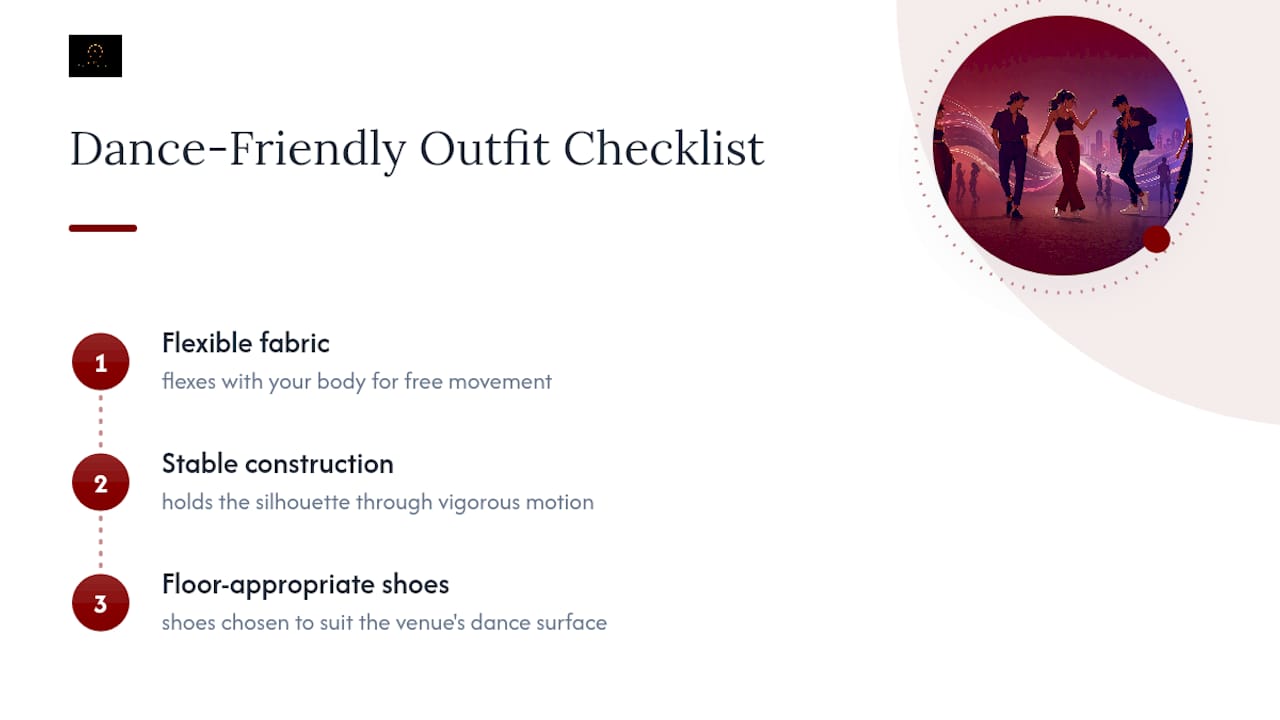
The community wisdom on this is blunt: the goal is comfort and connection, not performance, and Dance Flow Fort Myers's guide to social dance events puts it well, the right outfit is the one you forget about once the music starts. That's the actual benchmark. Not how the outfit photographs at 9 p.m., but whether you notice it at midnight.
Quick Checklist: 7 Non-Negotiables to Check Before You Go
Before anything else, run through this list. It takes two minutes and saves you from the worst kind of night, the one where you're tugging at your waistband instead of dancing.
- Layers: bring one light, removable piece (overshirt, denim jacket, packable vest) that ties around your waist or fits in a bag.
- Fabric: choose breathable knits or technical blends over anything stiff. Rigid denim is a hard pass unless it has real stretch, according to Dance Flow Fort Myers.
- Fit: tops need to stay tucked or fitted enough not to ride up; bottoms need enough give to let you lunge or kick without a seam fighting back.
- Shoes: match sole type to venue, more on that below, because grip and slide are not interchangeable.
- Bag strategy: a slim crossbody beats stuffed pockets almost every time.
- Movement test: arms up, spin, sit, lunge, all before you leave the house.
- Backup kit: hair ties, a strip of fashion tape, foldable flats, and a few wipes.
Pro Tip: Do the movement test in the actual shoes you're wearing that night. An outfit that passes in socks can still fail once you add three inches of unstable heel.
Outfit Formulas by Venue and Vibe
Different rooms demand different builds. A cargo-heavy festival outfit will overheat you in a packed club, and a club-ready bodysuit will leave you cold and underdressed at an outdoor set. Here's how the formulas break down by environment.
-
Club or small venue. Go with a fitted top or bodysuit paired with tapered pants. Dark colors do real work here, they hide sweat and stage haze better than pastels, a point WEAR2AM's concert streetwear guide makes repeatedly. Skip dangling jewelry entirely; it catches on other people in a packed room and it will not survive a shoulder-to-shoulder crowd.
-
Arena or mainstream show. This is where you can loosen up. Relaxed jeans or chinos, a statement tee, and a jacket you can tie off once the room heats up. Arena crowds move less aggressively than club floors, so you have more room for volume in your silhouette. Kenny Wade's night concert outfit guide covers a handful of these builds if you want a starting template.
-
Outdoor festival. Layer light pieces you can shed as the day heats up and add back when the sun drops. Cargo pockets earn their keep here since bag-checking lines make crossbody access annoying, and durable, closed-toe shoes matter more than anywhere else because festival grounds are unpredictable. The festival outfit formulas on Kenny Wade's World and Slapper N Bangers's day-party outfit guide both lean on this same layering logic for outdoor daytime events.
-
House party. This is the most forgiving category, but "forgiving" doesn't mean sloppy. Stretch bottoms, a top secure enough that you're not adjusting it near the speakers, and shoes you can actually move in beat anything borrowed from a night-out closet that wasn't built for a kitchen dance floor.
Two silhouette approaches show up across almost every formula above: the "tiny top, big pants" combo and the fitted bodysuit. Both work for the same reason.
A secured top or a reliable fitted silhouette holds its shape through spins and lifts, which means you're not stopping mid-song to fix a strap or tug a hem back into place. The outfit disappears, and that's the point.
Some clothing brands offer pieces that slot into these formulas directly, with stretch-blend tops for the club build and structured-but-flexible bottoms for arena and festival looks, designed around a "stays put through movement" standard.
Shoes, Accessories, and Movement Safety
Shoes make or break a dance-friendly outfit faster than anything else on this list. Sole type determines whether you glide through a turn or catch your foot and stumble. Grippy rubber soles are great for standing all day at a job, but on a crowded dance floor they can catch mid-pivot. Where to Dance Salsa's dress code guide recommends leather or suede soles, or a supportive dance sneaker built for lateral movement, specifically because they let your foot rotate instead of locking to the floor.
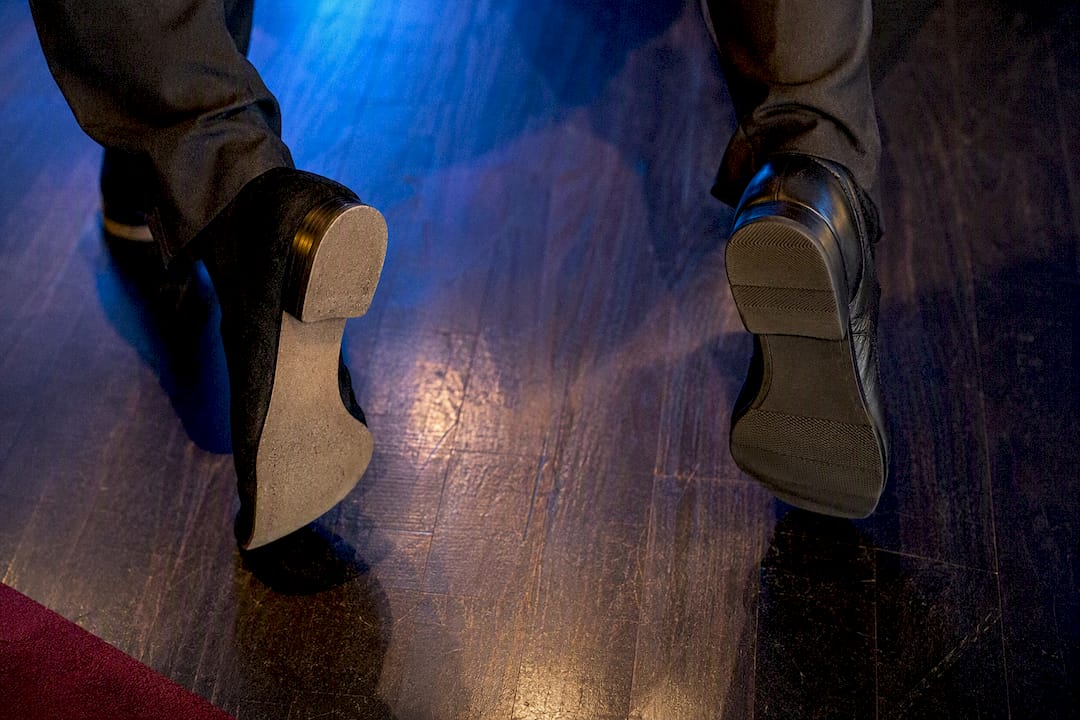
Support matters just as much as slide for extended dancing. Shoes that offer both support and slide, like strapped low heels or cushioned sneakers, help maintain comfort throughout a long night, whereas unsupportive flats or unstable heels can cause discomfort or injury. One shoe that works across venues is a better investment than three "occasion" pairs you can't actually move in, a point Where to Dance Salsa makes explicitly.
Accessories need the same scrutiny:
- Skip long, dangly earrings and necklaces. They snag on other people and on your own hair mid-spin.
- Secure your hair (braid, low bun, or tight ponytail) so it isn't in your face or someone else's.
- Wear a slimline watch or none at all, thick bands and bulky faces bruise during close contact.
- Keep your wrists and hands as unencumbered as possible; you need them free to catch your balance.
Pocket management deserves its own mention here. Heavy items in trouser pockets don't just bulge, they can bruise a dance partner during close contact, and On Pointe Dance Wear's guide to dance bags recommends a small crossbody that sits close to the body instead. It keeps your phone and card accessible without turning your hip into a hazard.
Pack, Test, and Quick Fixes That Save the Night
Run this sequence before you walk out the door:
- Put the full outfit on, shoes included, and raise both arms overhead. Anything that rides up fails immediately.
- Spin once, slowly, then again faster. A skirt that flips too high or pants that twist at the waist need adjusting now, not on the floor.
- Sit down, then stand back up. This catches waistband and seam issues that standing tests miss entirely, a step Zoukology's guide to social dance attire specifically calls out.
- Lunge forward on each leg. If your pants restrict this, they'll restrict you on the dance floor.
Pack a compact kit: hair ties, a couple of safety pins or a strip of fashion tape, foldable flats as a shoe backup, and a few wipes. Dance Flow Fort Myers notes this small kit resolves most mid-night wardrobe problems on the spot. If a strap breaks or tape needs reapplying, step toward a wall or restroom line rather than fixing it in the middle of the crowd.
Kenny's Note: How Music Shaped These Outfit Picks
I've built these formulas around what actually survives a real night out, not what looks good in a single photo. Testing outfits across long club sets and outdoor festival days taught me that fabric and silhouette decide everything else. A shirt that looks sharp under stage lights but binds at the shoulders is a shirt you'll regret by song three.
The EDM outfit formula on the blog and the festival formulas came directly out of that process, picking fabric blends that breathe, silhouettes that hold, and shoes that don't sacrifice support for style.
— Kenny
Build Your Next Outfit From Kenny Wade's World
Some fashion collections are built around the standard this whole guide runs on: clothing that holds its shape and comfort through actual movement, not just a fitting-room mirror. These collections lean into layering pieces you can tie off mid-night, tops with enough structure to stay secure through spins, and stretch-blend bottoms that pass the lunge test without a second thought.
When you're browsing, check three things on any product page: the fit notes (relaxed vs. fitted through the hip and shoulder), the fabric content (look for stretch percentages, not just "cotton blend"), and the care instructions, since crowded venues are hard on clothes and you want pieces that survive a wash cycle after a sweaty set. If you're building a full look for an upcoming show, the Rolling Loud outfit picks are a solid starting reference for how these pieces combine in practice. Start with one piece from the current collection, run the movement test at home, and build the rest of the outfit around whatever passes. Browse the current lineup and see what fits your next night out.
Sources
- On Pointe Dance Wear — bags
- First Dance Social: What to Wear, What to Expect — Dance Flow Fort Myers
- Social dance dress code guide — Where to Dance Salsa