
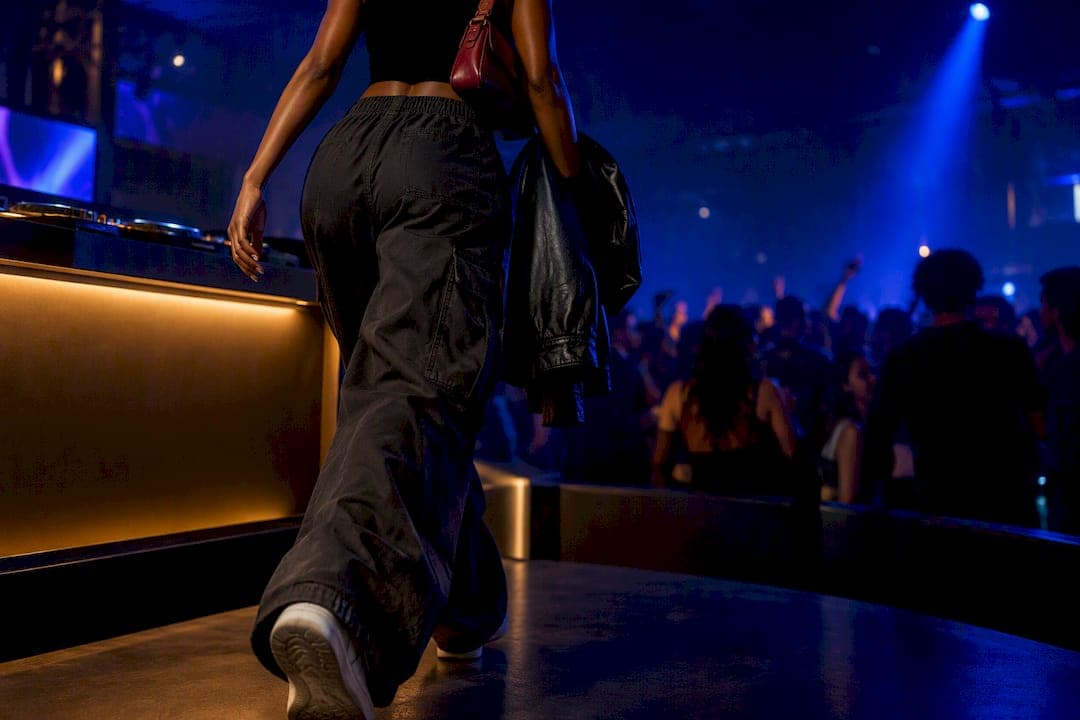
Pick a fitted base layer, a breathable mid layer, dark durable bottoms, and cushioned shoes with real arch support. That combination handles movement, heat, and crowd contact while still photographing well under club lighting. The formulas below break this rule down by venue so you can build a look tonight without guessing.
TL;DR:
- Proper footwear with arch support, such as cushioned sneakers or boots, is essential for dancing hours without foot pain or injury.
- Breathable fabrics like cotton, silk, and lightweight blends are crucial to stay comfortable under stage lights and prevent overheating.
- Layering with lightweight, packable outer pieces allows quick adjustment to changing room temperatures without sacrificing style or mobility.
- Use functional accessories like belt bags and earplugs to stay hands-free, protect hearing, and secure valuables during energetic nights.
- Outfit formulas prioritize movement, comfort, and venue vibe, with suggestions for quick swaps and fabric choices to optimize both performance and appearance.
Table of Contents
- 1. Twelve DJ night outfit ideas by vibe
- 2. Footwear that survives a full night on the floor
- 3. Fabrics and layers that keep you cool under stage lights
- 4. Small accessories that solve real dance floor problems
- 5. Dance-tested outfit formulas from Kenny Wade
- 6. Common outfit mistakes that ruin a good night
- 7. Why your music identity should shape what you wear
- 8. Shop Kenny Wade Clothing for your next set
- Sources
- FAQ
1. Twelve DJ night outfit ideas by vibe
Different rooms demand different priorities. A basement techno night runs hot and cramped, a festival stage means sun and dust, and a cocktail lounge rewards a sharper silhouette. Here are outfit builds organized by the vibe you are walking into, each with a swap for tight budgets and one upgrade for nights you want photos.
- Club classic: fitted ribbed tank, high-waist straight-leg trousers, chunky leather sneakers, small crossbody bag. Works because the tank moves with you and the trousers do not restrict a full range of motion. Swap the tank for a mesh long-sleeve if the room runs cold; upgrade with a metallic belt for camera flashes.
- Club statement: satin slip top, wide-leg trousers, block-heel boots, layered chain jewelry kept close to the body. The satin catches light without clinging to sweat the way vinyl or plastic fabrics do. Budget swap: a satin-finish polyester top from a thrift rack does the same visual job.
- Underground techno: mesh long-sleeve under a fitted tank, cargo pants, combat boots, small waist bag. Mesh keeps air moving in low-ceiling rooms packed with bodies, and cargo pockets replace a bag entirely. This layering approach mirrors the outfit formulas built for all-night dance events.
- Underground minimal: black fitted crop top, straight-leg cargo pants, platform sneakers, single statement earring. The monochrome base reads as intentional under strobe lighting rather than washed out.
- EDM or festival main stage: cropped hoodie, bike shorts, chunky sneakers, hydration belt bag. This trio shows up constantly in festival guides because it survives heat, dust, and hours of standing, a formula echoed in breathable festival outfit ideas.
- EDM statement set: matching neon two-piece set, cushioned running shoes, reflective sunglasses tucked in a bag for later. Coordinated color sets photograph cleanly against stage lighting and read as a deliberate look rather than a costume.
- EDM practical: mesh tank, cargo shorts, ankle-supportive sneakers, fanny pack worn front. Front-worn bags stay accessible while dancing and reduce the chance of a strap snapping in a crowd.
- Cocktail lounge polished: silk button-down worn half-unbuttoned over a fitted camisole, tailored trousers, slingback heels. This '90s-leaning combination has re-entered going-out fashion as a fast way to look put-together without sacrificing movement.
- Cocktail lounge modern: fitted turtleneck, leather-look miniskirt in a breathable blend, block heels, structured mini bag. Choose a poly-blend skirt over true vinyl since vinyl traps heat and clings once you start sweating.
- Bar hop layered: oversized denim jacket over a fitted tank, straight-leg jeans, low-top sneakers, crossbody bag. The jacket comes off the moment the room heats up and ties around the waist, a trick covered in more depth in outfits that shift from casual to dressy.
- Bar hop quick change: slip dress layered over bike shorts, ankle boots, small clutch that converts to a wristlet. The bike shorts underneath solve the sitting-and-dancing problem a slip dress alone cannot.
- All-purpose neutral: fitted black tee, dark relaxed trousers, all-white cushioned sneakers, thin gold jewelry. This is the outfit to default to when you are not sure what the night holds. Dark durable bottoms and a breathable base show up across nearly every DJ style guide for good reason: they hide sweat and stage dust while still moving with you.
Pro Tip: Thrift satin, mesh, and leather-look pieces before buying new. They photograph the same under club lighting and cost a fraction of the price.
2. Footwear that survives a full night on the floor
Standing and dancing on concrete or hardwood for hours puts real strain on your feet, and rhythmic movement carries genuine cardiovascular benefits only if your body can keep going without pain shutting the night down early. Footwear with proper arch support matters more than the shoe's finish.
- Cushioned running shoes: the safest bet for comfort, with the tradeoff of looking more athletic than fashion-forward.
- Platform sneakers: add height and edge while keeping a wide, stable base, though they run heavier than standard sneakers.
- Broken-in boots: combat or chunky boots offer ankle support in crowded rooms but need at least a week of wear before the night you actually need them.
- Modified classics: dress shoes or slip-ons with an added gel insole can work for shorter, lower-key sets but rarely hold up past a few hours of real dancing.
Test any new shoe on a walk around your block or a short home dance session before committing to it for a five-hour set. Carry a small blister kit: gel inserts, moleskin tape, and a spare pair of socks cover most emergencies.
Pro Tip: Break in boots at home for at least three separate wears before a night out. A boot that feels fine standing still can blister fast once you're moving for hours.

3. Fabrics and layers that keep you cool under stage lights
Stage lighting rigs run hot, and a packed dance floor adds body heat on top of that. Fabric choice decides whether you're comfortable at hour four or peeling off a shirt that's stuck to your skin. Breathable midweight materials consistently outperform tight, non-breathable fabrics over the course of a long set.
- Prefer: cotton blends, mesh, silk or satin, lightweight linen blends.
- Avoid: vinyl, PVC, and heavy polyester that trap heat and cling once you start sweating.
- Base layer: a moisture-wicking tank or fitted tee that manages sweat directly against skin.
- Mid layer: the piece doing the style work, a mesh top, satin blouse, or fitted crop.
- Outer layer: something that folds small, like a lightweight denim jacket or a packable bomber, for walking in and cooling down outside.
Pack a spare top in your bag if the venue runs unpredictable. A denim jacket or bomber that ties around the waist once you heat up solves the biggest layering headache without adding bulk. More venue-specific layering breakdowns are covered in outfit guidance for different concert settings.
4. Small accessories that solve real dance floor problems
The right accessories keep your hands free and protect your body over years of nights out, not just one evening.
- Hands-free bags: a belt bag or crossbody beats a clutch every time you need both hands to dance or push through a crowd.
- Hearing protection: high-fidelity earplugs are a small upfront cost that pays off since hearing health is an under-cited but important consideration for anyone spending regular time near club-level sound systems.
- Phone carry: an inner pocket or crossbody with a zip keeps your phone secure while dancing and away from wandering hands.
- Hair fixes: a few bobby pins or a small travel-size dry shampoo can rescue a look after hours of heat and movement.
- Safety basics: a portable phone charger, a small cash stash separate from cards, and a friend's number written down in case your phone dies.
5. Dance-tested outfit formulas from Kenny Wade
These combinations have been worn and adjusted through actual nights behind the booth and on the floor, built around what stays comfortable past hour three.
- The Movement Base: fitted ribbed tank, high-waist relaxed trousers, cushioned sneakers, thin layered necklace. This is the formula to default to on any night with unknown temperature or crowd size, since the ribbed fabric moves with your arms during a full set.
- The Heat Cutter: mesh long-sleeve over a bralette, cargo pants, low boots, small waist bag. Built for rooms with no air conditioning and a packed floor, the mesh layer can be pushed up or tied without ruining the look.
- The Photo Ready: satin slip top, wide-leg trousers, block heels, one statement earring. Save this one for nights you know will end up on camera, since satin holds its shape better than jersey under flash photography.
- The Festival Standard: cropped hoodie, bike shorts, chunky sneakers, hydration belt bag. Swap the hoodie for a mesh tank once the sun goes down and the temperature holds, keeping the same lower half all day.
- The Day to Night Flip: fitted tee and relaxed trousers during daylight hours, then a denim jacket and layered jewelry added as the sun sets and the set picks up energy. Full breakdowns of these builds, including fabric swaps for different climates, live in the dance-friendly outfit formulas guide.
Fit matters more than trend here. A trouser that's too tight at the knee will cut off circulation by hour two, and a top that rides up every time you raise your arms is a top you'll be adjusting all night instead of dancing.
Pro Tip: Build one outfit that works from a 6 PM daytime set straight into a midnight closing set by adding just two pieces, a jacket and a bag swap, instead of a full change.
6. Common outfit mistakes that ruin a good night
A handful of small missteps cause most of the discomfort people report after a night out.
- Dangling jewelry: long necklaces and hoop earrings catch on crowds and equipment. Switch to studs or short, close chains.
- Non-breathable fabrics: vinyl and heavy synthetics trap heat fast. Save them for photos before the set starts, not for the whole night.
- Zero-support shoes: flat sandals or unworn new heels lead to blisters within an hour. Choose a shoe you've already tested walking in.
- Overloaded bags: a large tote turns into a liability on a packed floor. Pare down to essentials in a crossbody or belt bag.
Choose function over style specifically during load-out, in tight hallways, or at any venue where a promoter has flagged a dress code in advance. A quick message to the promoter or a look at the venue's page settles most dress code confusion before you're standing at the door.
7. Why your music identity should shape what you wear
The outfit you choose says as much about your taste as the set you're walking into. I built these formulas around one principle: a look that fights your movement all night isn't worth the photo it gets you at the door. Test your outfit the way you'd test a new track, at home, under pressure, before it goes live. The tested formulas here come from that same process.
— Kenny Wade
8. Shop Kenny Wade Clothing for your next set
Every formula above works better with pieces actually cut for movement instead of borrowed from a regular closet. The clothing line pairs comfort and style in the same piece, tied directly to music culture.
Consistent movement, even something as simple as a night of dancing, carries real cardiovascular value. That's one more reason to dress for the whole set, not just the walk in. Browse the Kenny Wade Clothing shop for pieces built to move with you from doors open to last call.
Sources
- Let’s dance: Rhythmic motion can improve your health | Harvard Health Blog
- What Do DJs Wear? A 2026 Style Guide | Ghostnote
- Looking posh for a night out: '90s shirt trend + miniskirt | WhoWhatWear
FAQ
What should I wear to a DJ night?
Choose a breathable, fitted base layer, a stylish mid layer that can be removed or tied on when you heat up, dark durable bottoms, and cushioned shoes with arch support. This combination handles hours of movement while still looking intentional under club lighting.
What is the 3-3-3 rule for clothes?
Definitions vary, but the version most commonly cited in wardrobe planning refers to picking 3 tops, 3 bottoms, and 3 pairs of shoes that all mix and match for a set period, like a trip. It's a packing strategy rather than a nightlife-specific rule.
How to look 10 pounds thinner?
Fit and silhouette do more than fabric weight here: a well-fitted waistline, a structured jacket left open, and vertical lines from trousers or a slip dress all read as slimming. Avoid clingy synthetic fabrics that highlight every movement under harsh club lighting.
How to dress for a DJ party?
Match your outfit to the venue type: clubs and underground parties allow more personal expression, while more formal events call for smart-casual pieces. Prioritize movement and breathable fabric first, then layer in the statement pieces that fit the room's energy.