
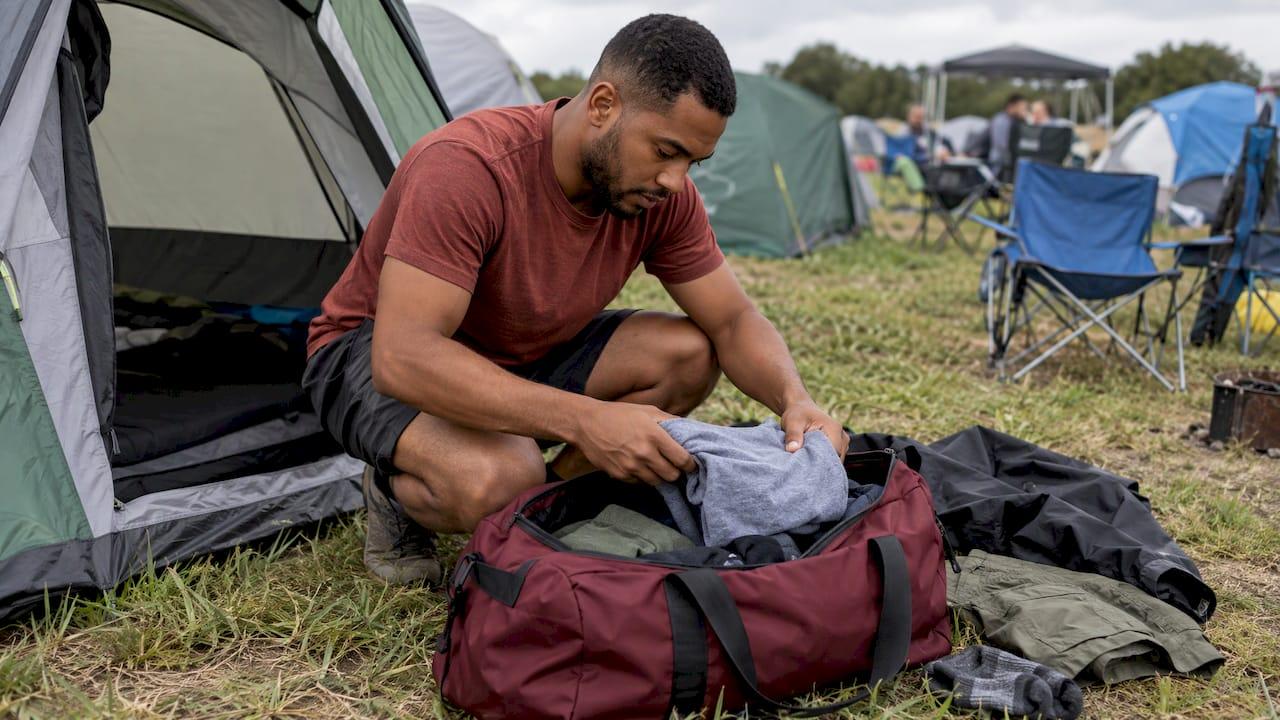
For a weekend festival, pack one outfit per day of music, one warm layer, one waterproof layer, two pairs of shoes you have already broken in, plenty of socks, and sun protection. Then adjust for the forecast and for whether you are camping. That core list covers most US festivals, from a desert in spring to a humid southern field in summer.
The rest of this guide shows how to turn that formula into a real bag: how many pieces you need, what to wear in heat, rain and cold, which shoes hold up over 10 hours, and what changes if you sleep on site.
TL;DR
- Plan one outfit per festival day, plus one night outfit and one outfit to sleep in, and pack more socks and underwear than seems reasonable.
- Build outfits in three layers: a breathable base, a warm mid-layer, and a waterproof or wind-resistant shell.
- Wear broken-in, closed-toe shoes. Add a second pair (boots or waterproof shoes) if rain or mud is possible.
- Pack sun protection for the day: a brimmed hat, sunglasses, and broad-spectrum SPF 30+ sunscreen.
- Check the festival's bag policy and the 10-day forecast before you close the bag.
Table of Contents
- How many outfits to pack for a music festival
- The layering system that handles any weather
- What to wear in hot weather
- What to wear in rain and mud
- What to wear when it's cold
- Shoes: the choice that decides your weekend
- Accessories that earn their space
- Adjusting the list for camping festivals
- Perspective: why we pack for comfort first
- Shop casual wear built to layer
- The festival clothes checklist
- Common packing mistakes
- FAQ
- Sources
How many outfits to pack for a music festival
The simplest rule is one outfit for each day of music, plus one or two spares. One festival guide's capsule wardrobe for first-timers gets specific. It suggests 2 lightweight tops, 2 bottoms (shorts, loose trousers or a skirt), 1 warm jumper or fleece, 1 waterproof jacket, 1 pair of boots, 1 pair of trainers or sandals, 1 hat, a night outfit and something to sleep in, plus a generous stash of socks and underwear.
That is a UK guide, and Americans will say sweatshirt instead of jumper and sneakers instead of trainers. The logic travels well, though. A US-focused outfit guide makes the same point from a different angle: you will be on your feet for 8 to 12 hours, so comfort has to lead every choice.
Here is a practical count for a three-day festival where you go home each night, and one for a camping weekend.
| Item | 3-day, going home nightly | 3-day, camping |
|---|---|---|
| Tops (tees, tanks, bodysuits) | 3 | 4 |
| Bottoms (shorts, joggers, cargo pants, skirts) | 2 to 3 | 3 |
| Warm mid-layer (hoodie, flannel, crewneck) | 1 | 1 to 2 |
| Outer shell (rain jacket or poncho) | 1 | 1 |
| Night or headliner outfit | 1 | 1 |
| Sleepwear | 0 | 1 set |
| Socks | 4 pairs | 6 to 8 pairs |
| Underwear | 4 | 6 to 7 |
| Shoes | 1 to 2 pairs | 2 pairs plus camp shoes |
| Hat and sunglasses | 1 each | 1 each |
These counts are our working formula, not a rule. If you can wash or re-wear a favorite piece, subtract. If the forecast is wet, add socks first.
Mix and match, don't bring full looks
The trick that saves the most space is building around two or three neutral bottoms and a handful of tops that all work together. A black pair of cargo shorts, one pair of relaxed pants and a denim-free option for rain can carry every day. Tops then do the talking: a graphic tee, a tank, a button-up worn open. If you want outfit formulas to copy, our guide to comfort-first music festival outfits lays out eight of them.
The layering system that handles any weather
Temperature is the one thing a festival packing list cannot predict for you. The same guide above recommends a layering system: a breathable base such as a cotton vest or a technical wicking tee, a mid-layer for warmth such as a light sweatshirt, oversized flannel or denim jacket, and a waterproof or wind-resistant outer layer. It also suggests keeping an emergency hoodie, a thermal layer and a beanie in your bag, because nights get cold fast.
US festivals prove the point. A US festival style roundup reports festival-day temperatures ranging from about 66°F to 102°F, with nights dropping as low as 43°F, and concludes there is no single American festival outfit. Another outfit guide gives examples: a California desert night can run 30°F colder than the afternoon, and a Chicago August evening turns chilly by 10 p.m.
If you want to understand how backpackers think about this, a mountain gear list for layering is a useful model. The same three jobs apply on a festival field: wick moisture, hold heat, block wind and rain.

Your base layer
Choose something breathable that dries quickly. Loose tees, tank tops and light button-ups work. Avoid anything that stays damp once you sweat through it, because damp fabric is what makes a 50°F night feel miserable.
Your mid-layer
A hoodie, crewneck or flannel is the piece that gets the most use. You can tie it around your waist at 3 p.m. and pull it on at 9 p.m. Pick one that stuffs into a small day bag, since many festivals limit bag size.
Your shell
A packable rain jacket or a poncho does the job. One camping checklist argues a poncho beats a jacket at festivals because it folds small and also covers a backpack. A hooded jacket, on the other hand, stays on better in wind. Pick the one you will actually carry.
What to wear in hot weather
Heat is a health issue as well as a comfort one. The CDC's advice on preventing heat-related illness starts with the clothing: choose lightweight, loose-fitting pieces. It also recommends resting often in shady areas and using a buddy system, since heat illness can cause confusion. At a festival, that means agreeing with your group to check on each other and stepping out of the crowd when you feel dizzy or unwell. If you or a friend seem confused or faint, find medical staff on site right away.
For hot festival days, pack:
- Loose, light tops in natural or quick-dry fabrics. The US style roundup above counts 22 of its listed American festivals as running in real heat (28°C and up) and prefers loose natural fabrics and a brimmed hat for those.
- Shorts, a skirt or relaxed pants that let air through.
- A wide-brim hat or cap and sunglasses.
- A very thin long-sleeve layer if you burn easily, as one weather checklist suggests.
For more hot-weather outfit ideas, see our summer concert outfits and summer streetwear outfits.
Sun protection you wear and apply
The American Academy of Dermatology says sun-protective clothing helps: long sleeves, pants, a wide-brimmed hat and UV-protective sunglasses. It also recommends broad-spectrum, water-resistant sunscreen with SPF 30 or higher on skin that clothing does not cover. A festival field offers little shade, so the hat and sunglasses do real work. Reapply through the day, and check the festival's rules on sunscreen containers before you pack, since aerosol cans are banned at some events.
What to wear in rain and mud
Rain turns a good festival outfit into a bad one only if you packed the wrong fabrics. The most useful rules from the guides we reviewed:
- Skip denim. The first guide above says plainly to avoid denim in the wet, since it soaks through and dries slowly. Quick-dry pants or shorts win.
- Pack a compact poncho or a lightweight hooded waterproof jacket.
- Bring extra socks in sealed bags and a small microfiber towel, plus zip bags or waterproof pouches for your phone and wallet.
- Choose water-resistant shoes or boots with grip, and consider two pairs: one guide suggests trainers plus waterproof boots when the forecast is mixed.
Regional examples help. One US festival packing guide says a southern summer festival like Bonnaroo calls for rain gear, mud boots, extra shoes and a hoodie, while Lollapalooza's changeable city weather calls for a packable rain jacket or poncho. It also says to dress for a cold entry line at a winter-season event like Lights All Night, even when the stages are indoors.
Our guide to rainy concert outfits shows how to stay dance-ready in wet weather without looking like you're about to hike.
What to wear when it's cold
Cold hits hardest at night and in the morning. Keep your warmest pieces in your day bag even when the afternoon feels warm. The same US guide says desert festivals call for a light evening layer and dust protection. A bandana or scarf does double duty there, and a fashion editor's festival advice also recommends sunglasses and a handkerchief or scarf for sunny, dusty conditions.
For cold-weather events, add a beanie, thin gloves, thermal leggings or base layers under your pants, and warm socks. Our winter concert outfits and hoodie and leather jacket outfits show how to stay warm without hiding the look.
Shoes: the choice that decides your weekend
If you get one thing right, make it your shoes. The fashion editor's guide above puts it simply: choose a comfortable shoe that will last all day.
A few rules hold across the guides we read:
- Break them in. One outfit guide calls broken-in sneakers the gold standard and says to wear your chosen pair at least 3 to 4 times before the festival. Brand-new shoes are how blisters start.
- Close the toes. A UK style editor recommends closed-toe shoes, boots or comfortable sneakers and advises avoiding heels, wedges and sandals. Another guide says open-toe shoes are a gamble because of crowds and ground hazards.
- Match the shoe to the ground. For rain or mud, the same US guide suggests ankle boots. For multi-day camping, it points to trail runners or hiking shoes, which are more comfortable over 10-plus hours on uneven ground and are often water-resistant.
- Pack a second pair. Rotating shoes lets one pair dry and gives your feet a change of pressure.
Socks matter as much as shoes. Pack cushioned, moisture-wicking pairs, and bring more than you think you need.
Accessories that earn their space
Keep the accessory list short, since every item has to fit in a bag that passes security.
- Hat or cap. Wide-brim bucket hats and caps both work. A style editor's sun-protection advice also covers sunglasses, noting that polarized lenses can reduce glare.
- Bandana or scarf. Sun, dust, a cold neck: one piece solves all three.
- Small crossbody or belt bag. Hands stay free, and it fits most clear-bag or small-bag rules.
- Lightweight tote or stuff sack. For a dirty-laundry bag at camp or a wet-clothes bag on the way home.
- Ear protection. It isn't clothing, but it belongs in your pocket. Check your festival's FAQ for what is allowed.
Adjusting the list for camping festivals
Camping changes the clothing list in four ways. First, you need dedicated sleepwear and a warm layer for sleeping, since nights are the coldest part of the day. The earlier capsule wardrobe includes an outfit for sleeping in for exactly this reason. Second, add more socks and underwear, because getting dry is harder at camp. Third, bring camp shoes that slip on easily for the walk to the bathroom. Fourth, pack a bag or packing cube to keep clean and dirty clothes apart.

The three-layer approach matters more when you sleep outside. One camping checklist notes that open fields can swing 15 to 20°C between the afternoon peak and 4 a.m., which is roughly 27 to 36°F. Plan your clothes for the cold end of that range, not the warm one.
Perspective: why we pack for comfort first
Most festival packing mistakes come from dressing for the photo instead of the 10 hours. We build our clothing around the idea that comfort and style should not be a trade.
At Kenny Wade's World, our casual wear is designed to be versatile enough for different occasions, so one hoodie, one tee or one pair of pants can carry you from a hot afternoon set to a cold late-night one. That is the same logic as a good festival bag: fewer pieces, each doing more than one job.
We come at this as people who love music as much as clothes. Our advice is to pick two or three pieces you feel great in, make sure they layer, and let the music be the main event. The outfit should disappear once the first beat drops.
Kenny Wade
Shop casual wear built to layer
If you're building a festival bag, our Kenny Wade Clothing collection is a good place to start for the pieces that do the most work: comfortable casual wear with a music-culture edge, designed to be versatile across occasions.

Want more ideas first? Our guide to concert outfit ideas for every show and budget and the night concert outfits guide cover what to wear when the sun goes down. Heading to Florida? Our Rolling Loud outfit picks are built around the Orlando weather. Flying in? See our airport outfits for a travel-day look that is easy to wear and easy to pack.
The festival clothes checklist
Use this as a final pass before you zip the bag.
Clothing
- Tops: one per day, plus one spare
- Bottoms: two or three that mix with every top
- Night or headliner outfit
- Sleepwear, if camping
- Socks and underwear: more than you think
Layers
- Hoodie, flannel or crewneck
- Packable rain jacket or poncho
- Beanie and thin gloves for cold-season events
- Thermal base layer for cold nights
Footwear
- Broken-in sneakers or trail runners
- Boots or water-resistant shoes if rain is possible
- Camp slides or slip-ons for camping
Sun and dust
- Hat or cap
- Sunglasses
- Bandana or scarf
- Broad-spectrum SPF 30+ sunscreen, in a form your festival allows
Rain extras
- Zip bags for phone and wallet
- Spare socks sealed in a bag
- Small microfiber towel
Common packing mistakes
- Packing only for the afternoon. Nights run much colder, so a warm layer belongs in the bag.
- Wearing new shoes. Blisters on day one can end your weekend.
- Bringing full outfits instead of pieces. Separate items give you more combinations with less volume.
- Forgetting the bag rules. Check size limits and banned items on the festival's official page before packing.
- Ignoring the forecast. Look at it about a week out and again the night before.
FAQ
How many outfits do I need for a 3-day festival?
Plan one outfit per day, plus a night outfit and, if you camp, something to sleep in. Mix and match around two or three bottoms to keep the bag small. Add extra socks and underwear before you add anything else.
What should I wear to a festival if I don't know the weather?
Dress in layers: a breathable base, a warm mid-layer and a packable waterproof shell. Keep the warm layer in your bag so you can add or remove pieces as the day changes. Check the forecast closely in the final days before you go.
Are sandals okay at a music festival?
Most guides recommend closed-toe shoes, because crowds, spilled drinks and uneven ground make open toes a gamble. Broken-in sneakers or trail runners are the safer pick, and boots help in mud. If you still want sandals, treat them as a camp-only second pair.
What should I pack in my day bag?
A warm layer, a packable rain layer, sunscreen, sunglasses and a hat, plus spare socks if rain is possible. Check the festival's bag-size rules first, since many events restrict what you can bring in.
Sources
- What to wear to a festival
- What to Wear to a Music Festival: The Complete Outfit Guide
- Festival Outfits in United States: What to Wear
- How to Dress for a Music Festival, According to Experts
- Wondering What to Wear to a Festival?
- Festival Packing List: The Complete Camping Checklist
- Festival Weather Checklist for Heat, Rain, Cold
- What to Bring to a Music Festival: A Packing List
- Preventing Heat-Related Illness (CDC)
- Sunscreen FAQs (American Academy of Dermatology)