
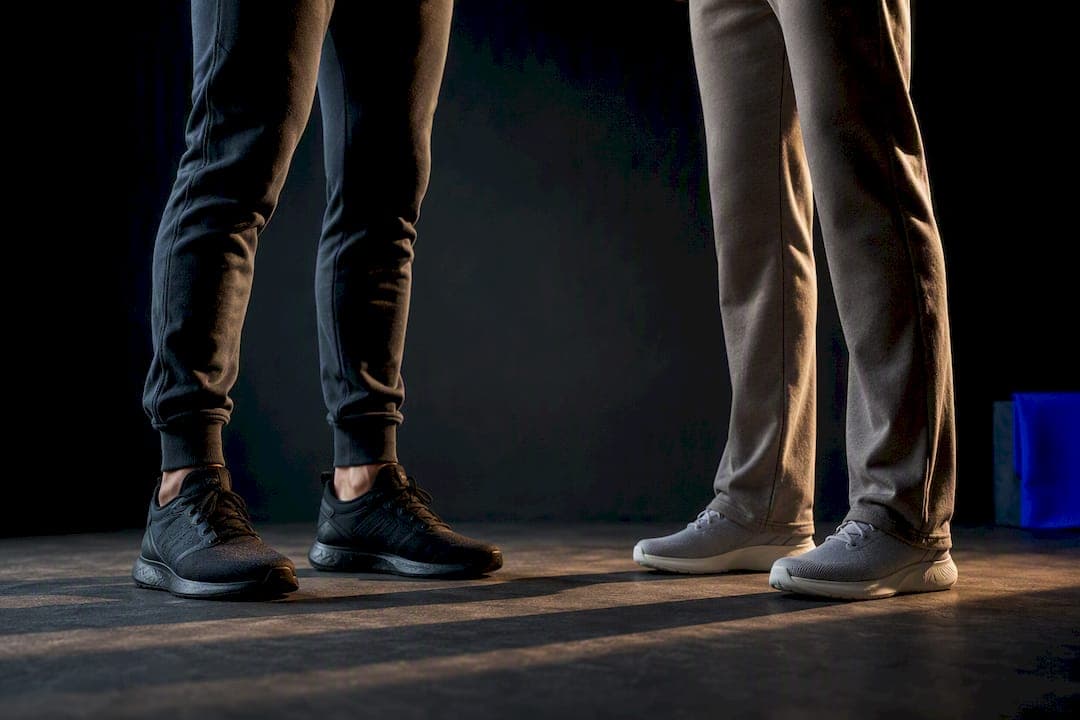
Joggers and sweatpants are not the same garment. Joggers have a tapered leg and cuffed hem built for movement, which makes them the better pick for travel, errands, and public wear. Sweatpants stay loose from waist to ankle and lean on heavier fabric for warmth, so they win for lounging, sleep, and cold-weather recovery days.
TL;DR:
- Joggers typically use lightweight, breathable fabrics suitable for movement and public wear, unlike heavier, insulating sweatpants designed for warmth and lounging.
- Proper fit involves a slim, tapered leg that hits at the ankle bone, with a slight taper starting at the knee, avoiding excess fabric pooling or balloon effects.
- Fabric selection is crucial: fleece-lined sweatpants rely on heavier cotton for insulation, while joggers often feature tech fabrics or cotton blends that wick moisture and handle movement well.
- Style can be versatile, with joggers suited for smart-casual and travel looks when paired with structured tops, while sweatpants are better for at-home cozy or structured loungewear ensembles.
- Key buying tips include checking fabric weight and texture, cuff durability, waistband construction, and ensuring zippers for pockets if needed, especially when shopping online.
Table of Contents
- Joggers vs Sweatpants: Fit and Silhouette Differences
- Materials and Construction: What Actually Separates Them
- Which One Fits Your Day: A Situational Guide
- How to Style Joggers and Sweatpants So They Look Deliberate
- Buying Checklist: What to Check Before You Commit
- Kenny Wade's Take on Getting This Right
- Where to Find Joggers and Sweatpants Built for Both Comfort and Style
- Sources
- FAQ
Joggers vs Sweatpants: Fit and Silhouette Differences
The fastest way to tell them apart is the leg line. Joggers taper from the thigh down to a cuffed or elastic ankle, which creates a slimmer silhouette that reads closer to a pair of chinos than a pair of gym pants. Sweatpants keep a straighter or fuller cut through the leg, often ending in an open hem rather than a cuff, which is exactly why they drape looser and feel roomier when you sit down.
That taper does more than change the shape. A tapered fit reads neater and is easier to wear in public, largely because the fabric doesn't pool around the ankle the way a wide-leg sweatpant does. Sneakers, boots, and even loafers all pair more cleanly with a tapered hem since there's a visible break at the shoe instead of fabric bunching over the laces.
A few fit cues worth checking before you buy either one:
- The hem should hit right at your ankle bone. Any lower and joggers start to look like sweatpants that shrank.
- Look for a slight taper starting at the knee, not the hip. Too much taper up top creates a balloon effect.
- Sweatpants should still sit close enough at the waist to avoid sagging. Loose does not mean shapeless.
- If you're between sizes, size down on joggers and size true on sweatpants. Joggers rely on the taper for shape, sweatpants rely on room for comfort.
Track pants sit somewhere in between the two, usually with a straighter leg than joggers but a more athletic finish than sweatpants, often with side stripes or zip pockets that signal "gym" rather than "everyday." If your closet needs one pant that works from the couch to the coffee shop, the jogger's cut is doing most of that work.
Materials and Construction: What Actually Separates Them
Fit gets you halfway there. Fabric decides the rest. Joggers are typically built from lighter, breathable, or moisture-wicking materials, while sweatpants lean on heavier cotton fleece or brushed interiors designed to trap heat rather than release it.
Here's how the fabric families usually break down:
- Sweatpants: heavyweight cotton fleece, often 12 to 20 ounces per yard, with a brushed or looped interior for insulation.
- Joggers: French terry, cotton-poly blends, or tech fabrics with four-way stretch, chosen for breathability over warmth.
- Track pants: nylon or polyester shells, sometimes with a mesh lining, built for sweat management during actual exercise.
Pro Tip: Rub the inside of the fabric between two fingers before buying. If it feels looped and slightly rough, that's fleece built for warmth. If it feels smooth and thin, that's a tech blend built for movement, not insulation.
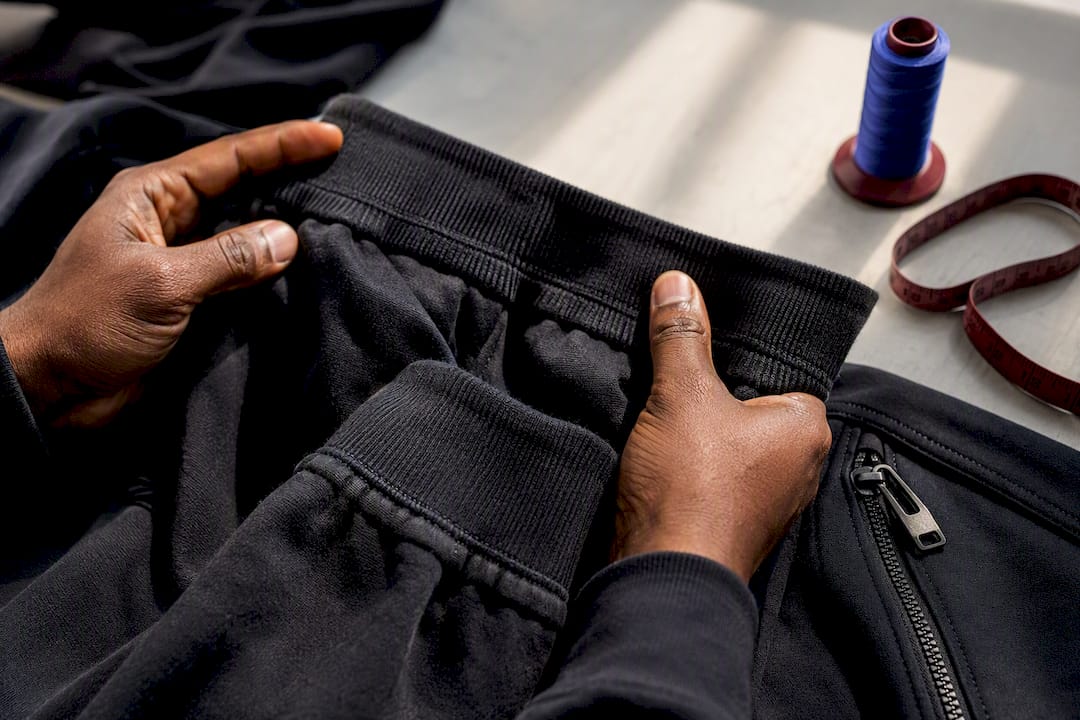
Construction details matter as much as the fabric itself. Waistband type, cuff durability, and pocket design change how long a pair lasts and what it's actually good for. A ribbed cuff that's sewn rather than just elasticized will hold its shape through dozens of washes. Zippered pockets matter if you're walking through an airport with your phone and cards on you; open pockets are fine for the couch but a liability anywhere else.
Which One Fits Your Day: A Situational Guide
Matching the pant to the activity solves most of the "what do I wear" debate before it starts.
- Travel days. Joggers in a lightweight tech fabric resist wrinkles through hours of sitting and pair easily with slip-on sneakers at security.
- Errands and casual public settings. Joggers again, ideally in a neutral color with minimal branding, since muted tones and low-key logos make a jogger read as intentional rather than athletic.
- Light workouts or a walk. Joggers with a bit of stretch handle movement fine without the bulk of true sweatpants.
- Lounging at home. Sweatpants, full stop. The looser cut and heavier fabric exist for exactly this.
- Cold weather and sleep. Sweatpants' fleece lining holds heat far better than a thin jogger fabric ever will.
- Recovery days after training. Sweatpants again, since the goal is warmth and zero restriction, not mobility.
Climate shifts this equation more than most people account for. Someone in a warm climate might live in joggers year round and only pull out sweatpants for air-conditioned flights, while someone in a colder region reaches for fleece sweatpants by October and saves joggers for indoor days. Activity intensity matters too. Sweatpants restrict movement enough that they're a poor choice for anything beyond a slow walk, while joggers with stretch panels can handle a jog without feeling athletic when you're done.
How to Style Joggers and Sweatpants So They Look Deliberate
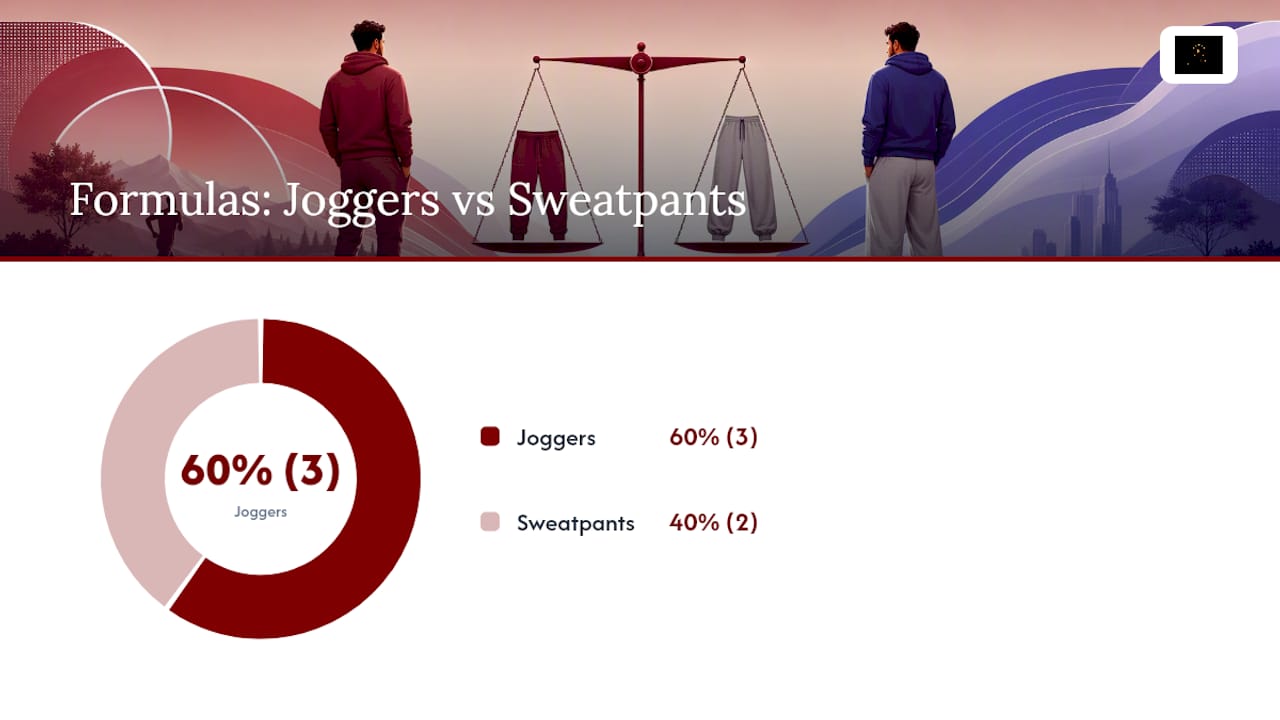
Both garments can look put-together. Both can also look like you rolled out of bed. The difference comes down to a formula, not luck.
For joggers, three combinations do the heaviest lifting:
- Smart-casual: tapered joggers in a solid, dark color, a fitted button-down or henley, and clean leather sneakers. Editors consistently point to structured tops as the fix that makes joggers wearable outside the gym.
- Travel: a French terry jogger, an oversized crewneck, and slip-on sneakers, built entirely around comfort over hours of sitting.
- Athleisure: a tech-fabric jogger, a fitted tee, and a bomber or track jacket, kept intentional through color matching rather than mismatched gym pieces.
For sweatpants, two formulas cover most situations:
- At-home cozy: oversized fleece sweatpants with a cropped hoodie or fitted tee, no need to dress it up further.
- Elevated loungewear: straight-leg sweatpants in a heavier, structured fabric, paired with a fitted jacket and clean sneakers, which is the formula that makes loungewear work outside the house instead of just on the couch.
Proportion is the rule most people skip. A loose top with tapered joggers balances out; a loose top with already-loose sweatpants just reads as sloppy. Keep one half of the outfit fitted, and the color palette simple, ideally two tones plus a neutral, and you avoid what stylists call the "matching tracksuit trap." For public outings, neutral colors and minimal graphics keep either piece from reading as pajamas. Casual dress codes for evening plans work the same way; dressing joggers or sweatpants up for a night out still comes down to fit and structure over fabric alone.
Buying Checklist: What to Check Before You Commit
A few minutes checking these details saves you from a pair that looks right in photos and wrong on your body.
- Fabric weight. Heavier ounces per yard mean more warmth and less breathability. Light weights favor movement and travel.
- Taper. Try them on and sit down. If the knee area bunches, the taper is too aggressive for your build.
- Cuff durability. Sewn ribbed cuffs outlast simple elastic bands, especially through repeated washing.
- Waistband. A drawstring plus elastic combo holds up better over time than elastic alone.
- Pocket security. Zippered pockets matter for travel and errands; open pockets are fine strictly for lounging.
- Return policy. Fit varies enough between brands that a flexible return window is worth checking before you buy.
Shopping online adds one more layer. Product photos rarely show how a fabric drapes when you sit, so check the material description for fiber content and weight, not just the marketing copy. A listing that says "soft fleece" without specifying cotton content or ounce weight is usually hiding a thinner, lower-quality fabric. Red flags worth walking away from: vague fabric descriptions, no return policy listed, and stock photos that don't show the cuff or waistband up close.
Kenny Wade's Take on Getting This Right
Most guides treat joggers and sweatpants as interchangeable comfort wear, and that's where people get it wrong. The garment you choose sends a signal before you say a word, and that signal changes depending on the cut, the fabric, and where you're headed. I built Kenny Wade's World around that idea: comfort and style are not opposites, they're a fit problem waiting to be solved.
The mistake I see most often is people buying based on softness alone. Softness matters for a Sunday on the couch. It matters far less at an airport gate or on a coffee run, where taper, hem, and color do the actual work of looking intentional. Modern joggers built in better fabrics can move like tailored trousers, which is exactly the gap between what most people expect from a jogger and what a well-made one actually delivers.
My advice stays simple: match the fabric to the activity first, the fit to your body second, and the color to wherever you're actually going. Skip that order and you end up with a closet full of pants that only work in one room of your house.
— Kenny Wade
Where to Find Joggers and Sweatpants Built for Both Comfort and Style
Everything covered in that buying checklist, fabric weight, taper, cuff durability, waistband construction, is exactly what Kenny Wade Clothing was built around. The line focuses on pieces versatile enough to move from an errand run to a casual dinner without a wardrobe change in between, blending music culture with fits designed to hold their shape wash after wash.
If you're shopping for a tapered jogger that works for travel or public wear, look for a mid-weight fabric with a defined cuff. If you want something closer to true loungewear, look for the heavier, relaxed-fit pieces built for warmth over structure. Either way, start browsing the current collection at Kenny Wade's World and pick the fit that matches how you actually spend your day.
Sources
For more outfit-specific guidance, see 12 sweatpants outfits that look styled, not sloppy and airport outfits that stay comfortable and sharp, both built around the same fit and fabric rules covered above.
- Sweatpants vs. joggers: what’s the difference? — Men’s Fitness
- Joggers vs Sweatpants: Key Differences and When to Wear Each — tasc Performance
- How to style joggers — Men’s Health
- How to wear joggers — FashionBeans
FAQ
Are joggers and sweatpants the same thing?
No. Joggers have a tapered leg and cuffed hem built for mobility, while sweatpants keep a looser, straighter cut and heavier fabric meant for warmth and lounging.
Do British people call sweatpants joggers?
Terminology varies by region, with terms like trackpants and jogging bottoms used across different English-speaking markets, but the functional distinction between a tapered, athletic-leaning pant and a loose, warmth-focused one holds regardless of the name used.
Are joggers thinner than sweatpants?
Usually, yes. Joggers typically use lighter, breathable, or moisture-wicking fabrics, while sweatpants rely on heavier cotton fleece for insulation and comfort.
Is it okay to wear joggers in public?
Yes, when the fit is tapered and the styling is deliberate. Pairing joggers with a structured top, clean sneakers, and neutral colors is what turns them from gym wear into an outfit you can wear on errands, travel, or even smart-casual settings.
Does Kenny Wade's World sell joggers and sweatpants?
Yes. Casual pieces designed around fit and fabric quality are offered, with pricing available directly on the site.