
Relaxed fit gives you extra room while keeping your body's natural shape visible; oversized fit is a deliberately larger, boxier silhouette built with dropped shoulders and added length. If you want comfort without losing your outline, go relaxed. If you're chasing that intentional, dropped-shoulder streetwear look, go oversized. The size differences that separate the two are described below.
TL;DR:
- Relaxed fit provides about 3 to 5 inches of chest ease and a shoulder drop of 1 to 2 inches, maintaining your body's natural shape.
- Oversized garments typically offer 6 to 10 inches of ease, with shoulder drops of 2 to 4 inches, and often extend to mid-thigh or longer.
- Sizing should be based on measurements like chest width, not labels; order your normal size for a true oversized look, or compare measurements to avoid returns.
- Fabric weight and care instructions significantly affect how a relaxed or oversized piece fits after washing, making sizing adjustments important for cotton fabrics.
- Proper styling involves balancing oversized pieces with slim bottoms and layering relaxed fits under structured outerwear for a balanced silhouette.
Table of Contents
- Relaxed Fit vs Oversized: The Core Definitions
- How Many Inches Separate Relaxed From Oversized?
- Sizing and Shopping: How to Avoid a Return
- Styling Relaxed and Oversized Pieces the Right Way
- Fixing a Fit Problem: When Alterations Actually Help
- Why I Design Around Ease, Not Just Size Charts
- Shop Relaxed and Oversized Pieces Without the Guesswork
- Sources
- FAQ
Relaxed Fit vs Oversized: The Core Definitions
The confusion between these two terms usually comes down to marketing, not measurements. Retailers slap "relaxed" and "oversized" on tags without much consistency, so knowing the actual construction differences matters more than trusting the label.
Relaxed fit sits between regular and oversized. It has a slight drop at the shoulder seam, moderate ease through the chest and torso, and it still follows the general contour of your body. You can see where your shoulders end and the sleeves begin. A relaxed tee skims your frame instead of hanging off it. Think of it as "regular fit that breathes."
Oversized fit is a different animal entirely. It's built with a dropped shoulder seam that sits well past your actual shoulder point, a boxy body that ignores your waist shape, and extra length and sleeve volume that make the whole piece read as intentionally large. According to the fit breakdown from WEAR2AM, oversized garments are engineered from a completely different block pattern than fitted or relaxed pieces, not just scaled up.
Here's how to spot the difference on a hanger or a product photo:
- Shoulder seam position: on your shoulder bone (regular), just past it (relaxed), or noticeably down your arm (oversized).
- Hem length on the model: hip length reads relaxed; anything drifting toward mid-thigh signals oversized.
- Sleeve opening: fitted to the wrist means regular or relaxed; a wide cuff that swallows the wrist means oversized.
- Overall silhouette: if you can trace a waist in the photo, it's relaxed. If the garment looks like a rectangle, it's oversized.
Once you know what to look for, you stop guessing from a product thumbnail and start reading the cut like a pattern maker would.
How Many Inches Separate Relaxed From Oversized?
Numbers cut through vague marketing language faster than adjectives do. A garment described as "relaxed" should sit roughly 3 to 5 inches beyond your actual chest measurement in ease. Oversized pieces typically run 6 to 10 inches or more, depending on how dramatic the brand wants the silhouette to look, based on measurement patterns outlined by WEAR2AM.

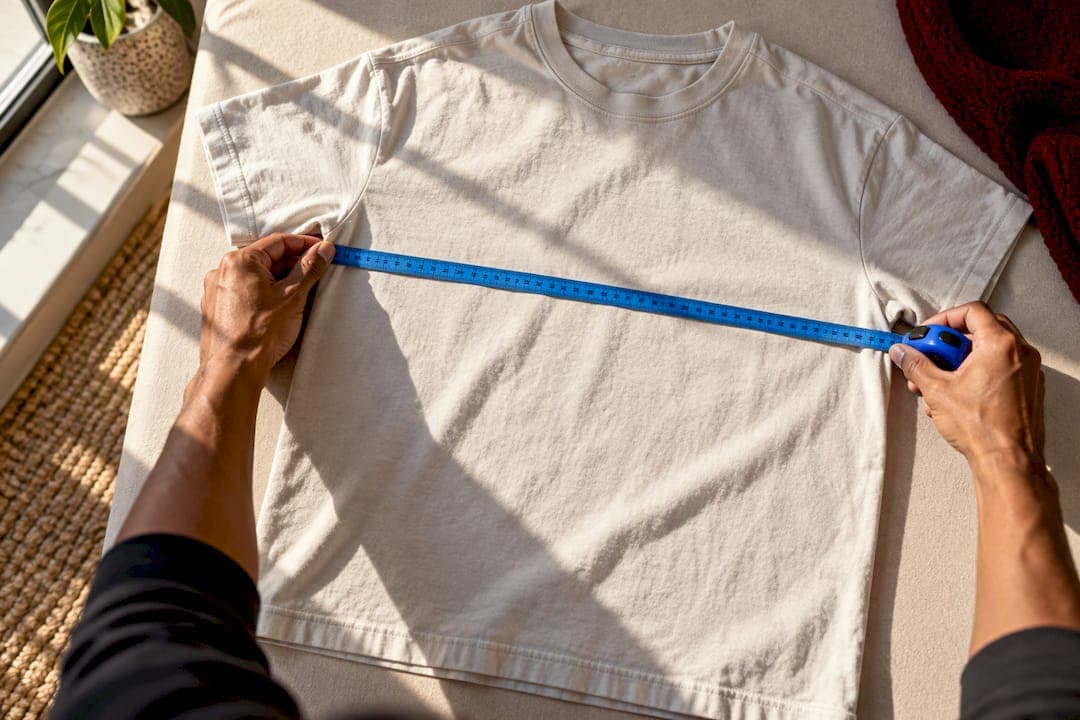
Pro Tip: Grab a t-shirt you already own and love the fit of. Lay it flat, measure pit to pit, and double that number. That's your chest measurement baseline. Compare every new product's listed chest width against it before buying.
Shoulder drop follows a similar pattern. Relaxed garments usually drop the shoulder seam 1 to 2 inches past your natural shoulder point. Oversized garments push that drop to 2 to 4 inches, according to construction notes from Trendy Beautys. That extra inch or two doesn't sound like much until you try one on. It's the difference between a shoulder seam that sits naturally and one that visibly droops down your bicep.
Length and sleeve length follow the same logic:
- Relaxed hem length: typically hits at or slightly below the hip.
- Oversized hem length: often extends toward mid-thigh, sometimes longer on hoodies.
- Relaxed sleeve length: ends at or near the wrist.
- Oversized sleeve length: frequently extends past the wrist, sometimes to mid-palm.
Here's a quick reference for comparing a product's stated measurements against your own:
| Measurement | Relaxed Fit | Oversized Fit |
|---|---|---|
| Chest ease over body measurement | 3–5 inches | 6–10+ inches |
| Shoulder drop past natural shoulder | 1–2 inches | 2–4 inches |
| Hem length | Hip level | Mid-thigh or longer |
| Sleeve length | At the wrist | Past the wrist |
To use this table with an actual product page, take the listed "chest width" (usually measured flat, pit to pit) and multiply by two. Subtract your own chest measurement. If the difference lands in the 3 to 5 inch range, you're looking at relaxed. If it clears 6 inches, that's oversized territory. This one calculation eliminates most of the guesswork that leads to returns.
Sizing and Shopping: How to Avoid a Return
Sizing for relaxed and oversized garments follows opposite instincts, which is exactly why so many people order the wrong size. For a garment already labeled and cut as oversized, order your normal size. The pattern already builds in the dropped shoulder and extra ease. Sizing up on top of that usually pushes the proportions past what the designer intended, according to fit guidance from YourSizer. You end up with a shoulder seam sliding down your elbow and sleeves you have to roll three times.
Sizing up only makes sense when a brand's "regular" or "relaxed" cut runs closer to a slim block than you'd like, and you want extra room without buying a piece that's structurally oversized. In that case, one size up in a relaxed style often lands closer to what a true oversized cut delivers, although the shoulder drop still won't match.
Before you check out, run through this list on every product page:
- Chest width, measured flat pit to pit, compared against your own doubled measurement.
- Shoulder seam placement, either stated in inches or visible in a flat-lay photo.
- Model height and the size they're wearing, since most brands list this in the description.
- Fabric weight, often listed in GSM (grams per square meter). Heavier fabric drapes differently and holds an oversized shape better than lightweight cotton.
- Return policy, especially whether the brand covers exchanges for fit issues versus defects only.
Care labels matter more than people think. U.S. regulations require every garment to carry specific care instructions covering washing and drying, and those instructions directly affect how a garment fits after the first wash. Cotton tees commonly shrink 2 to 5 percent on that first wash cycle. On a relaxed fit with only 3 to 5 inches of ease, that shrinkage can noticeably tighten the fit. On an oversized piece with 8 or more inches of room, the same shrinkage barely registers. If you're buying relaxed and the fabric is 100% cotton, consider sizing up slightly or washing cold and hanging to dry the first time. Our t-shirt sizing guide walks through the five measurements worth checking before you commit to a size.
Styling Relaxed and Oversized Pieces the Right Way
Fit rules only matter once you're putting together an actual outfit. The single most useful rule: oversized pieces work best as the outer layer, while relaxed pieces layer well underneath structured jackets or coats without adding bulk.
That's because a relaxed tee or sweater has enough ease to move comfortably but not so much that it bunches under a blazer or denim jacket. An oversized hoodie, on the other hand, needs to be the visual statement. Throw a fitted jacket over an oversized hoodie and you lose the entire point of the silhouette.

Balance comes down to proportion. Pair an oversized top with something narrower on the bottom, slim jeans, straight-leg trousers, or leggings, so you're not drowning in volume from head to toe. Relaxed fits are more forgiving here and work with nearly anything: wide-leg pants, joggers, denim, even tailored shorts.
Body type changes the math slightly:
- Shorter frames benefit from cropping the oversized silhouette shorter (hip length rather than mid-thigh) to avoid looking swallowed by fabric.
- Taller frames can lean into the longer, boxier oversized length without it reading as sloppy, since there's more vertical space to fill.
- Broader shoulders often look best in relaxed fits, since an oversized dropped shoulder can exaggerate width past what's flattering.
A few quick outfit formulas: for casual weekend wear, an oversized graphic tee with straight-leg denim and low sneakers. For smart-casual, a relaxed button-down layered under a structured overcoat with slim trousers. For streetwear, an oversized hoodie under an open jacket with joggers and chunky sneakers. Our sweatpants outfit guide has more combinations for pairing loose tops with structured bottoms, and the streetwear formulas piece covers oversized layering in more depth.
Fixing a Fit Problem: When Alterations Actually Help
Not every fit issue means you need to return the garment. Some problems are a quick tailor visit away from being solved, and knowing which ones saves you money and shipping time.
Common, affordable fixes include:
- Narrowing the shoulder seam on a relaxed piece that runs slightly too big through the shoulders.
- Taking in the side seams to remove excess width through the torso without touching the shoulders or length.
- Shortening the hem or sleeves when the length is close but not quite right.
These work because they adjust ease incrementally rather than rebuilding the garment's structure. Pattern-alteration guidance from NMSU Cooperative Extension treats ease as a deliberate design choice, which means a tailor can remove some of it without destroying the garment's intended drape.
Where alterations stop making sense: don't try to narrow the dropped shoulder on a true oversized hoodie or jacket. That seam placement is structural to the whole silhouette, and moving it usually distorts the sleeve cap and collar in ways a tailor can't cleanly fix. The same goes for shortening an oversized piece by more than an inch or two. Cut off too much length and you've turned an intentional boxy silhouette into an ill-proportioned regular fit. If a garment needs more than 2 inches of adjustment anywhere near the shoulder or chest, it's usually cheaper and safer to return it and size differently than to alter it.
Why I Design Around Ease, Not Just Size Charts
Most fit guides treat relaxed and oversized like two points on the same scale. They're not. Relaxed is about giving your body room to move without hiding it. Oversized is about building a shape that exists somewhat independently of the body wearing it. Confusing the two is why so many people end up disappointed with an online order that technically matched their measurements.
What surprises people most is that oversized done well takes more precision, not less. A dropped shoulder seam that's off by half an inch reads as sloppy instead of intentional. That's the standard I hold pieces to: enough structure that the silhouette looks designed, not just large. Comfort and shape aren't opposites. They just require different amounts of ease depending on what you're going for.
If you're still unsure which category a piece falls into, check our guide to finding your correct size before you buy. Measuring first beats guessing every time.
— Kenny Wade
Shop Relaxed and Oversized Pieces Without the Guesswork
Some brands build relaxed and oversized pieces with the actual construction differences in mind, not just a size label slapped on a regular cut. That means when you see "oversized" on a hoodie in a shop, the shoulder drop and chest ease are built into the pattern, not left for you to fake by sizing up two sizes.
Before you order, pull up the product's chest-width measurement and compare it against your own using the doubled pit-to-pit method covered earlier in this guide. If you're between sizes and want more of a relaxed drape than a boxy oversized shape, our size charts note where a piece runs closer to true oversized versus a lighter relaxed cut. Browse the full Kenny Wade Clothing collection to compare relaxed tees, oversized hoodies, and everything between, and check the product page for care instructions before your first wash. If a piece doesn't sit right once it arrives, review the return details listed at checkout before you decide whether a quick alteration or an exchange makes more sense.
Sources
The measurement rules in this guide didn't come out of nowhere. A few sources are worth keeping handy if you want to double-check fit decisions on your own:
- Clothing Construction and Fitting: Alteration Guidelines — NMSU Cooperative Extension (C228)
- Care Labeling of Textile Wearing Apparel — Code of Federal Regulations (16 CFR part 423)
- Oversized vs Relaxed Fit: The Actual Difference Explained — WEAR2AM Blog
- Oversized hoodies that actually fit the way they’re supposed to — Trendy Beautys
FAQ
Does Relaxed Fit Mean the Garment Runs Big?
Not exactly. Relaxed fit means the garment has moderate extra room, typically 3 to 5 inches of chest ease beyond your body measurement, while still following your body's general shape. It runs looser than a regular or slim fit, but nowhere near as large or boxy as a true oversized cut.
Should I Size Up or Down for Relaxed Fit?
Order your normal size for a relaxed fit garment, since the extra room is already built into the pattern. Only size up if the brand's relaxed cut runs notably tight compared to your usual size, or if you specifically want extra drape.
Which Is Better, Loose Fit or Relaxed Fit?
Neither is objectively better since they serve different goals. "Loose fit" is often used interchangeably with relaxed or even oversized depending on the brand, so check the actual chest ease and shoulder drop measurements rather than trusting the label name alone.
What Size Should I Get if I Want It Oversized?
Order your normal size when the garment is specifically designed and labeled as oversized, since the dropped shoulder and extra length are already engineered into that size. Sizing up on a regular fit garment adds bulk but rarely reproduces the proportional shoulder drop of a true oversized pattern, based on construction notes from Trendy Beautys.