
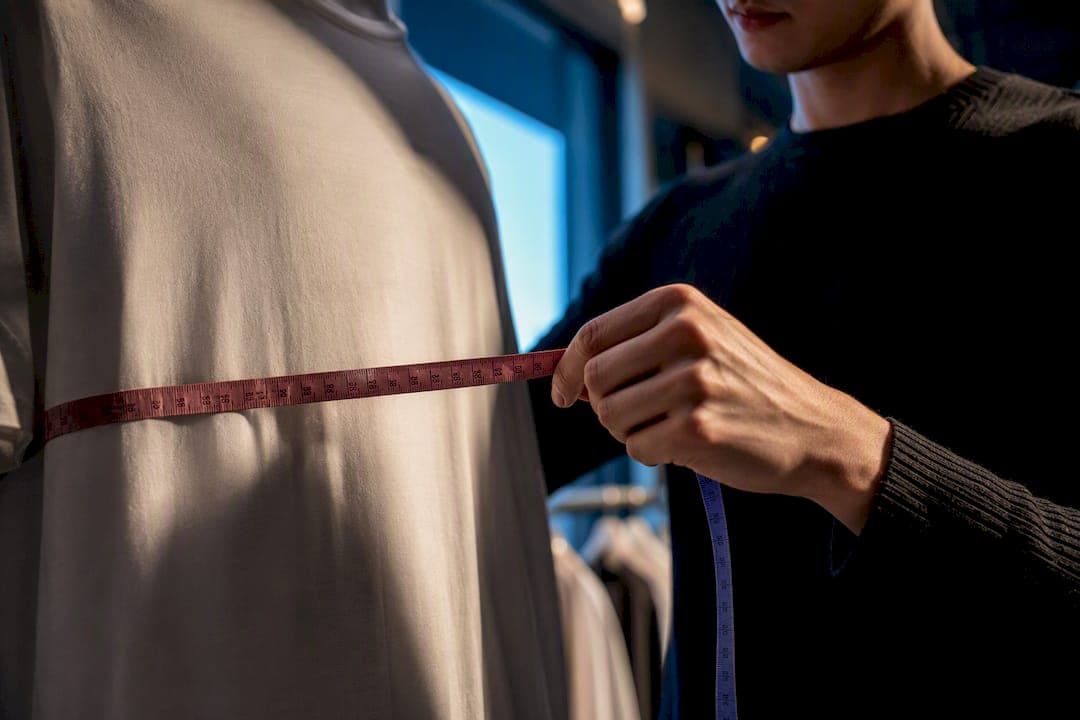
Measure your chest and body length before you look at a single size chart, then pick your fit style (slim, regular, relaxed, or oversized) before matching those numbers to a garment's flat measurements. That order matters more than the letter on the tag. If you're stuck between two sizes, size up when the fabric is heavy cotton or when you want a relaxed, oversized look. Get those three steps right and you'll rarely need to return a shirt for fit.
TL;DR:
- Choosing the correct size depends on measuring your chest and body length accurately before matching to garment measurements, not relying on size labels.
- Garment measurements are taken flat and can vary between brands, with chest width doubling to find full chest circumference.
- Fit style (slim, regular, relaxed, oversized) adds different amounts of ease, significantly changing the shirt's final fit on the same body size.
- Fabric content influences shrinkage; 100% cotton shirts shrink 3 to 5 percent after washing, so size up if a perfect fit is desired post-wash.
- Cross-check flat measurements against your preferred shirts to avoid sizing mistakes, especially when ordering for groups or layering.
Table of Contents
- What Do T-Shirt Size Charts Actually Measure?
- How Do You Measure Yourself for a T-Shirt?
- What's the Difference Between Slim, Regular, and Relaxed Fit?
- Do Unisex, Men's, Women's, and Youth Sizes Match Up?
- How Much Do T-Shirts Shrink in the Wash?
- Common T-Shirt Sizing Mistakes to Avoid
- Why Trust This T-Shirt Sizing Guide?
- Why Fit-First Sizing Actually Matters to Me
- Ready to Shop With Confidence?
- Sources
What Do T-Shirt Size Charts Actually Measure?
A size chart is only useful once you know what it's measuring: your body, or the garment itself. Most brands publish garment measurements, which are taken with the shirt laid flat, not wrapped around a person. That distinction trips up more shoppers than any other part of sizing.
Here's a general reference point. Men's and unisex mediums typically fit a 38 to 40-inch chest, with a flat chest width (armpit to armpit) of roughly 20 to 21 inches. Women's mediums run closer to a 35 to 37-inch chest with a shorter body length and narrower shoulders. Chest measurement alone accounts for around 80% of whether a shirt fits, which is why it's the first number you should nail down.
- Men's/unisex S to XL: roughly 34 to 44 inch chest range, flat width around 18 to 23 inches
- Women's XS to XL: roughly 31 to 41 inch chest range, shorter torso length throughout
- Tall sizes (LT, XLT): add 2 to 3 inches of body length while keeping chest width the same as the standard size
- Extended sizes (2XL and up): chest width typically increases by about 2 inches per size, length by 1 to 1.5 inches
To convert a flat garment measurement into a full-body chest number, double it. A shirt with a 20-inch flat chest width has a 40 inch full chest. Brands vary slightly (a Bella+Canvas medium runs a bit slimmer through the body than a Gildan medium, even though both are labeled "M"), which is exactly why the flat number matters more than the letter.
How Do You Measure Yourself for a T-Shirt?
Grab a soft tape measure and measure over a thin t-shirt or bare skin, never over a bulky sweater. Stand naturally, don't puff your chest out, and round up to the nearest half inch if you're between numbers.
- Chest/bust: Wrap the tape around the fullest part of your chest, under your arms and across your shoulder blades, keeping the tape level and snug but not tight.
- Waist: Measure around your natural waistline, usually just above your belly button.
- Hips: Wrap the tape around the widest part of your hips and backside.
- Body length: Measure from the top of your shoulder (near the neck) straight down to where you want the hem to fall.
- Sleeve length: Measure from the shoulder seam to where you want the sleeve to end.
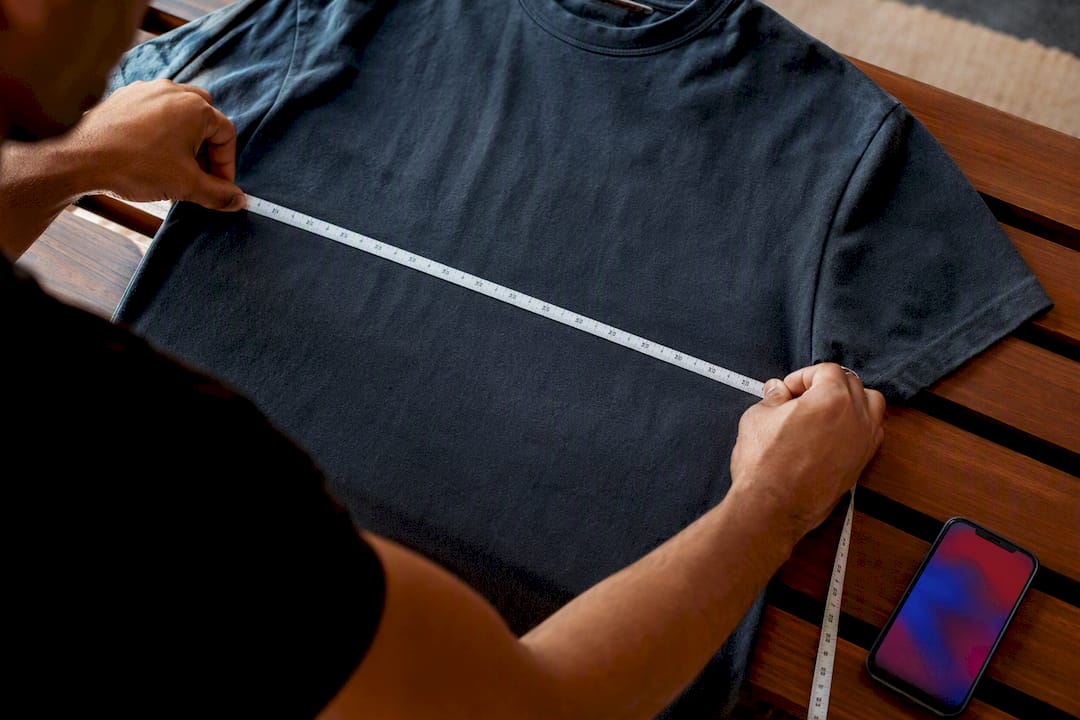
If you'd rather skip your own body entirely, grab a t-shirt that already fits the way you like and measure it flat instead. Lay it on a table, smooth out the wrinkles, and measure armpit to armpit for chest width, then from the shoulder's high point straight down to the hem for length. Compare those numbers directly to the brand's own garment chart, and check our step-by-step measurement guide if you want visuals to go with it.
Pro Tip: Keep a running note of your favorite tee's flat measurements on your phone. Every time you shop a new brand, you compare those two numbers instead of guessing from the size label.
What's the Difference Between Slim, Regular, and Relaxed Fit?
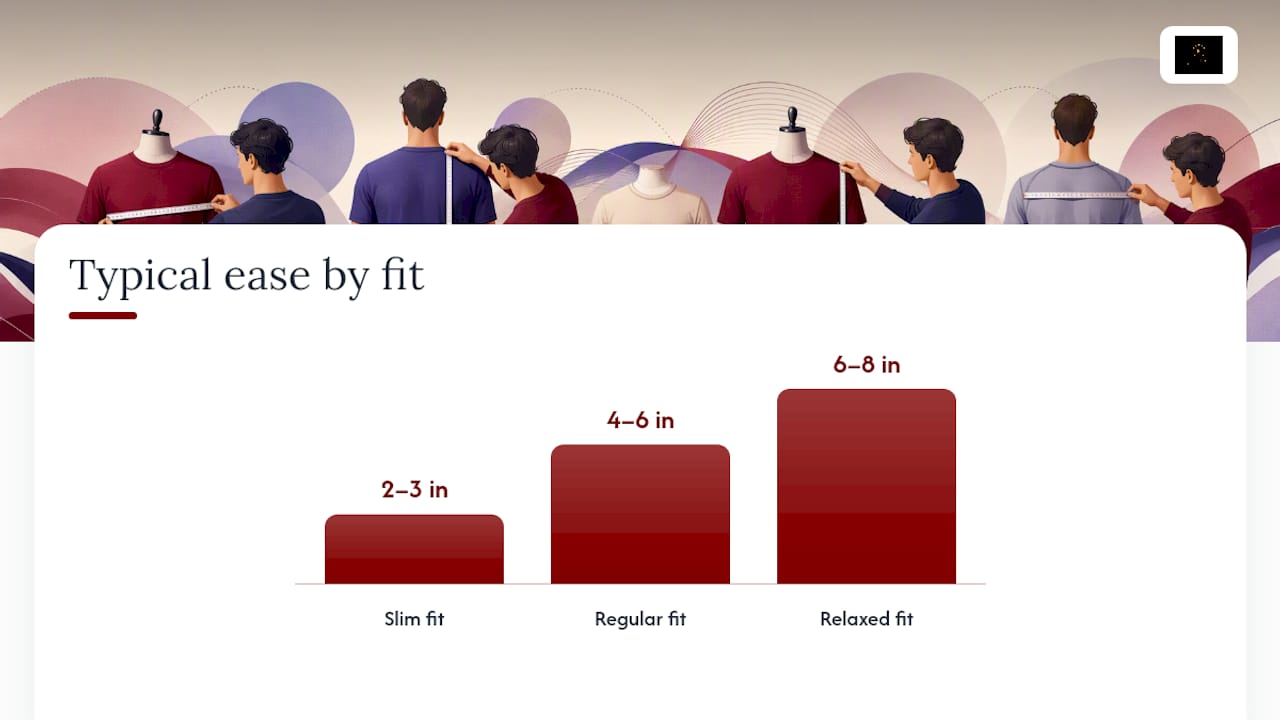
Ease is the extra room a garment gives you beyond your actual body measurement, and it's the single biggest reason two shirts labeled "Medium" can feel completely different on the same person. A slim fit hugs the body; an oversized fit drapes well past it. Neither is more "correct" than the other. It comes down to what silhouette you're after.
Here's how the ease typically breaks down at the chest:
- Slim fit: 2 to 3 inches of ease
- Regular/classic fit: 4 to 6 inches of ease
- Relaxed fit: 6 to 8 inches of ease
- Oversized fit: 8 or more inches of ease
Say your chest measures 40 inches. In a slim fit, the shirt's finished chest lands around 42 to 43 inches. In regular fit, expect 44 to 46 inches. Go relaxed and you're looking at 46 to 48 inches, and oversized pushes past 48. Same body, four completely different shirts.
The rule of thumb: decide on the silhouette you want first, then find the labeled size whose garment chest matches your body chest plus that fit's typical ease. Reversing the order (picking a size, then hoping the fit works out) is where most sizing regret starts.
Do Unisex, Men's, Women's, and Youth Sizes Match Up?
Unisex tees are built on a men's block, which means the chest, shoulders, and sleeves run wider and boxier than most women's-specific cuts. If you're shopping unisex and want a tailored, closer fit, size down one letter from what a women's chart would recommend. Want a casual, relaxed drape instead? Keep the size the conversion chart gives you.
- Unisex Medium fits closer to a women's Large in shoulder width and armhole depth
- For a fitted unisex look, size down; for relaxed or oversized, stay true to size
- Youth sizes are shorter proportionally, not just narrower, so a Youth XL is not interchangeable with an Adult Small despite similar chest widths
- Always compare flat body length between youth and adult charts before assuming a size "graduates" cleanly
- Tall (LT) sizes add length only. Chest width stays identical to the standard version of that size
Teens transitioning from youth to adult sizing should measure body length specifically, since that's where the biggest mismatch happens.
How Much Do T-Shirts Shrink in the Wash?
Fabric content decides how much your size chart math will still be true after laundry day. A 100% cotton tee typically shrinks 3 to 5% on its first wash, which on a 40 inch chest can mean an inch or more of tightening. Poly blends and anything with elastane shrink far less and often add stretch, which is why blended tees can afford a closer, more tailored fit right out of the box.
- If a shirt is 100% cotton and you want zero size drift, size up one from your true measurement
- Blends (cotton/poly, tri-blend) hold their shape better and rarely need a size adjustment
- Wash cold, skip the high-heat dryer setting, and air-dry when possible to limit shrink
- Check the fabric type before you buy, not after the first wash
Common T-Shirt Sizing Mistakes to Avoid
Most sizing regrets trace back to a handful of repeatable mistakes, and nearly all of them are avoidable once you know what to check.
- Trusting the label over the tape. An "M" from one brand can run a full size smaller than another's. Always cross-check the actual chest measurement.
- Ignoring fabric and shrink notes. A cotton tee that fits perfectly off the shelf may run tight after two washes.
- Ordering youth sizes for a short adult without checking length. The chest might match, but the body length rarely does.
- Guessing on group orders. For team or event shirts, collect real measurements rather than assuming everyone knows their size, and order one or two samples first if the run is large.
- Sizing for layering as an afterthought. If the tee goes under a jacket or hoodie regularly, size up slightly or lean relaxed rather than slim.
When you're stuck between two sizes, let intended use break the tie: tailored and layering-free favors sizing down, bulkier layering or a laid-back look favors sizing up.
Why Trust This T-Shirt Sizing Guide?
Kennywadesworld built its product pages around one idea: you shouldn't have to guess. Every listing includes flat garment measurements and fit notes, not just a size label, because that's the only information that actually predicts fit across different shirt styles.
- Kenny Wade's World designs stylish casual wear that blends comfort with versatility across every day and dressed-up occasions
- The brand ties fashion to music, building a community around both Kenny Wade's artistic work and the clothing itself
- Kenny has written extensively on fit and fabric, including a detailed sizing walkthrough and a broader breakdown of styles, materials, and care
That measurement-first approach isn't a marketing angle. It's the same method laid out in every section above.
Why Fit-First Sizing Actually Matters to Me
I've watched enough returns come back over the years to notice a pattern: almost nobody returns a shirt because the chest was wrong. They return it because they picked "Medium" out of habit and got a fit they didn't expect. That's why every product page we publish leads with flat measurements instead of just a letter.
For merch drops, I lean people toward relaxed or oversized fits because that's how most people actually want to wear a graphic tee. For retail-style basics, I'll point them toward regular or slim depending on how they described the fit they wanted. Neither is right or wrong. It's just which silhouette matches the moment you're dressing for.
— Kenny
Ready to Shop With Confidence?
Kennywadesworld's own product pages solve the exact problem this guide walks through: every tee lists flat garment measurements and fit notes right next to the size selector, so you're never guessing between a chart on our site and a chart from somewhere else. That's a real advantage over shopping brands that only post a vague size label with no chest or length numbers attached.
Before you check out, pull up the product's measurement table and compare it against your own chest and body length numbers from the steps above. If you're still torn between two sizes, ordering one to try is a low-risk way to confirm the fit before you commit to a full order. While you're browsing, check out Kenny Wade's music sales resources if you're curious how the fashion and music sides of the brand connect, then head back to the shop to place your order with the right size already dialed in.
Sources
- Sizechart
- T-Shirt Size Chart: The Complete Sizing Guide for Every Brand – Arklavo
- How to Size Your Custom T-Shirt Order – T-Shirt Elephant