
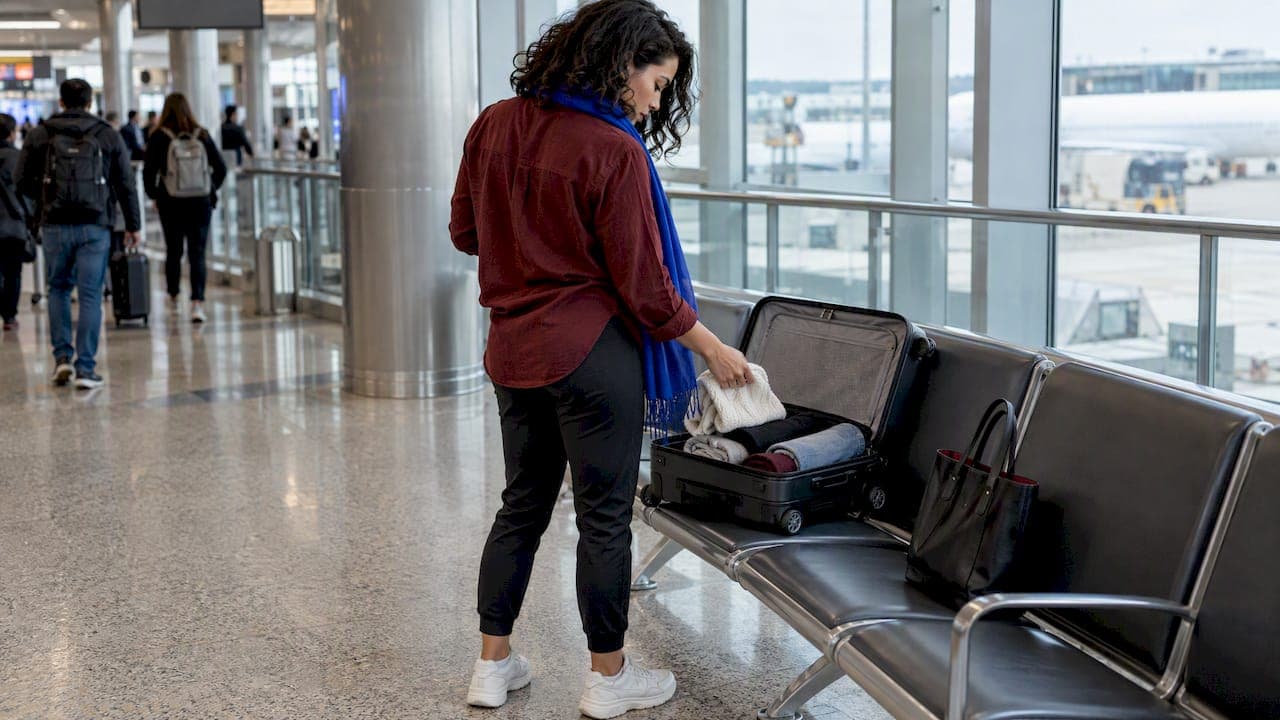
A soft tee, stretchy tailored pants, supportive sneakers, and a lightweight layer make up the simplest travel outfit that works for most trips. Built around three rules: pack versatile neutrals you can mix freely, prioritize layers that pack flat, and choose shoes with real support. That combination carries you from security line to sightseeing without a wardrobe change.
TL;DR:
- Supportive sneakers are essential for most travel outfits because they combine comfort, functionality, and a casual polished look.
- Packing a small capsule wardrobe with three tops, three bottoms, and two layers maximizes versatility and minimizes decision fatigue during trips.
- Layering performance fabrics like quick-dry and moisture-wicking knits helps maintain a neat appearance and comfort after hours in a bag or during long walks.
- Slip-on shoes became more convenient after the TSA shoes-off policy ended in July 2025, easing security checks for travelers.
- Including modest, fully-covered clothing is advisable for insect-prone areas and conservative destinations to stay safe and respectful of local norms.
Table of Contents
- 5 travel outfit formulas to copy for any trip
- How to build a compact travel capsule
- Layering, fabrics, and fit for comfort and polish
- Shoes, bags, and accessories that make or break comfort
- Health and safety clothing tips that change what you pack
- Kenny Wade styling playbook: tested outfit formulas
- Choosing travel outfits for different body types and sizes
- Dress codes and cultural expectations at your destination
- Author's note: the simplicity of a travel uniform
- Kenny Wade travel-ready pieces and quick links
- FAQ
- Sources
5 travel outfit formulas to copy for any trip
Different trips call for different versions of the same idea: comfortable fabric, a little structure, shoes you can actually walk in. Here are five formulas worth saving.
- Airport uniform: stretchy tailored pants or joggers, a soft tee, a bomber or lightweight jacket, and sneakers. This is the look that gets you through screening and a layover without looking like you slept in it.
- Long-haul flight: the same soft layers as the airport look, with the option to add compression socks and swap sneakers for slip-on supportive shoes you can remove easily in your seat.
- City sightseeing: a neutral dress or midi skirt, a light cardigan, and comfortable sandals or sneakers for a day of walking between neighborhoods.
- Resort or beach day: a lightweight dress or matching co-ord, a cover-up, and packable sandals that survive sand and a beach bag.
- Active or outdoor: a quick-dry top, convertible pants or shorts, and sturdy walking shoes for hikes or trips with more movement than sitting.
A travel stylist writing in Condé Nast Traveler describes a near-identical formula of a white tee, polished black pants, comfortable sneakers, and a lightweight jacket as a repeatedly tested combination for long flights and airport travel. The same piece notes that supportive sneakers are foundational to most travel outfits because they combine comfort, walking performance, and a casual-polished look.
Pro Tip: Pick one formula as your default and repeat it across the trip in different colors. It cuts decision fatigue and still reads as five different outfits in photos.
How to build a compact travel capsule
A capsule wardrobe is a small set of pieces chosen to combine into many outfits, which is exactly what a carry-on needs; for ideas on coordinating group travel looks and packing strategies, see Girls Trip Matching Travel Outfits for inspiration. A simple starting point: 3 tops, 3 bottoms, 2 layers, 1 dress, and 2 pairs of shoes. Add a piece or two for longer trips or very different climates, but resist doubling the whole list.
Carry-on versus checked bags changes what you prioritize:
- Keep your outfit for arrival day, any medication, and one layer in your carry-on in case checked luggage is delayed.
- Pack heavier items like jeans or boots in checked bags when you have one, and save carry-on space for pieces you will want on hand.
- Use TSA's travel tips page to check what is allowed in carry-on versus checked bags before you pack toiletries or accessories.
To keep things wrinkle-free, roll knits and fold structured pieces, and pack a small pouch of travel-size detergent for a sink wash mid-trip. Hanging a wrinkled piece in the bathroom while you shower often relaxes the fabric enough to wear it right away.
Layering, fabrics, and fit for comfort and polish
The fabric you choose matters as much as the outfit itself. Performance knits, jersey blends, and treated synthetics resist wrinkles and still look put together after hours folded in a bag, which is why they show up in nearly every tested travel formula.
Fit choices matter just as much as fabric:
- Choose cropped or ankle-length pants so nothing drags on escalators or airport floors.
- Look for forgiving waistbands, pull-on styles, or soft elastic that handles a long sit without digging in.
- Size jackets slightly roomy so they layer easily over a sweater without pulling at the shoulders.
Functional features are worth checking labels for too: moisture-wicking fabric keeps you comfortable through a sweaty terminal walk, UPF-rated pieces protect you on sunny excursions, and quick-dry fabric means a sink-washed top is ready to wear the next morning.
Shoes, bags, and accessories that make or break comfort
Footwear and bag choices decide whether a travel day feels easy or exhausting. Supportive sneakers work for most trips, and slip-on styles save time at security checkpoints where you may still need to remove shoes depending on the line.
- Choose sneakers with real arch support over fashion flats for any day involving more than a short walk.
- Compression socks in a moderate range can help reduce swelling and support circulation on long flights, based on travel-medicine recommendations.
- Look for a bag with a trolley sleeve, zip compartments, and RFID-safe pockets to keep documents secure.
- Add one hands-free option, like a crossbody sling or small backpack, for days you need both hands free.
Health and safety clothing tips that change what you pack
Two recent updates directly affect outfit planning. In July 2025, the U.S. Department of Homeland Security ended the long-standing shoes-off policy at domestic airport security checkpoints, according to a TSA press release, meaning slip-on shoes are now a convenience rather than a requirement at most checkpoints.
For trips to insect-prone destinations, the guidance shifts toward coverage and treated fabric:
- The CDC recommends long-sleeved shirts, long pants, boots, and EPA-registered insect repellent to reduce bites.
- Permethrin-treated clothing stays protective through multiple washes and should never be applied directly to skin.
- Pack a lightweight long-sleeve shirt and EPA-registered repellent as standard items for warm, buggy climates.
Kenny Wade styling playbook: tested outfit formulas
Comfort-first styling means choosing stretch and movement before anything else, then layering for polish. Our airport outfits and road trip outfits posts build on that same principle: one base outfit, swapped layers.
- Look one: soft tee, stretch tailored pants, sneakers, and a light jacket, built for the airport-to-arrival stretch.
- Look two: a relaxed sweatshirt paired with joggers for a long drive or red-eye flight, styled the way we break down in our sweatpants outfits guide.
Pro Tip: Choose one jacket that works over both a dress and joggers. It doubles your outfit options without adding a single extra bag item.
Choosing travel outfits for different body types and sizes
The goal is fit that moves with you, not a specific silhouette. Stretch fabrics with some structure, like a ponte-knit pant or a wrap dress, tend to flatter a wider range of body types because they adjust to how you sit and walk rather than fighting your shape.

If you carry more through the midsection, a higher-rise pant with a soft waistband avoids digging in during a long flight, while a slight A-line dress skips clinging fabric altogether. If you're petite, cropped or ankle-length pants keep proportions in check and prevent dragging hems from getting caught on luggage wheels or escalators. Taller travelers often do better in midi lengths and tunic tops that avoid the too-short look that can happen with standard sizing.
Layering also works differently depending on your frame. A fitted base layer under a roomier jacket gives structure without bulk, while an oversized cardigan over a simple dress adds warmth without hiding your shape entirely. The common thread across every body type is the same: prioritize where the fabric stretches and where the waistband sits, since those two details decide whether an outfit still feels good after six hours of travel.
Dress codes and cultural expectations at your destination

Comfort matters less if an outfit is out of step with local norms, so it pays to check expectations before you pack. Religious sites in many countries ask visitors to cover shoulders and knees, and some require a head covering for women specifically, so a lightweight scarf and a knee-length skirt or pants are worth including regardless of climate.
Beach towns tend to be relaxed almost everywhere, but cover-ups are often expected the moment you step off the sand and into a restaurant or shop. City centers in more conservative regions may expect looser, more covered clothing even in hot weather, which is where breathable long-sleeve tops and wide-leg pants earn their space in a suitcase.
A quick search for your specific destination's dress norms before you go takes a few minutes and avoids an uncomfortable moment at a temple, mosque, or local event. When in doubt, packing one modest, fully-covered outfit alongside your usual rotation solves the problem without reworking your whole wardrobe.
Author's note: the simplicity of a travel uniform
I pack the same core outfit for almost every trip now: soft pants, a plain tee, one jacket. It sounds boring on paper, but it means I'm never standing in a hotel room second-guessing a packing choice. Try repeating one formula on your next trip before you build anything more complicated.
— Kenny Wade
Kenny Wade travel-ready pieces and quick links
Comfortable fabric and a packable fit matter more than anything else on a trip, which is important for travel clothing. Pieces should be built to move with you through a travel day and still look intentional once you land.
- Browse Kenny Wade Clothing for pieces built around stretch, comfort, and easy layering.
- Start with one jacket and one pair of stretch pants, then build the rest of your travel capsule around them.
FAQ
What is the best outfit to wear on a plane trip?
A soft tee, stretchy tailored pants, supportive sneakers, and a lightweight jacket work for most flights. This combination handles security lines, long sitting, and temperature swings in the cabin without sacrificing comfort.
What is the 3-3-3 rule for travel packing?
The 3-3-3 rule is a packing approach built around three tops, three bottoms, and three pairs of shoes, aimed at keeping a carry-on wardrobe small and mixable. It works as a starting point rather than a strict limit, since trip length and climate often call for small adjustments.
What is the best outfit to wear when traveling?
The most reliable formula pairs a soft top with stretch tailored pants, supportive shoes, and one packable layer, a combination tested repeatedly for long flights and airport travel. It adapts easily by swapping the top or layer for the climate at your destination.
What is the 3-3-3 rule for clothes?
In packing terms, the 3-3-3 rule usually refers to three tops, three bottoms, and three pairs of shoes built to mix into several outfits. Some travelers apply a similar ratio to layers and accessories, so definitions vary slightly depending on the source.
Sources
- TSA press release: DHS ends shoes-off travel policy
- Mosquitoes, ticks, and other arthropods | Yellow Book | CDC
- About permethrin-treated clothing and gear | CDC
- I've perfected the long-haul flight travel outfit — and it doesn't involve sweatpants | Condé Nast Traveler
- Travel tips | TSA