
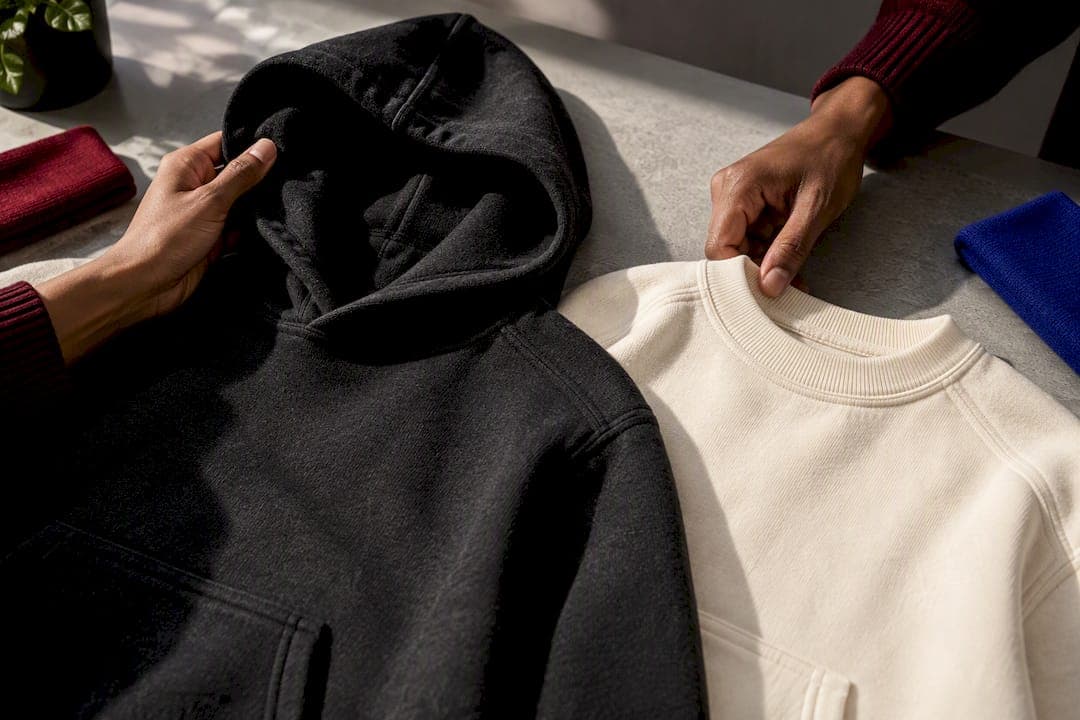
A hoodie is a hooded sweatshirt, and a sweatshirt is the broader hoodless category that includes crewnecks and pullovers. Pick a hood when you want extra coverage and a casual, layered look; pick a crewneck when you want a cleaner line under a jacket or collared shirt. The rest comes down to fabric, fit, and where you're headed.
TL;DR:
- Hoodies are better suited for cold or wet weather due to their extra coverage and quick hood access, especially if lined or made from heavier fabric.
- Crewnecks offer a cleaner silhouette ideal for indoor, office, or layered looks, and they do not carry the cultural baggage associated with hoods.
- Fabric weight, lining, and fit are more important for warmth and comfort than simply choosing between hoodie or sweatshirt styles.
- Combining layering and proportion, such as fitting a crewneck under a jacket or balancing oversized hoodies with slim pants, enhances style without overthinking.
- Always check fabric weight and construction details before buying, and wash with cold water to protect prints and prevent shrinkage.
Table of Contents
- What actually separates a hoodie from a sweatshirt
- How hoodies and sweatshirts differ in daily use
- Matching the garment to the moment
- Styling both pieces without overthinking it
- What to check before you buy
- How Kenny Wade's World approaches hoodie and sweatshirt design
- A personal note on choosing between the two
- Where to find both styles done right
- Sources
- FAQ
What actually separates a hoodie from a sweatshirt
A sweatshirt is the umbrella term for any pullover or zip-up knit top built for warmth and comfort. A hoodie is simply a sweatshirt with an attached hood, so Wikipedia's entry on the hoodie treats it as a category within sweatshirts rather than a separate garment. Crewnecks, by contrast, are hoodless sweatshirts with a round collar that sits close to the neck.
Within hoodies, you'll find two closures worth knowing. Pullover hoodies slide over the head and typically carry a single kangaroo pocket across the front, while zip-up hoodies split that pocket into two separate side pockets, according to Printful's breakdown. Both are still hoodies. Fabric doesn't decide the label either: brushed fleece, French terry, and cotton jersey all show up in hoodies and sweatshirts alike. The hood is the only defining feature, which means a heavy fleece crewneck can run warmer than a thin hoodie despite the missing hood.

How hoodies and sweatshirts differ in daily use
Once you get past terminology, the real differences show up in how each garment behaves once you're wearing it.
- Neckline: a crewneck's round collar sits flat under a jacket or shirt, while a hood adds bulk at the back and shoulders that can bunch under structured outerwear.
- Pockets and closures: pullover hoodies use one kangaroo pocket, zip-ups split it into two, and most crewnecks skip pockets entirely, per Printful.
- Warmth: fabric weight, lining, and knit construction matter more than the hood itself, so don't assume a hoodie is automatically warmer than a sweatshirt.
- Style signal: hoods read as casual or athletic, while crewnecks lean cleaner and pair more easily with tailored pieces.
- Activity fit: hoods offer quick coverage for wind or light rain, while a lighter crewneck breathes better during movement.
The hood also carries a longer cultural story that shapes how people read it in different settings. The garment's rise from athletic gear to a streetwear and protest symbol is well documented, and that history still colors how a hoodie lands depending on the room, according to Smithsonian Magazine's coverage of the hoodie's design history. A crewneck carries none of that baggage, which is partly why it reads as the safer, more neutral choice in mixed company.
Matching the garment to the moment
Weather, activity, and venue should drive the choice more than personal habit.
- Cold or wet weather outdoors: reach for a heavier hoodie, lined if you can find one, since the hood adds coverage a crewneck can't match.
- Office-casual or indoor layering: a crewneck sweatshirt gives you a cleaner silhouette under a blazer or coat.
- Workouts and warmups: a lightweight French terry sweatshirt breathes better than a bulkier hoodie during movement.
- Travel and errands: a hoodie's pockets and quick hood coverage make it the more practical grab-and-go option.
None of these are fixed rules. A well-cut hoodie can still work in a casual office, and a heavyweight crewneck can handle a cold commute just fine. The point is to match fabric weight and silhouette to what you're actually doing that day, not to default to whichever one is closest to the door.
Styling both pieces without overthinking it
The easiest way to make either garment look intentional is to control proportion and layering.
- Layer a crewneck under a denim or wool jacket for a cleaner, slightly dressed-up casual look.
- Wear a hoodie under an unstructured overshirt or field jacket rather than under anything tailored.
- Balance an oversized hoodie with slimmer pants, and reserve a boxy crewneck for a similar high-low pairing.
- Stick to solid colors or small logos for a polished look, and save bold prints for the more casual hoodie side of your wardrobe.
Pro Tip: Skip the hood under a structured coat or blazer, it bunches at the collar and ruins the line; save hoods for casual jackets or no jacket at all.
What to check before you buy
Fabric names only tell part of the story, so it helps to know what's behind them. Brushed fleece runs warmer and heavier, French terry stays lighter and more breathable, and cotton jersey sits in between, according to background on polar fleece and the fabric distinctions Printful outlines.
- Check the fabric weight or gsm listed on the product page rather than trusting the product name.
- Look for lining details, drawstring quality, and zipper hardware if you're buying a zip-up.
- Wash hoodies and sweatshirts inside out in cold water to protect prints and embroidery.
- Skip the dryer's high heat setting, which shrinks fleece and cracks printed graphics over time.
How Kenny Wade's World approaches hoodie and sweatshirt design
Kenny Wade's World builds casual wear meant to hold up in real layering situations, not just on a hanger. The brand focuses on comfortable, versatile pieces that work across different occasions, from lounging to going out. That approach also ties into Kenny Wade's music, giving customers a wardrobe that connects to the artist's broader creative identity.

A personal note on choosing between the two
I default to a crewneck when I need to look put together and a hoodie when comfort wins the day. Most of my week comes down to that trade-off: how much coverage I need against how clean I want the layering to look.
— Kenny Wade
Where to find both styles done right
Some clothing lines carry hoodies and crewneck sweatshirts built around a comfort-first, versatile approach.
Browse the Kenny Wade Clothing collection to find your next layering piece.
Sources
- Sweatshirt vs. hoodie: what’s the difference? | Printful
- Hoodie — Wikipedia
- Exhibition spotlights tangled history of the hoodie — Smithsonian Magazine
FAQ
Is a hoodie still a hoodie if it has a zipper?
Yes, a zip-up top with an attached hood is still a hoodie. The zipper just changes the closure and pocket style, typically splitting the single kangaroo pocket into two side pockets, as Printful notes.
Which is best, a sweatshirt or a hoodie?
Neither is universally better since it depends on what you need that day. Choose a hoodie for extra coverage and casual layering, and choose a crewneck sweatshirt for a cleaner line under jackets or collared shirts.
Is a sweatshirt a hoodie without a hood?
Not exactly. A sweatshirt is the broader category that includes hoodless styles like crewnecks, and a hoodie is one type of sweatshirt defined by its attached hood, per Wikipedia.