
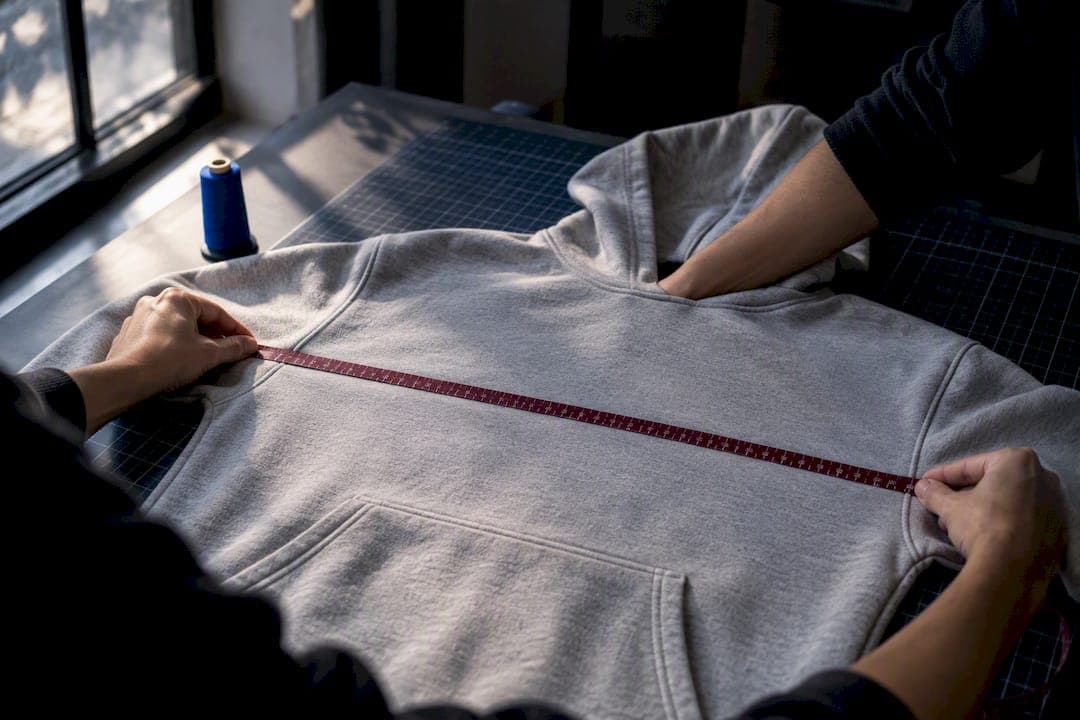
Unisex hoodies are built on men's sizing, full stop. Men should order their usual size; women typically drop one size down for a fit that matches what they'd expect from women's-specific sizing, or keep their usual size if they want the oversized, borrowed-from-the-boyfriend look. Before you check out, grab a hoodie you already own, measure it pit-to-pit, and compare it against the brand's chart.
TL;DR:
- Men should order their usual size, while women generally size down one to achieve a typical fit, or keep their size for an oversized look.
- Values like pit-to-pit width and body length are more reliable for sizing than labels, and measuring an existing hoodie can ensure a better fit.
- Unisex hoodies are based on men's sizing patterns, which include broader shoulders and straighter seams, making them inherently larger overall.
- Expect up to 0.75 inches variation between production batches and potential shrinkage of up to half an inch in heavyweight fabrics after washing.
- For a tailored fit, measure the hoodie that fits well and compare the numbers to the sizing chart rather than relying solely on the size label.
Table of Contents
- Standard Unisex Hoodie Size Chart
- How to Measure Your Body and a Hoodie
- Why Unisex Sizing Follows Men's Measurements
- Choosing the Right Fit for the Way You'll Wear It
- Why You Can Trust This Guide
- A Measuring-First Take on Fit
- Get Your Fit Right With Kenny Wade Clothing
- Sources
- FAQ
Standard Unisex Hoodie Size Chart
Every unisex hoodie chart starts with two numbers: pit-to-pit width and body length. Pit-to-pit is measured flat, armpit seam to armpit seam, across the front of the garment. Double that number and you get a rough body chest circumference, since the hoodie wraps around your torso in both front and back.
Here's a typical unisex hoodie size chart that reflects common industry patterns without committing to exact inches for every brand:
These numbers aren't universal law. They reflect common patterns across standard hoodie size charts, but every brand cuts a little differently. What matters more than the exact inch count is the relationship between pit-to-pit and body length, since that ratio tells you whether a hoodie runs boxy or slightly tapered.
Hoodies also carry more built-in ease than a fitted t-shirt would. A flat pit-to-pit measurement of 22 inches commonly fits a 42 to 44 inch body chest, because hoodie patterns typically add 4 to 6 inches of ease for the hood, drawstrings, and front pocket. That extra room is intentional. It's why a hoodie in your "true" size still feels roomier than a t-shirt in that same size.
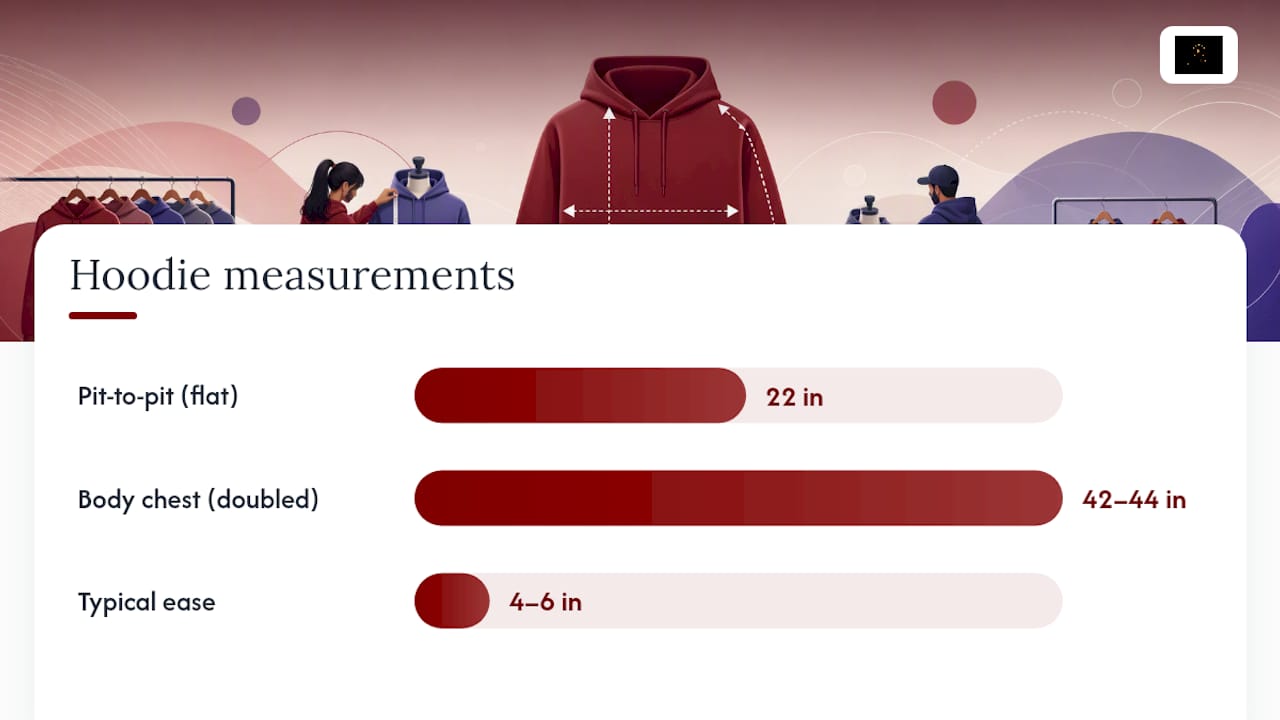
Two more things worth flagging before you trust any chart down to the quarter inch. First, manufacturing tolerance on hoodies usually runs about 0.5 to 0.75 inches between production batches, so two "medium" hoodies from the same brand can measure slightly differently. Second, heavyweight cotton fleece shrinks. Expect up to half an inch of shrink in length and width after a few washes if you're not careful with heat, which is one more reason to wash hoodies the right way instead of tossing them in a hot dryer out of habit.
How to Measure Your Body and a Hoodie
Skip the guesswork. Five minutes with a tape measure beats scrolling through five different size charts hoping one of them tells you what you want to hear.
- Measure your chest circumference. Wrap a soft tape measure around the fullest part of your chest, keeping it level and snug but not tight. Write that number down; it's your body chest measurement, not a garment measurement.
- Measure pit-to-pit on a flat hoodie. Lay a hoodie you like flat on a bed or table, smooth out the wrinkles, and measure straight across from one armpit seam to the other. Double it to estimate the equivalent body chest fit.
- Measure body length. Starting at the high point of the shoulder, next to the collar, run the tape straight down to wherever you want the hem to hit.
- Measure sleeve length. With the hoodie still flat, measure from the center of the back collar, along the top of the shoulder, and down the sleeve to the cuff.
- Decide which way to round. If you're stuck between two sizes and plan to layer a t-shirt or flannel underneath, size up. If you want a cleaner, more fitted line, size down.
Pro Tip: Measure the hoodie in your closet that already fits the way you want your next one to fit, then match those numbers to the chart instead of relying on the size label alone. Two brands' mediums rarely measure identically.
This same measure-first approach applies whether you're buying a hoodie or figuring out your correct t-shirt size; the steps barely change.
Why Unisex Sizing Follows Men's Measurements
Unisex hoodies are built on a men's block pattern: straighter side seams, broader shoulder allowance, less shaping at the waist. That's a fit decision, not an insult to anyone's body type. Unisex measurements are typically based on men's sizing across the industry, which is exactly why a women's-specific hoodie chart and a unisex chart don't line up one-to-one.
For women who want the fit they'd expect from a women's-specific size chart, the standard advice is to order one size down from what they'd normally wear. Order your usual size instead, and you'll land in oversized, streetwear-leaning territory on purpose.
Rough mapping, based on common size correspondences:
- Women's Small often maps to a unisex XS or S, depending on the brand's cut.
- Women's Medium commonly lines up with unisex S, sized down one step.
- Women's Large typically corresponds to unisex M.
- Women's XL usually maps to unisex L.
Height and shoulder width push back against these defaults. A tall woman with broader shoulders may find her usual size fits just fine unadjusted, while a petite frame might need to go down two sizes for a cropped, fitted look. Heavyweight fleece also amplifies bulk, so if you're between sizes in a heavier fabric, lean toward sizing down rather than up.
Choosing the Right Fit for the Way You'll Wear It
Fit isn't just about measurements, it's about what the hoodie has to do for you. A hoodie you're wearing under a jacket needs different room than one that's the whole outfit.
- Layering: Size up one from your true measurement if you're planning to wear a t-shirt or thermal underneath regularly.
- Fitted, everyday wear: Stick to your true measured size, using the pit-to-pit and body length numbers rather than the label.
- Oversized, streetwear look: Size up one or two from your true size, and expect the sleeves to run long, which is part of the look.
- Athletic or slim cuts: These run tighter through the body even within the same labeled size, so measure the specific style rather than assuming consistency across a brand's lineup.
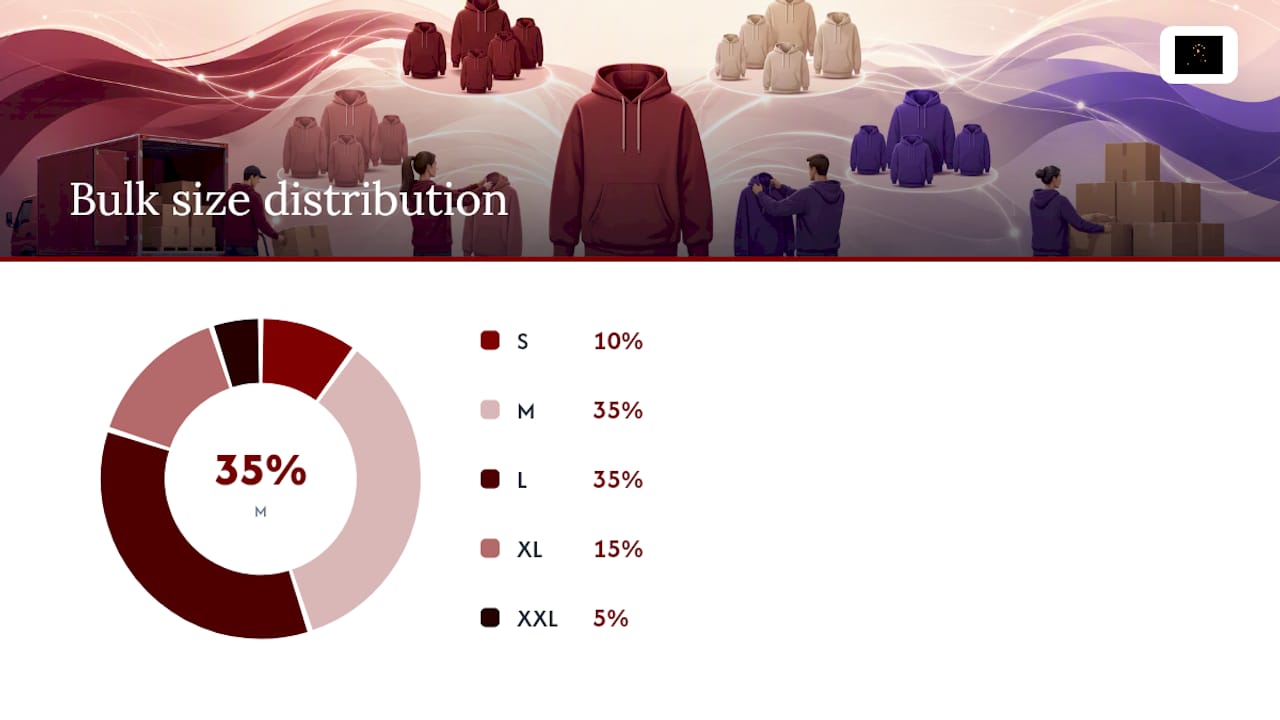
Buying for a group complicates things fast. A common starting distribution for bulk orders runs roughly 10% S, 35% M, 35% L, 15% XL, and 5% XXL, then you adjust from there. If the group leans women-majority, shift weight toward S and M and add a few extra mediums as buffer stock, since manufacturing tolerance means even "the same size" varies slightly batch to batch.
Buying as a gift with no measurements to go on? Default to their usual t-shirt size and size up one step. It's a safer miss than guessing small.
Why You Can Trust This Guide
Kenny Wade's World built its clothing line around one idea: comfort and fit shouldn't be a coin flip. That philosophy shows up in the brand's broader content too, not just its hoodies. The step-by-step measurement approach for t-shirt sizing follows the same pit-to-pit, body-length logic used here, and the guide to washing hoodies without shrinking them exists precisely because sizing advice is worthless if the hoodie shrinks a size after one hot wash cycle.
This is practical, repeatable guidance built from how hoodies are actually cut and measured across the industry, not a marketing pitch dressed up as advice.
A Measuring-First Take on Fit
Numbers beat guessing every time. A hoodie's label is a starting point, not a promise, and the tape measure settles arguments the size chart alone can't. If you're chasing an oversized, trend-driven look, size up without hesitation. If you want something that actually skims your body the way it's supposed to, measure first and size down when the numbers say to.
— Kenny Wade
Get Your Fit Right With Kenny Wade Clothing
Unisex hoodies often use men's-sizing foundations, so the advice above applies generally when shopping such collections. It's best to check your usual size against the product's specific chart, and size down if you prefer a fitted rather than oversized silhouette.
Before adding a hoodie to your cart, take a moment to measure a hoodie already in your closet and compare those numbers to the size chart listed on each product page. If you're deciding between a fitted or oversized look for a specific outfit, the women's streetwear formulas and men's streetwear looks on the blog both walk through how sizing choices change the whole outfit, not just the hoodie. Browse the Kenny Wade Clothing collection and check the spec sheet on each hoodie before you check out.
Sources
This guide draws on published sizing standards from MFG Merch's hoodie size chart, T-Shirt Envy's unisex sizing guide, Boathouse's unisex hoodie sizing advice, and Alibaba's bulk sizing guide for cotton hoodies.
- Your Guide to Unisex Hoodie Sizes for Custom Apparel – T-Shirt Envy Co.
- Hoodie Size Chart - MFG Merch
- Men's vs Unisex Cotton Hoodies: A Complete Sizing Guide for Bulk Buyers on Alibaba.com - Alibaba.com Seller Blog
FAQ
What Size Should I Get for a Unisex Hoodie?
Measure your chest circumference and compare it to the doubled pit-to-pit figure on the brand's chart rather than trusting the label alone. Men should order their usual size, while women typically go one size down for a standard fit or keep their usual size for an oversized look, following the sizing pattern used across most unisex hoodie charts.
Do Unisex Sizes Run Bigger?
Yes, unisex sizing runs bigger than women's-specific sizing because it's built on a men's pattern with a straighter cut and more shoulder room. A hoodie's built-in ease often adds 4 to 6 inches beyond your actual body chest measurement, which is part of why unisex mediums feel roomier than women's mediums.
What Size Is Medium in Unisex Sizing?
A unisex medium typically has a pit-to-pit measurement around 21 inches, which corresponds to a body chest circumference near 42 inches. Body length usually falls around 28 inches, though exact numbers shift slightly by brand, so checking the specific product chart before ordering still matters.
Does a Unisex Small Fit Like a Women's Medium?
Roughly, yes. Because unisex sizing runs larger through the chest and shoulders, a unisex small often lines up closer to a women's medium in overall fit, though shoulder width and sleeve length will still feel more generous than a true women's-cut medium.