
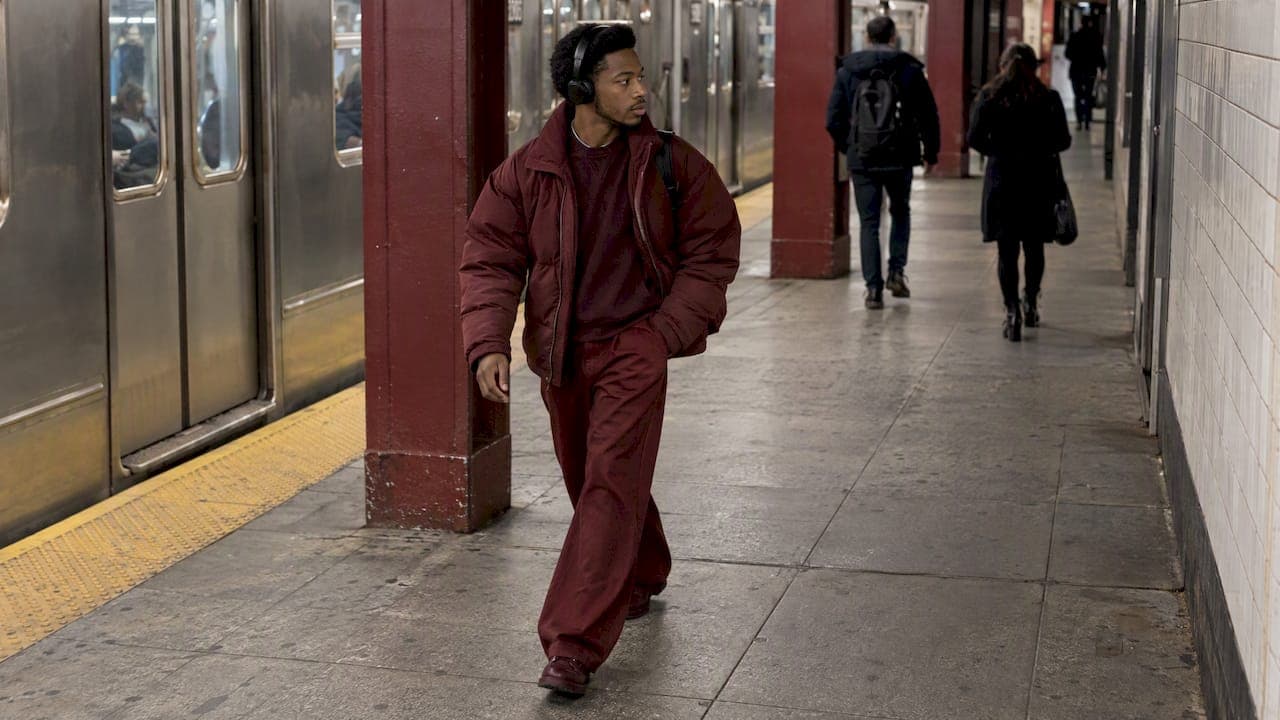
A great monochrome streetwear outfit comes from one color family plus tonal variation, mixed textures, and clear proportion, not an exact color match. Our styling approach is built around this exact logic, and below we walk through ten copyable outfit prompts plus piece-by-piece tips you can apply to whatever is already in your closet.
TL;DR:
- Build around a tee, hoodie, or sweatshirt, then use three tonal steps and at least two fabrics to create depth without introducing another color.
- Pair an oversized top with slim bottoms, or reverse the proportions; two oversized pieces or two slim pieces can leave the silhouette shapeless.
- Keep accessories to one focal point, such as a bag, hat, or chain, and match metallic finishes instead of mixing them.
- A cream piece breaks up an all white outfit, while denim in light and medium washes creates tonal steps without adding another color.
Table of Contents
- Why Monochrome Works for Streetwear
- How to Build Depth Without Breaking the Palette
- 10 Monochrome Streetwear Outfit Prompts to Copy Now
- How to Style Monochrome Streetwear by Piece
- Footwear and Accessories That Sharpen or Soften a Monochrome Look
- Common Mistakes and Quick Fixes for Monochrome Streetwear
- Kenny Wade's Perspective: Wardrobe Heroes and How I Build Monochrome Fits
- Pairing Monochrome Outfits With Music and Cultural Influences
- What Most Monochrome Advice Gets Wrong
- Shop a Monochrome Capsule at Kenny Wade's World
- FAQ
- Sources
Why Monochrome Works for Streetwear
Dressing head to toe in one color family creates a column effect that makes you look taller and your outfit look more deliberate. That visual trick is the entire appeal of monochrome streetwear: it reads as put-together without requiring you to coordinate five different colors.
The real work happens in the details once you commit to a single hue. Stylist Pernille Teisbaek has made the case that black becomes visually exciting through texture and proportion rather than through an exact match, pointing to leather jackets and mixed fabrics as the pieces that do the heavy lifting. GQ's breakdown of Austin Butler's all-black fits backs this up, noting that layered tonal contrast and texture keep an outfit from going flat.
A few reasons the formula holds up:
- One base color removes the guesswork of matching separate hues.
- Tonal steps add depth without introducing a second color.
- Mixed textures (denim, leather, knit) stop the look from feeling like a uniform.
- Proportion contrast keeps a single-color outfit from reading as flat or shapeless.
How to Build Depth Without Breaking the Palette
Depth inside a monochrome outfit comes from a short, repeatable process rather than trial and error. Follow these steps in order:
- Pick your core layers first. Choose a tee, hoodie, or sweatshirt in your base shade and build everything else around it.
- Work in three tonal steps. Go light, medium, and dark within the same color family, or alternate matte and shiny finishes on the same shade.
- Mix at least two fabrics. Pair denim with leather, or a technical shell with a midweight knit, so the outfit has visual texture even in one color.
- Alternate shine and matte. GQ's coverage of Michael B. Jordan's monochrome styling shows how alternating one shiny piece with one matte piece keeps a tonal look from feeling stale.
- Balance your silhouette. If your top is oversized, slim down the bottom, and vice versa.
- Check the whole fit in a mirror before you leave. Look for one obvious texture shift and one obvious proportion shift.
Keep six wardrobe heroes on hand: a heavyweight hoodie, a leather or faux-leather jacket, a ribbed long-sleeve, straight-leg denim, a technical shell, and a pair of chunky sneakers. These six pieces alone can build most of the outfit prompts below.
Pro Tip: Lay your outfit flat on the floor before wearing it. Flat layouts expose texture and proportion problems faster than a mirror does.

10 Monochrome Streetwear Outfit Prompts to Copy Now
Each of these prompts uses one color family and at least two texture or proportion shifts. Swap fabric weights by season rather than swapping the formula itself.
- All-black: Leather jacket, ribbed tee, straight-leg denim, matte boots. Swap the leather for a wool coat in winter.
- Navy block: Oversized hoodie, slim joggers, canvas sneakers. Mix a raw denim jacket in for texture.
- Olive utility: Cargo pants, fitted long-sleeve, technical vest. Our earth tone streetwear guide has ten more prompts in this family.
- Beige and tan: Oversized knit, straight denim, suede sneakers. Add a woven belt for texture.
- All-white: Heavyweight tee, wide-leg trousers, low-top sneakers. Keep one piece slightly off-white to avoid a flat match.
- Grey scale: Hoodie, cargo joggers, chunky trainers. Alternate a brushed fleece with a smooth cotton piece.
- Pastel set: Soft tee, relaxed shorts or pants, canvas slip-ons. See our pastel streetwear formulas for combinations that avoid a costume look.
- Tonal denim: Light-wash jacket over mid-wash jeans, white tee. Different washes act as your tonal steps.
- Leather-led black: Leather trucker jacket, mesh layer, slim pants. The mesh adds texture without adding color.
- Athleisure grey: Zip-up track top, jogger pants, slides. Our gym-to-street formulas show how to dress this up fast.
Pro Tip: Photograph each outfit once you build it. A quick photo reveals texture gaps a mirror often misses.
How to Style Monochrome Streetwear by Piece
Breaking the formula down by garment makes it easier to adapt to whatever you already own.
- Hoodies: An oversized hoodie layered under a slim jacket in the same tone gives you instant proportion contrast. Our hoodie and leather jacket outfit guide covers eight combinations.
- Tees and overshirts: Pair a heavyweight tee with a lighter woven overshirt so the fabric weights contrast even though the color does not.
- Sweatshirts: A fleece sweatshirt over tailored trousers instantly elevates a casual piece by contrasting a soft texture with a structured one.
- Pants: Joggers suit a relaxed, athletic mood; straight-leg denim reads as classic streetwear; wide-leg trousers add drape and work well against a fitted top.
Each of these rules follows the same principle from the earlier steps: one color, two textures, one proportion shift. Our minimal streetwear outfit guide applies this same restraint to pared-back fits if you want fewer pieces to manage.
Footwear and Accessories That Sharpen or Soften a Monochrome Look
Footwear sets the tone of a monochrome outfit faster than almost any other piece. Sneakers keep a look casual and sharp, boots add weight and a slightly rugged edge, and slides push the whole outfit toward relaxed athleisure territory.
Accessories work best when they stay limited to one focal point rather than spreading attention across several pieces.
- Choose one accent area: a bag, a hat, or a chain, never all three at once.
- Match metallic finishes (gold, silver, gunmetal) to the overall tone of the outfit rather than mixing them.
- Use a hat or sunglasses as a texture tool when the rest of the outfit is smooth and simple.
A plain cap or bucket hat from a resource like Tekton LA's black monochrome pieces is a straightforward way to fill that one accent slot without overcomplicating the fit.
Common Mistakes and Quick Fixes for Monochrome Streetwear
Most monochrome outfits fail for one of three predictable reasons.
- Exact-match syndrome: Wearing every piece in the identical shade and finish flattens the whole outfit. Fix it by shifting at least one piece a shade lighter or darker.
- Proportion mismatch: Two oversized pieces together, or two slim pieces together, can read as shapeless. Fix it by swapping one item for the opposite fit.
- Accessory overload: Stacking a chain, a bag, and a patterned hat competes for attention. Fix it by cutting down to one accessory and letting the clothing carry the rest.
Kenny Wade's Perspective: Wardrobe Heroes and How I Build Monochrome Fits
Some pieces serve as wardrobe heroes when building a monochrome fit: a leather jacket for texture and edge, an oversized tee for proportion contrast, and a midweight knit for a softer tonal step between the two. These items can solve most of the problems above.
- Leather jacket: adds shine and structure against softer fabrics.
- Oversized tee: creates the proportion contrast a fitted jacket needs.
- Midweight knit: bridges a light base layer and a heavier outer layer in the same tone.
For deeper breakdowns, our all-black outfit formula guide and men's streetwear look templates expand on these same wardrobe heroes.
Pairing Monochrome Outfits With Music and Cultural Influences
Streetwear and music have always moved together, and monochrome dressing fits naturally into that overlap. A single-color fit photographs cleanly, holds up under stage lighting, and reads consistently across album covers, music videos, and show flyers, which is part of why so many artists default to it.
The overlap between sound and style often inspires fashion approaches. A monochrome look paired with a specific playlist or sonic mood can give an outfit a narrative beyond the clothing itself: an all-black fit might suit a darker, bass-heavy set, while a beige and tan palette leans toward a warmer, more laid-back sound. Treating color the way you would treat a track list, picking one mood and staying inside it, keeps both the outfit and the cultural reference point consistent.
This is also where accessories earn their keep. A chain, a cap, or a bag tied to a specific scene or era can act as the one focal accent the outfit needs, the same rule covered earlier in the accessories section. The goal is coherence: the way a well-sequenced playlist holds together, a monochrome outfit should hold together as one visual statement rather than a pile of separate choices.

What Most Monochrome Advice Gets Wrong
Most styling content treats monochrome as a color exercise: pick a hue, buy everything in that hue, done. That advice undersells the actual skill involved, which is almost entirely about texture and proportion, not color selection.
The outfits that actually work, the ones editors keep pointing to on figures like Pernille Teisbaek or Austin Butler, succeed because of fabric contrast and silhouette balance, not because the wearer found a perfect color match. A flat, single-texture black outfit will always look cheaper than a textured one, regardless of how expensive the pieces are.
If you take one thing from this guide, prioritize texture mixing before you worry about finding the "right" shade of black or grey. A denim jacket over a ribbed tee in slightly different tones will outperform a perfectly matched two-piece every time. Proportion comes second. Accessories come last, and only one at a time.
— Kenny Wade
Shop a Monochrome Capsule at Kenny Wade's World
Every wardrobe hero covered above, the heavyweight hoodie, the ribbed layers, the oversized tee, exists in the Kenny Wade Clothing lineup, built with a texture-first, proportion-aware approach.
Browse the current pieces and start a capsule around whichever color family fits your closet best.
FAQ
What Is the 3-3-3 Rule for Outfits?
The 3-3-3 rule is a compact capsule approach built around three tops, three bottoms, and three pairs of shoes that mix and match into multiple outfits. Trend analysis notes retailers are packaging this formula for 2026 shoppers, and it pairs naturally with monochrome dressing since fewer colors mean more combinations.
What Is Considered a Monochrome Outfit?
A monochrome outfit uses one color family across every piece, from top to shoes, often with lighter and darker shades of that same color rather than one flat tone. A styling guide covering 60-plus real-life looks breaks this down by color family, including navy, beige, black, white, and pastels.
Are Monochrome Outfits Expected to Be Trendy in 2026?
Monochrome styling has stayed consistently popular in streetwear and celebrity fashion, and capsule formulas like the 3-3-3 rule suggest the approach will keep showing up in 2026 wardrobes. The core techniques, tonal variation and texture mixing, remain the same regardless of seasonal trend shifts.
Where Can I Buy Monochrome Streetwear Pieces?
Monochrome staples are available through the Kenny Wade Clothing collection, which features base layers and tonal pieces covered in this guide. Smaller accent pieces, like a plain cap, can also come from focused shops such as Tekton LA's black monochrome line.
Sources
- Black Is Never Boring—Just Ask Pernille Teisbaek | Vogue
- Austin Butler Knows the Secret to Wearing All Black | GQ
- Monochromatic outfits by color: 60+ real-life looks & styling tips