
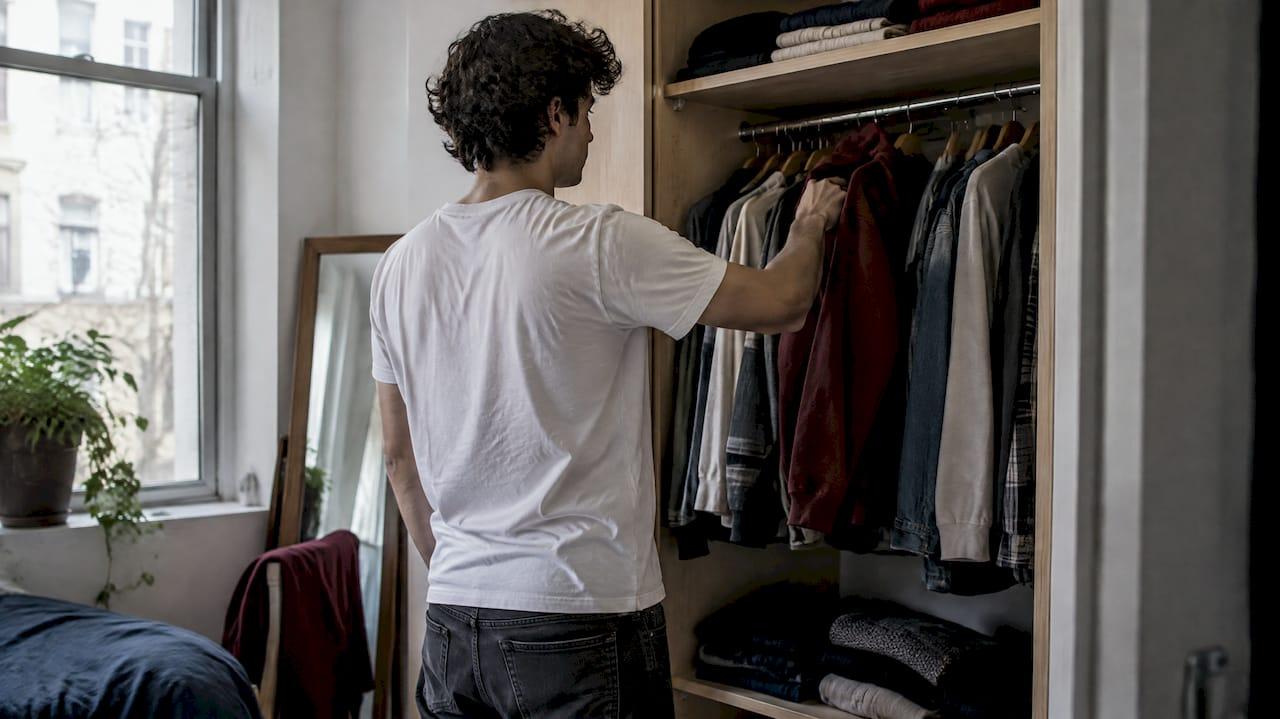
Music inspired outfits start with one decision: pick the feeling of a song or an artist, then translate it into a silhouette, a palette and one piece that does the talking. You don't need a costume or a logo on your chest. You need a point of view, clothes you can move in, and a little editing.
This guide shows you how to do that. We cover the method, how it plays out across rap, pop, R&B, rock and electronic, what to wear to a show, and how to tell real style from a merch-table cliché.
TL;DR
- Start with a mood, not a brand: choose the color, texture and attitude of the music, then build the outfit around one statement piece.
- Comfort decides whether the look works. Test it for movement and duration before the night.
- Streetwear staples (a good tee, a hoodie, relaxed pants, clean sneakers) are the best base because you can restyle them for any genre.
- Layers solve the swing from hot crowds to cold exits.
- Authentic music style signals belonging. It's rarely just a logo.
Table of Contents
- What "music inspired" really means
- A four-step method for building the outfit
- Why basics beat costumes
- Music inspired streetwear, genre by genre
- Dress for the venue, not just the vibe
- Making a look that feels like the artist, not a copy
- Our perspective
- Wear the music every day
- A sample week of music inspired outfits
- Questions people ask
- Sources
What "music inspired" really means
There are two ways to dress with music in mind. The first is literal: the band tee, the tour hoodie, the cap with the album art. The second is atmospheric: you borrow the world an artist builds, with its colors, its fabrics, its era, and wear it without a single name on the clothes.
Stylist Harper Slate, who has dressed artists such as Clairo and Charli xcx, describes this work as telling a story and conveying emotion without speaking. For fans, she says, it becomes a kind of identity projection: you get to be whoever you want to be by stepping into the aesthetic world of the music you love. That is the right frame for everyday dressing too. You're not copying a stage costume. You're choosing which part of a sound you want to carry around.
Research on music subcultures points the same way. One university thesis on music and fashion describes fans practicing bricolage: collecting visual identifiers that let them participate in a community and signal they belong to it. A logo can be one of those identifiers, but the thesis frames dressing as a wider act of assembling signals, not just buying a label.
A four-step method for building the outfit
When readers ask how to put a music inspired look together without it feeling like fancy dress, we give them the same four steps.
- Name the mood in two words. "Sunburnt and loose." "Midnight and sharp." "Garage and grainy." If you can't name it, you can't edit for it.
- Pick a palette of three. Two neutrals and one accent is the easiest formula. A black tee, washed gray pants and a single acid-green cap reads as deliberate.
- Choose one statement piece. A jacket with a strong shape, a graphic tee, a bold pair of sneakers, a chain. Everything else supports it quietly.
- Check movement and finish. Sit, squat, raise your arms and walk a block. If something pulls, rides up or itches, swap it now.
The fourth step is the one most people skip, and it separates a photo outfit from a real one.
Why basics beat costumes
It can feel more creative to buy something exotic. In practice, the stylists who dress music's biggest names lean on simple pieces. In the same FADER profile, Slate's behind-the-scenes lessons include the fact that lead times in music styling are often very short, so effortless style is mostly curation, and that basics such as tracksuits can look custom with the right styling tweaks.
The takeaway for your closet: a handful of versatile staples styled differently gets you ten different music moods. Swap the shoes, the layer and the accessories, and the same tee moves from a rap show to a dive-bar rock night.
This is also the idea behind our own approach. We design casual wear around comfort and versatility so that a single piece can carry you through different occasions.
Music inspired streetwear, genre by genre
Streetwear and music have been tied together for a long time. Complex's list of rapper-owned clothing brands notes that in the 2010s, artist merch began mingling with streetwear, which is why a hoodie from a musician can now sit comfortably next to any other casual brand. Here is how to translate each genre.
Rap and hip-hop
Think proportion. Roomy tees, heavyweight hoodies, cargo or wide-leg pants, and one standout accessory: a chain, a beanie, a pair of sunglasses. Footwear is the loudest part of the outfit, so choose clean, broken-in pairs rather than box-fresh ones if you'll be standing all night. For a deeper breakdown, see our guide to rap concert outfits, and if you're headed to a festival weekend, our Rolling Loud outfit picks for Orlando.
Pop
Pop rewards color, shine and a clear focal point. Keep the base simple and let one piece be camera ready: a sequined jacket over a plain tee, a bright mini with sneakers, a bold bag. Our walkthrough of pop concert outfits built around one statement piece goes further.

R&B
R&B is about softness and movement: satin, knits, draped tops, relaxed tailoring. You want fabrics that flow when you sway and don't cling when you dance. We tested ideas for this in R&B concert outfits for dancing.
Rock and alternative
Band tee, denim or dark jeans, a jacket and boots or chunky sneakers is the classic frame, and it works because each part is durable. Distressed texture, leather and washed black set the mood. See venue-ready rock concert outfits.
Electronic and DJ nights
Dance floors are hot, crowded and long. Lightweight, breathable layers and reflective or neon accents suit the visual world of the music, while secure shoes and zero-fuss pockets suit the reality. Our pieces on the EDM concert outfit formula and DJ night outfits for full sets cover this in detail.
| Genre | Mood | Base | Statement piece | Comfort check |
|---|---|---|---|---|
| Rap | Bold, oversized | Heavy tee, wide pants | Chain or standout sneakers | Broken-in shoes |
| Pop | Bright, playful | Simple tee or tank | Sparkle jacket or color-pop bag | Easy-to-carry bag |
| R&B | Smooth, fluid | Knit or satin top | Draped layer | Stretch at the waist |
| Rock | Gritty, worn-in | Band tee, dark denim | Leather or denim jacket | Sturdy soles |
| Electronic | Futuristic, light | Breathable tee or set | Reflective or neon accent | Cool fabrics, secure pockets |
Dress for the venue, not just the vibe
The best-looking outfit on the internet fails if you spend the night adjusting it. Three rules come up in every stylist interview we read.
Test it before the show. Celebrity stylists Chloe and Chenelle Delgadillo, who dress clients including Olivia Rodrigo and Addison Rae, advise fans to try the outfit for movement and duration ahead of time. Avoid brand-new shoes for long standing periods, and make sure you can breathe, sing and dance in whatever you wear.
Comfort is a professional standard. Fashion director Brandon Maxwell, who has worked with Lady Gaga, has said that even stage looks must serve the performer. In a PBS Q&A he points to how restrictive silhouettes make it hard to move and breathe. If it holds up on a stage with choreography, your fit should be no tighter than that.
Plan for temperature swings. Fashion editors at Who What Wear note that concertgoers underestimate how much the temperature changes between a hot, crowded floor and a chilly walk out, so packable layers like a hoodie tied at the waist matter. A light jacket you can knot around your hips is the most useful piece in the bag.

Hot-weather and festival fabrics
For warm, humid outdoor events, stylists quoted by StyleCaster for Lollapalooza 2025 say breathable natural fabrics such as cotton and linen are the most important factor, with temperatures often reaching the high 80s and 90s Fahrenheit. Stylist Nena Evans adds that flowy silhouettes help airflow, which makes them practical and stylish at once.
If you want a full set of ideas for a multi-day lineup, our own music festival outfit formulas and summer concert outfits are built around staying comfortable from soundcheck to the last set. For after dark, there is also a guide to night concert outfits for every venue. Another useful read on the streetwear side is this set of packable festival streetwear formulas, which shows how to assemble a complete look from apparel, footwear and accessories.
Making a look that feels like the artist, not a copy
Once you have the base, small details do the storytelling.
- Color as shorthand. Washed pastels read dreamy and indie. Black on black reads club or rock. Saturated primaries read pop. You don't need a name on the clothes to say it.
- Texture as era. Denim and fishnet carry a late-'90s feel. Nylon and tech fabrics feel current. Stylist Wilford Lenov, talking to Billboard about the return of 90s and early 2000s style, tied denim, fishnets and chokers to the look of TLC.
- One graphic, not three. If your tee has a statement, keep the rest of the outfit quiet. Retail pages for music graphic tees frame them as a way to bring your playlist into everyday style, and that is the right role for a graphic: a conversation starter, not a uniform.
- Styling tricks over shopping. Rolling a sleeve, swapping laces, cropping a layer or knotting a jacket changes a piece without buying anything. If you like quick styling ideas around a loud graphic top, these tips for styling statement tees show how colors and silhouettes shift a tee's tone.
Avoid the costume trap
If every item references one artist, the look can tip into costume, which is fine for spirit week or Halloween but less so for daily wear. Pick one reference, then let the rest of the outfit stay neutral. A good test: would the outfit make sense if the listener didn't know the music? If yes, you've got style. If no, you've got a costume.
Our perspective
We see music and clothing as the same conversation. Kenny Wade's World started from the idea that a person who loves music wants clothes that feel as good as a song sounds: easy to wear, hard to forget. That's why we focus on casual wear that blends comfort and style, with pieces versatile enough for a show, a dinner, or a Sunday.
Our view is that merchandise should earn its place in your closet. A shirt you only wear to one concert is a souvenir. A shirt you reach for every week is part of your identity. We design with the second one in mind, and we publish our concert and festival guides so that you can build looks with what you already own, not only with what we sell.
The fan community around an artist is what makes the clothes mean something. Wearing them is a way to say you are part of it, and we'd like that to feel natural, never forced.
— Kenny Wade
Wear the music every day
If you want casual pieces with a musical identity behind them, take a look at Kenny Wade Clothing. It pairs comfortable, versatile casual wear with Kenny Wade's music, so your outfit and your playlist come from the same place. Pair one piece with the basics you already own and use the four-step method above.
A sample week of music inspired outfits
To show how little you need, here is one capsule of five pieces styled for five moods. These are examples to adapt, not rules.
- Monday, studio mood: gray hoodie, black relaxed pants, white sneakers. Quiet, focused, headphones on.
- Wednesday, rap show: the same hoodie tied at the waist over a heavyweight tee, plus a cap and a chain.
- Friday, pop night: swap the pants for light denim, add a bright jacket as the one statement piece.
- Saturday, festival: a cotton tee, loose shorts or breathable pants, a packable layer and shoes you have already broken in.
- Sunday, easy listening: the tee with relaxed trousers and a knit layer, nothing tight.
Notice that most of the work is repetition with variation. That is how stylists on tight timelines do it, and it keeps your budget down.
Questions people ask
How do I make an outfit feel music inspired without wearing band merch?
Pick the mood of the music and translate it into color, texture and silhouette. Washed pastels and soft knits suggest dreamy indie, while black leather and denim suggest rock. One statement piece is enough.
What should I wear to a concert if I don't know the dress code?
Dress for the venue and the climate first, then the genre. Choose comfortable shoes you have already worn, breathable layers, and a jacket you can tie around your waist when it gets hot.
Is streetwear a good base for music fashion?
Yes. Tees, hoodies, relaxed pants and clean sneakers are easy to restyle, and they have been closely tied to artist merch and music culture for years. You can swap one accessory and move from rap to rock.
How do I avoid looking like I'm wearing a costume?
Keep to one clear reference and let the rest of the outfit stay neutral. If the outfit still makes sense to someone who doesn't know the artist, it reads as personal style.
Sources
- How stylist Harper Slate builds a sartorial world around Clairo, Charli xcx, and more (The FADER)
- Music and fashion subcultures thesis (University of Rhode Island)
- The 20 Best Rapper-Owned Clothing Brands of All Time (Complex)
- Celeb Stylists Chloe and Chenelle Talk Outfit Tips (Us Weekly)
- Slideshow and Q&A with Lady Gaga's stylist Brandon Maxwell (PBS)
- What to Wear to a Concert (Who What Wear)
- What to Wear to Lollapalooza 2025, According to Stylists (StyleCaster)
- Coachella Fashion With Celebrity Stylist Wilford Lenov (Billboard)
- Men's Band T-Shirts and Music Tees (Pacsun)