
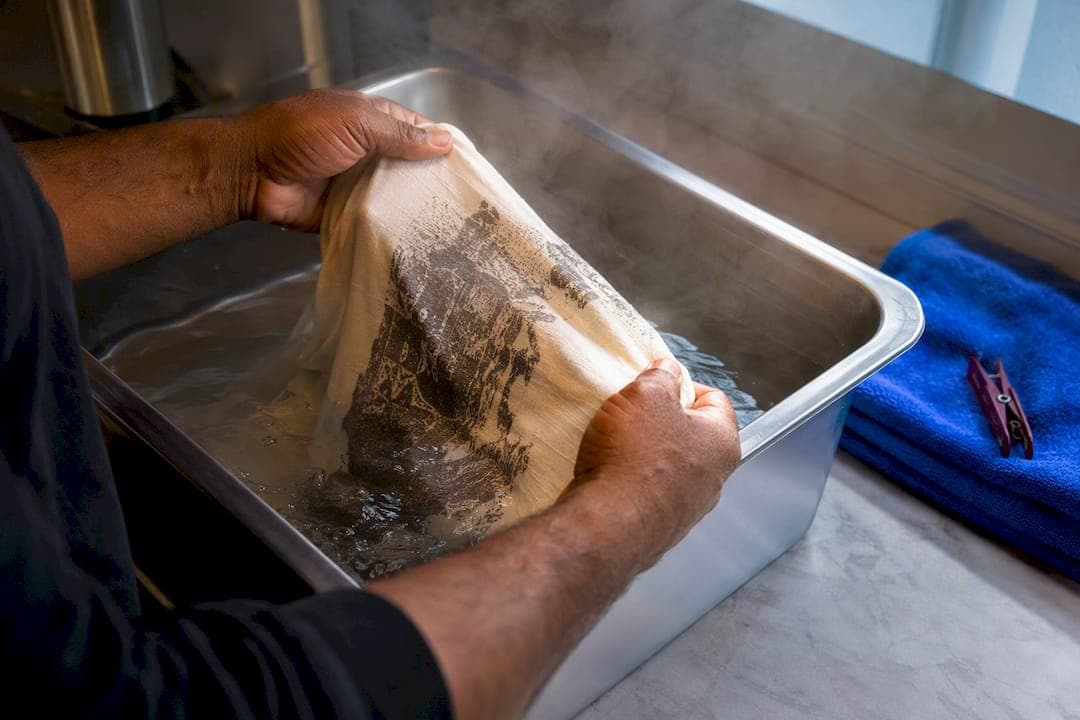
Yes, you can shrink a hoodie, and for most cotton or cotton-majority hoodies, it works reliably. The go-to method is a hot wash followed by a high-heat tumble dry, checked every 10 to 15 minutes so you stop at the right size. Boiling shrinks fabric faster but comes with more risk. Polyester and elastane barely budge, so check your fabric content before you commit to anything aggressive.
TL;DR:
- Most cotton and cotton-polyester blend hoodies can be reliably shrunk with a hot wash followed by a high-heat tumble dry, but polyester and elastane fabrics resist shrinking.
- Always measure and record your hoodie’s current size before shrinking, and set clear size reduction goals to prevent overshooting during the process.
- Shrinkage mainly occurs in the first hot wash and dry cycle, with 100% cotton hoodies shrinking about 3 to 8% in length, roughly 1 to 2 inches on a 28-inch hoodie.
- Fabric decorations like vinyl and foil are vulnerable to heat damage, so low-heat or incremental methods are safer for hoodies with embellishments.
- If only specific areas need shrinking, targeted steaming or ironing can modify small sections without risking damage to the entire garment.
Table of Contents
- What to Check Before You Shrink a Hoodie
- How to Shrink a Hoodie: Step-by-Step Methods
- How Fabric Type Changes Your Approach
- How Much Will a Hoodie Actually Shrink?
- Avoiding Damage and Fixing Uneven Results
- Kenny Wade's World Tips for Getting the Fit Right
- When I'd Shrink a Hoodie vs. When I'd Tailor It
- Sources
- FAQ
What to Check Before You Shrink a Hoodie
Skipping the prep work is how people end up with a hoodie that fits a different person entirely. Before you touch a washing machine dial or fill a pot with water, spend five minutes on these basics.
- Read the care label. It tells you the maximum safe wash and dry temperature, and it often flags heat-sensitive prints or trims you'd otherwise fry.
- Measure and record the hoodie now. Lay it flat and note chest width (pit to pit), body length (collar to hem), and sleeve length. Write these down. You cannot judge shrinkage without a baseline.
- Gather your tools. You'll want a pot large enough for a soak (if you're going that route), a thermometer or reliable machine temperature settings, a towel for blotting, and gloves for handling hot fabric.
- Decide your target before you start. Are you trying to drop half a size, or a full size? Half a size usually means one hot wash and dry cycle. A full size often means repeating the process or leaning on a hotter method with real risk of overshooting.
Setting that target matters because shrinkage is largely a one-shot event. Most of the change happens in the first cycle, which means your first attempt should already be your most careful one.
How to Shrink a Hoodie: Step-by-Step Methods
There are four practical ways to shrink a hoodie: hot wash plus dryer, boiling or hot soak, dryer-only bursts, and targeted steam or iron work for specific spots. Pick the one that matches how much shrinkage you need and how much risk you're willing to take.
Method 1: Hot wash + high-heat dryer (the standard approach)
This is the simplest and most controllable home method, and it's where almost everyone should start.
- Turn the hoodie inside out to protect any printed graphics.
- Wash it alone or with similar-weight items on the hottest setting your care label allows, typically in the 130 to 140°F (54 to 60°C) range.
- Use a normal or heavy-duty cycle. More agitation means more shrinkage, since a washing machine's heat and agitation together drive most of the fabric relaxation that causes shrinking.
- Move it straight to the dryer on high heat. Do not let it air dry between wash and dry. Heat exposure needs to be continuous for the best result.
- Check the hoodie every 10 to 15 minutes during the dry cycle. Pull it out, measure against your baseline numbers, and put it back in only if you need more shrinkage.
- Stop as soon as you hit your target measurements, even if that means an incomplete dry cycle.
Method 2: Boiling or hot soak (aggressive, higher risk)
Boiling shrinks fabric faster than a wash cycle, but it's also the method most likely to cause uneven results or damage decorations, so treat it as a last resort for stubborn 100% cotton hoodies with no prints.
Bring a pot of water to a boil, then remove it from heat for about 30 seconds so you're not dropping fabric into an active boil. Submerge the hoodie fully and let it soak for 10 to 20 minutes, stirring occasionally so it shrinks evenly. Using tongs or gloves, lift it out and let it cool slightly before wringing out excess water gently. Never twist hard. Then finish with a high-heat dryer cycle, checking every 10 minutes.
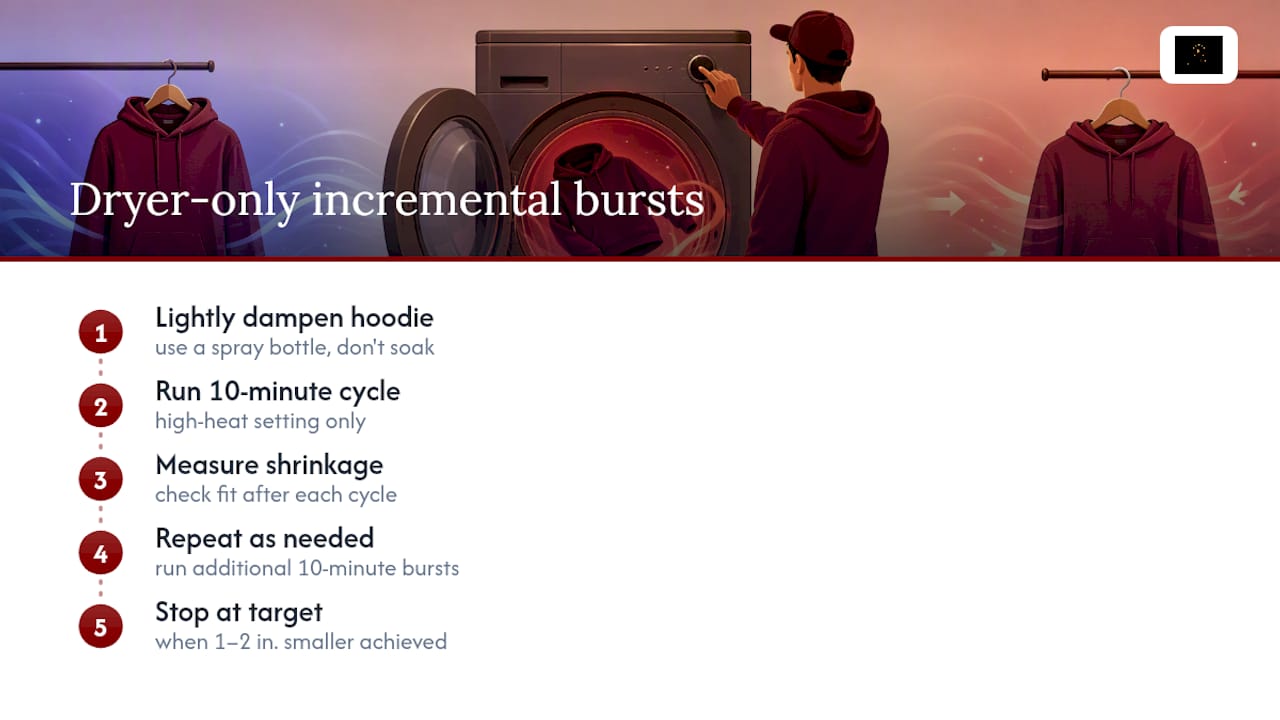
Method 3: Dryer-only incremental bursts
If you want minor, controlled shrinkage without the wash cycle, short high-heat bursts in the dryer alone work well. Dampen the hoodie slightly with a spray bottle if it's already dry, then run it through 10-minute high-heat cycles, measuring between each one. This method gives you the most control of any option here, because you're never committing to a full wash-and-dry combo you can't undo.
Method 4: Targeted steam or iron for spot shrinking
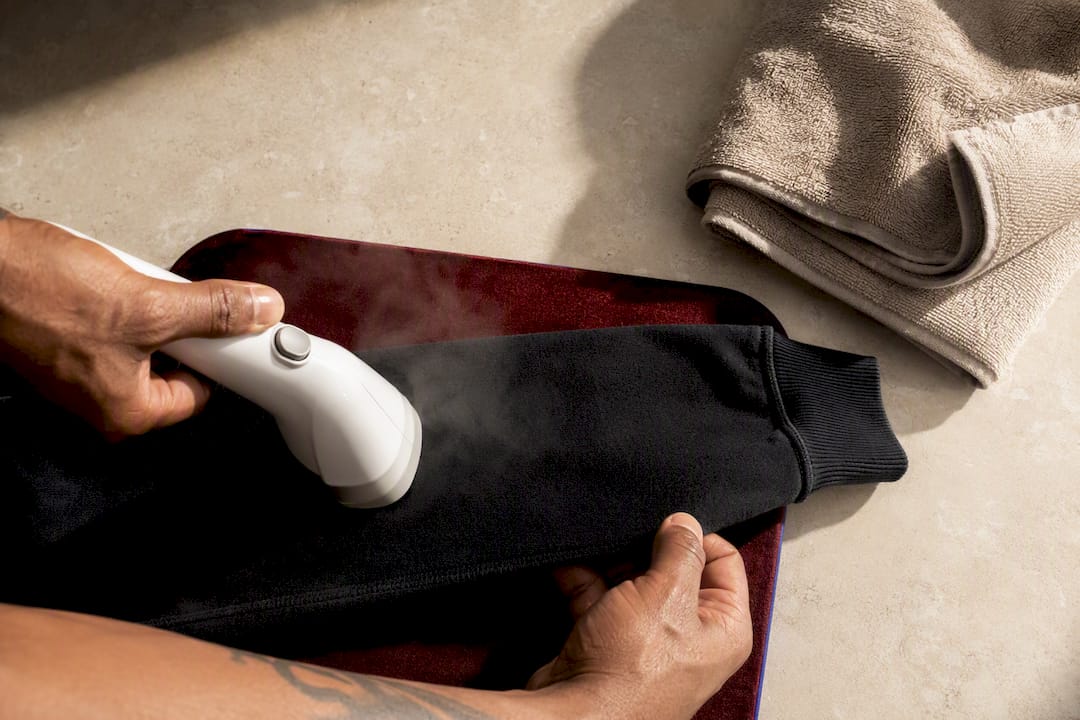
Sometimes the whole hoodie fits fine except the sleeves are too long, or the hem hangs lower than you like. For that, skip the whole-garment methods entirely. Dampen just the area you want to shrink, then apply a steamer or iron on a low to medium setting, moving constantly rather than resting the iron in one spot. This shrinks a hoodie only where you need it, leaving the rest of the fit untouched.
Pro Tip: Before running any method on your actual hoodie, test it on a hidden seam allowance, an old similar garment, or a scrap of the same fabric if you have one. Five minutes of testing beats an hour of regret.
How Fabric Type Changes Your Approach
Not every hoodie shrinks the same way, and fabric content should decide your method before anything else does.
- 100% cotton shrinks reliably and predictably. It's the fabric these methods are built around, and it tolerates the hot wash plus dryer combo well.
- Cotton/poly blends shrink, but proportionally less than pure cotton. A 60/40 cotton poly blend will move less than a 100% cotton hoodie under identical heat, so expect a smaller size change and possibly more cycles.
- 100% polyester and brushed fleece barely shrink at all. Polyester fibers are heat-set during manufacturing, which means the fiber structure resists the kind of relaxation shrinkage that cotton undergoes. High heat on polyester risks glazing, pilling, or surface damage rather than a smaller garment.
- Elastane and spandex (common in fitted cuffs and waistbands) lose elasticity under aggressive heat. That stretch panel can turn stiff and lifeless long before the rest of the hoodie shrinks meaningfully, so treat any hoodie with more than a trace of elastane with caution.
- Decorations matter as much as fabric. Screen prints, heat-transfer vinyl, foil accents, and embroidery all react differently to heat. Vinyl and foil are the most vulnerable and can crack or peel under repeated high-heat cycles, so a hoodie loaded with decoration is a better candidate for the gentler, incremental dryer-only method than for boiling.
How Much Will a Hoodie Actually Shrink?
A 100% cotton hoodie typically shrinks about 3 to 8% in length after one hot wash plus a high-heat tumble dry. On a hoodie that started at 28 inches long, that's roughly 1 to 2 inches gone after a single cycle.
Cotton/poly blends land toward the lower end of that range or below it, scaled down roughly by how much polyester is in the mix. Pure polyester shrinkage is minimal enough that it's rarely worth attempting.
Nearly all of that shrinkage happens on the first hot wash and dryer cycle. Running the exact same cycle again gives diminishing returns. If a hoodie doesn't move much on attempt one, a second identical attempt usually won't fix it either. It's also worth knowing that most retail hoodies are already sanforized, meaning manufacturers pre-shrink the fabric before the garment is even sewn. That's exactly why some hoodies barely shrink no matter what you throw at them.
Avoiding Damage and Fixing Uneven Results
Getting the size right is only half the job. Protecting the garment while you do it is the other half.
- Turn it inside out before any wash, soak, or ironing to keep prints and trims away from direct friction and heat.
- Use a protective cloth between iron and decoration whenever you're steaming or ironing near a printed area, and check the spot frequently.
- Skip chlorine bleach entirely. It weakens cotton fibers and produces inconsistent, brittle results, which works against everything you're trying to achieve.
- If one section shrank more than another, re-wet the whole hoodie and reshape it by hand while damp, or use targeted steam to pull the looser area back toward even proportions.
- If you've overshot the size, there's no reliable way to stretch cotton back out at home. A tailor can sometimes let out seams if there's extra fabric allowance, but that's a limited fix, not a guarantee.
Pro Tip: Stop immediately if you see cracking in a print, a trim that's gone stiff or shiny, or fabric that looks distorted at the seams. Those are signs of heat damage, not shrinkage, and continuing will only make it worse.
Kenny Wade's World Tips for Getting the Fit Right
Measuring before you start isn't optional if you actually want a predictable outcome. Practical measurement paired with incremental cycles is consistently the most reliable way to land the fit you're after while keeping the garment intact. Run your first attempt on a similar, less precious garment if you have one lying around, or test on a hidden seam first.
If your hoodie carries a large print, embroidered logo, or vinyl detail, favor the slower dryer-only bursts over boiling. Boiling is unforgiving, and a print that cracks doesn't come back. When a hoodie needs a genuinely large size change rather than a nudge, tailoring the side seams and sleeves is often the safer, more predictable route than betting everything on heat. For more on keeping hoodies in good shape day to day, our guide on washing hoodies without shrinking them covers the flip side of this same process.
When I'd Shrink a Hoodie vs. When I'd Tailor It
For a minor fit issue, a hoodie that's just slightly too roomy, incremental shrinking is the right call. It's cheap, it's reversible up to a point if you stop early, and it works with the garment you already own instead of replacing it. For a major size gap, two sizes too big, sleeves that pool at your wrists, tailoring is more predictable. A seamstress can take in sides and shorten sleeves with results you can actually plan for, something heat can't promise.
There's a sustainability angle here too. Shrinking a hoodie that no longer fits keeps it in rotation instead of in a donation bag or a landfill, and that's a better outcome than buying a replacement just because sizing shifted. If you're building out your fabric knowledge before your next purchase, our breakdowns of ring spun cotton versus standard cotton and what GSM tells you about fabric weight are worth a look, and if you're shopping for something new that fits right the first time, browse Kenny Wade's World casual wear collection while you're at it.
— Kenny
Sources
The shrinkage percentages and fabric guidance in this article draw on Natu Clothes' cotton hoodie shrinkage breakdown, which covers temperature ranges and realistic percent outcomes for cotton garments. The step-by-step machine methods come from Roomy Edit's washing machine shrinkage guide. Background on how washing machines generate heat and agitation, and why the dryer often does more shrinking than the wash cycle itself, comes from the Wikipedia entry on washing machines. Readers who want the deeper technical detail behind any of these numbers should check those sources directly.
- How to Shrink a Cotton Hoodie: Steps, Temperatures, and Realistic Shrinkage %
- How to shrink hoodies in washing machine? Safely and Permanently - Roomy Edit
- Washing machine — Wikipedia
FAQ
Can You Shrink a Hoodie Down a Full Size?
Sometimes, but it depends on fabric. A 100% cotton hoodie can shrink 3 to 8% in length from one hot wash and dryer cycle, which can be enough for a full size drop on some garments, while blends and polyester shrink far less.
Will a 100% Cotton Hoodie Shrink?
Yes, 100% cotton is the most reliable fabric for shrinking at home, responding well to a hot wash followed by a high-heat dryer cycle. Just check whether it's labeled pre-shrunk or sanforized, since that limits how much more it will move.
Can a Dryer Shrink a Hoodie by Itself?
Yes. High-heat dryer bursts alone can shrink a hoodie incrementally, and this method actually gives you more control than washing and drying together, since you can measure between short cycles and stop exactly when you hit your target.