
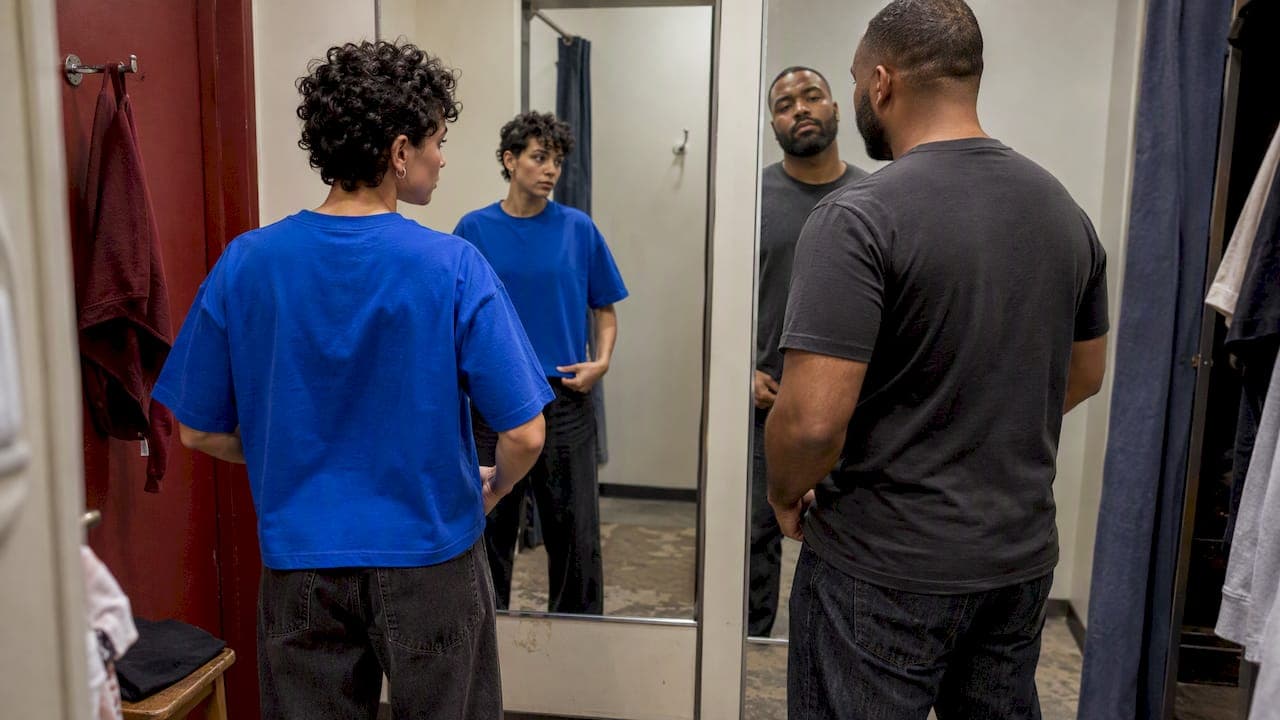
Boxy means a shorter, wider block cut away from the body. Regular means a closer, longer line that follows your shoulders and torso down to a standard hem. Choose boxy when you want a top to read as the statement piece of an outfit, and choose regular when you need a dependable base layer that works under jackets or tucked into pants.
TL;DR:
- A true boxy cut has dropped shoulders, even width from chest to hem, a shorter hip length, and wider sleeves, rather than excess fabric everywhere.
- Sizing up rarely recreates that cut because it adds length and shifts shoulder proportions; compare chest, shoulder, body, and sleeve measurements instead.
- Straight side seams and a shoulder seam just beyond your shoulder indicate a boxy fit, while chest pulls, underarm sagging, or restricted movement suggest poor sizing.
- Pair boxy tops with high rise or wide leg bottoms for a statement look; regular fits layer neatly under blazers or tuck into trousers.
- Heavier knits hold a squared boxy shape, while thin cotton drapes more softly and can make the same cut look relaxed.
Table of Contents
- Quick Checklist: Shoulder, Chest, Length, Sleeve
- What a Boxy Cut Actually Changes in the Pattern
- Five Fit Checks You Can Run Before You Buy
- Who Boxy Fits Best, Who Should Stick With Regular
- Sizing: Should You Size Up for Boxy?
- Styling Ideas for Boxy and Regular Fits
- Why Deliberate Patterns Matter to Us
- Shop Boxy and Regular Fits at Kenny Wade's World
- FAQ
- Sources
Quick Checklist: Shoulder, Chest, Length, Sleeve
Before you read the full breakdown, run the comparison that matters most: how the garment sits at four points on your body.
- Shoulder seam: boxy drops past your natural shoulder; regular sits on top of it.
- Chest and torso width: boxy adds even width from armpit to hem; regular tapers slightly at the waist.
- Hem length: boxy often stops shorter, around the hip; regular runs longer, covering the waistband.
- Sleeve opening: boxy sleeves sit wider and looser; regular sleeves hug the upper arm.
If you want the top to be the focal point of the outfit, lean boxy. If you want it to disappear under a cardigan or blazer, lean regular.
What a Boxy Cut Actually Changes in the Pattern
The difference between boxy and regular is not one setting turned up. It is several separate decisions stacked together, which is why a boxy tee looks nothing like a regular tee two sizes up.
The shoulder seam is the clearest signal. On a boxy pattern, the seam drops off the edge of your shoulder, creating that squared silhouette line. On a regular pattern, the seam sits right at the natural shoulder point, which is why regular fits read as more fitted even when the chest has some room.
Ease, the extra room built into a garment beyond body measurements, is not distributed evenly. Research on garment style and ease distribution shows that width at the chest, length at the hem, and room in the sleeve are treated as separate design variables, not one global looseness dial. A pattern can be wide through the chest while staying controlled at the hem, or vice versa.
That is also why sizing up rarely reproduces a true boxy cut. Parametric ease research confirms that designers set local looseness for the torso, sleeves, and hem independently, so a larger size changes all of those proportions at once instead of adjusting only the one you wanted wider. You end up with a shirt that is long and loose everywhere, not deliberately short and wide the way a boxy pattern is drafted.
Sleeve width and armhole geometry follow the same logic. A boxy armhole is typically drafted straighter and deeper, which is what lets the sleeve hang with a looser, almost dropped quality instead of hugging the bicep.

Five Fit Checks You Can Run Before You Buy
Whether you are standing in a fitting room or comparing finished measurements online, these checks tell you if a top is genuinely boxy or just poorly sized.
- Check the side seams. They should run straight down to the hem without curving in at the waist.
- Find the shoulder seam. On boxy pieces it should sit visibly past your shoulder point, not dropped so far it falls down your arm.
- Look for diagonal pulls. Wrinkles pulling across the chest or sagging fabric under the arms usually mean the size is wrong, not that the fit is boxy.
- Compare finished measurements. Lay the garment flat and measure chest width and shoulder-to-shoulder against a top you already know fits well.
- Test the sleeve opening. Raise your arm. You should have room to move without the sleeve riding up or binding at the bicep.
Pattern alteration guidance from New Mexico State University backs this up directly: a well-fitted garment allows movement without binding, pulling, sagging, or wrinkling at any of these points, which is a more reliable test than trusting a size label.
Pro Tip: Keep one tee you already love the fit of on hand and measure every new purchase against it instead of against the size tag.
Who Boxy Fits Best, Who Should Stick With Regular
Boxy works when you want visual weight on top: streetwear looks, layered outfits where the tee is the statement, or when you are intentionally balancing a slim bottom with a wider upper block. Pair a boxy tee or cropped hoodie with high-rise or wide-leg bottoms and the proportions read as deliberate rather than sloppy.
Regular works when the top needs to disappear into a layered outfit. Under a blazer, zipped into a jacket, or tucked into trousers, a regular fit keeps the silhouette clean instead of adding bulk at the waist. If you are building a classic, streamlined look rather than a statement one, regular is the safer base.

Sizing: Should You Size Up for Boxy?
Start with your true chest and shoulder measurements, the same numbers you would use for any top. Sizing up mainly adds length and shifts shoulder proportions, it does not reliably recreate a boxy block, since NMSU's fit guidance notes there is no universal size-up rule because ease varies by design, fabric, and style.
Before buying, compare these finished-garment numbers to something you already own:
- Chest width, measured flat from armpit to armpit.
- Shoulder-to-shoulder distance across the back.
- Body length from collar to hem.
- Sleeve opening circumference.
A true boxy pattern is the right call when you want the squared shoulder and even width on purpose. Sizing up from a regular pattern is only acceptable as a stopgap, and it usually adds unwanted length before it adds the width you're after. Our t-shirt sizing guide walks through exactly which of these numbers to compare first.
Styling Ideas for Boxy and Regular Fits
Fabric weight changes how each fit behaves. A heavier knit holds a boxy shape with more structure, while lightweight cotton drapes softer and can look closer to relaxed than truly boxy.
- Boxy: pair a cropped hoodie or boxy tee with high-waist trousers and chunky sneakers to balance the wider block on top.
- Regular: wear a regular-fit tee under an open blazer or zip-up, with slim or straight bottoms, for a cleaner line.
- Heavier knits (think fleece or midweight cotton) keep boxy shapes squared off; thin cotton tees soften into more of a relaxed drape.
If you are shopping for hoodies specifically, our unisex hoodie sizing guide covers how heavier fabric changes the fit math.
Why Deliberate Patterns Matter to Us
We build toward comfort and versatility first, which means boxy and regular pieces in our lineup follow deliberate pattern choices rather than one size stretched to fit both. Check our online size chart guide before you order.
— Kenny Wade
Shop Boxy and Regular Fits at Kenny Wade's World
We design both boxy and regular silhouettes with the same goal: comfort that holds its shape, whether you want a squared statement piece or a streamlined base layer. Sizing resources help you check exact measurements before ordering, so you're not guessing between a true boxy cut and a size up.
If you're still narrowing down sizing for a group order or unisex fit, Shay's Print Shop's sizing breakdown is a solid companion read, and our own guide to finding your correct t-shirt size covers the same ground for our pieces specifically. Browse the current lineup and sizing charts at Kenny Wade Clothing and find the fit that matches what you're building.
FAQ
Is a boxy fit flattering?
A boxy fit can be flattering when it's used to balance proportions, like pairing a wider top with slim or high-rise bottoms. It reads as a style choice rather than an oversight when the shoulder seam and hem sit where they were designed to, not stretched out from sizing up.
Who should wear boxy fit shirts?
Boxy shirts suit anyone building a streetwear-inspired or statement-piece look, especially when layering over slimmer bottoms. They also work well if you prefer a structured, squared silhouette over a fitted one.
Should I size up for a boxy fit?
Not usually. Fit research from NMSU shows there's no universal size-up rule for boxy styles, since ease varies by design and fabric, so it's better to buy a true boxy pattern in your normal size and compare finished measurements first.
Is boxy fit a baggy fit?
No, boxy and baggy aren't the same thing. Boxy refers to a deliberately squared, even-width silhouette with a controlled hem, while baggy or oversized implies excess fabric throughout with less structure, a distinction worth checking against our relaxed vs oversized fit guide.
Sources
- C-228: Pattern Alteration (New Mexico State University)
- Study on the relation between garment style and ease distribution (PolyU)
- EASE: Parametric garment design with explicit and local ease control (Computers and Graphics, 2026)