
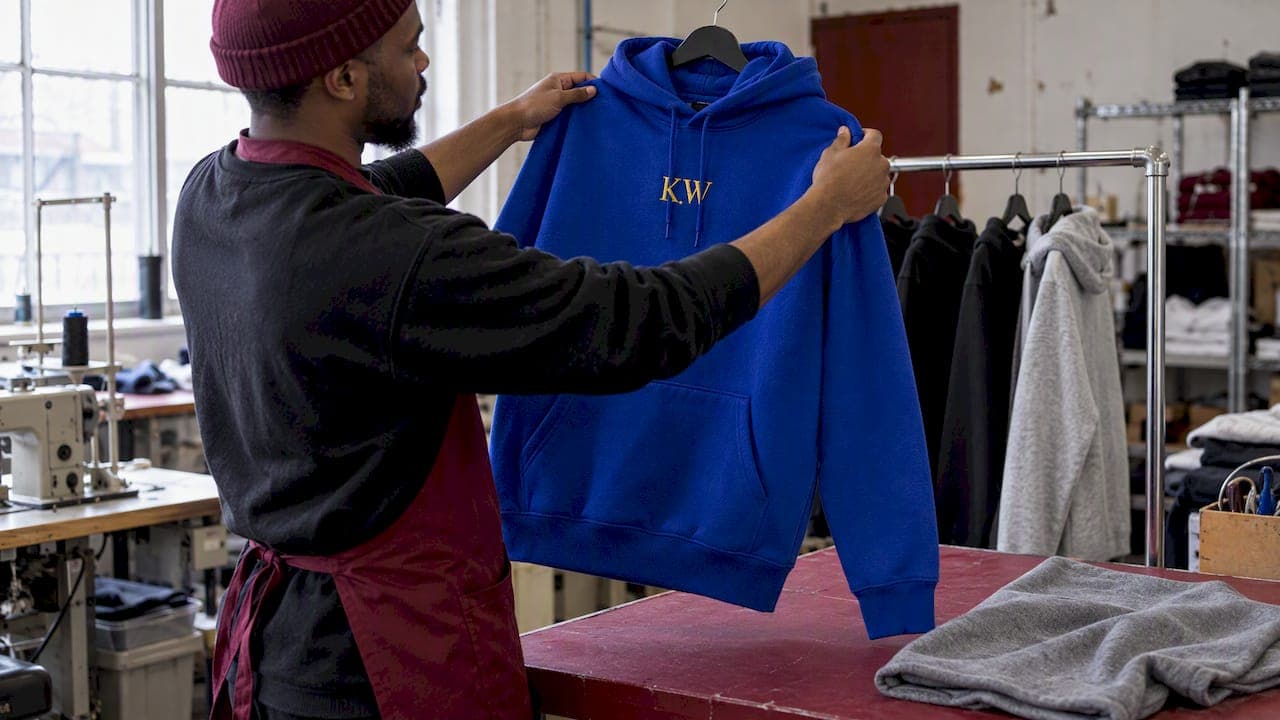
Choose heavyweight if you need maximum warmth and long-term structure. Choose midweight if you want year-round versatility and easier layering. Weight is measured in ounces per square yard or grams per square meter, but construction can override raw weight, so a well-made midweight can outlast a cheap heavyweight. Below, we break down the numbers, the fit differences, and how to shop smart.
TL;DR:
- Midweight hoodies, weighing 10 to 13 ounces per square yard, are best for layering and comfort in temperatures around 50 to 60°F.
- Heavyweight hoodies, weighing 14 to 20 ounces per square yard, are ideal for standalone warmth in temperatures below 50°F.
- Construction quality, including reinforced seams and fiber type, influences durability more than fabric weight alone.
- Proper care involves cold washing and low-heat drying to maintain both weight ranges and prevent pilling or shrinkage.
- Fit should be chosen based on layering needs: size up for heavyweight hoodies when layering, true size for midweight for a fitted look.
Table of Contents
- Heavyweight vs midweight at a glance
- What fabric weight means and how to read the numbers
- How hoodie weight affects warmth and real-world use
- How weight shapes fit, drape, and sizing
- Why construction often matters more than raw weight
- A shopper's checklist for choosing between the two
- Caring for each weight to make it last
- Styling notes from Kenny Wade on weight and construction
- When I reach for heavyweight versus midweight
- Our take on weight and construction at Kenny Wade Clothing
- FAQ
- Sources
Heavyweight vs midweight at a glance
Midweight hoodies typically run 10 to 13 ounces per square yard, while heavyweight hoodies fall in the 14 to 20 ounce range. That gap in fabric mass shows up in warmth, drape, and price.
- Midweight: moderate warmth, soft drape, suited to layering, commuting, and mild-to-cool weather.
- Heavyweight: high warmth, stiffer structure that softens with wear, suited to standalone cold-weather use and statement pieces.
- Materials: both weights come in cotton, cotton-poly blends, and fleece, but heavier builds often use denser fleece or brushed backing.
- Care: midweight fabric dries faster and resists bulk; heavyweight needs more drying time and benefits from gentler cycles.
Neither weight guarantees quality on its own. A midweight piece with tight knit and reinforced seams can beat a heavyweight hoodie stitched with thin thread and loose cotton.
What fabric weight means and how to read the numbers
Fabric weight is expressed in ounces per square yard (oz/yd²) in the US or grams per square meter (GSM) elsewhere; roughly, 1 oz/yd² equals about 34 grams per square meter. Industry references put lightweight hoodies around 6 to 9 ounces, midweight around 10 to 13 ounces, and heavyweight around 14 to 20 ounces.

Those numbers are useful shorthand, but they are not the whole story. Manufacturing experts caution that GSM or fabric mass is not a universal quality score; fiber quality and knit density matter just as much. A 280 GSM hoodie made from long-staple cotton with a tight knit can hold up better than a 400 GSM hoodie built from short, loosely spun fibers. You can read more about what GSM actually tells you about clothing quality before trusting a label alone.
The lesson: use weight bands to narrow your search, then check construction before you buy.
How hoodie weight affects warmth and real-world use
Weight bands translate roughly into use-case guidance. Midweight hoodies suit cool, variable days, generally around 50 to 60°F, and work well for layering, while heavyweight hoodies perform better below roughly 50°F when worn alone.
Breathability shifts with weight too. Midweight fabric moves air more easily, which makes it a better pick for walking, errands, or indoor-to-outdoor days where you do not want to overheat. Heavyweight fleece traps more heat but can feel stifling during activity.
If you spend your day moving between a warm car, a heated store, and a cold sidewalk, a midweight hoodie under a jacket often beats a single heavyweight layer. You get adjustable warmth instead of one fixed setting.
How weight shapes fit, drape, and sizing
Heavier fabric holds its shape and creates a boxier silhouette, which is why heavyweight hoodies look structured even off the body. Midweight fabric drapes closer to the body and moves more naturally, which suits a fitted or layered look.
Break-in behavior differs too: heavyweight fleece often feels stiff out of the bag and softens over several washes, while midweight fabric feels flexible from the first wear.
- Size up on a heavyweight hoodie if you plan to layer a shirt underneath, since the thicker fabric reduces stretch room.
- Size true on a midweight hoodie if you want a fitted, streamlined look for daily wear.
Why construction often matters more than raw weight
A heavier fabric number means little if the stitching fails after a few washes. Before buying, check the stitch type at the shoulders and cuffs, look for reinforced seams at stress points, and inspect the rib knit on the cuffs and hem for tightness. Fiber type matters as much as weight: combed or long-staple cotton and ring-spun yarn resist pilling and hold shape far longer than cheaper short-staple blends, a distinction explained in detail in our ring-spun cotton comparison.
Weak construction shows up fast: loose stitching unravels at the seams, low-grade rib knit loses its stretch, and short-staple cotton pills within a few wears regardless of how heavy the fabric felt in the store. A detailed fleece-type checklist can help you spot these cues before you check out.

A shopper's checklist for choosing between the two
Work through these steps in order before you add a hoodie to your cart:
- Define your primary use: standalone cold-weather warmth points toward heavyweight; layering and daily wear point toward midweight.
- Check the weight band listed on the product page against the 10 to 13 ounce midweight and 14 to 20 ounce heavyweight ranges.
- Verify construction, including stitch type, reinforced seams, and rib quality, not just the ounce number.
- Assess fit and size based on whether you plan to layer underneath or wear it fitted.
- Check the return policy in case the weight or fit feels different once it arrives.
Pro Tip: For a piece you plan to wear for years, favor reinforced stress points and combed cotton over a high headline GSM number; durability comes from the stitching, not the scale.
Ask these questions on any product page: What is the fabric weight in ounces or GSM? What fiber type is used? Are seams reinforced? What is the return window? Does sizing run true or large?
Caring for each weight to make it last
Wash both weights in cold water to limit shrinkage and fading, and air-dry or tumble-dry on low rather than high heat, a step covered in more detail in our hoodie wash guide.
Heavyweight fleece typically softens with repeated washing while holding its structure, especially when made from quality fibers. A low-quality midweight hoodie can pill sooner if the cotton is short-staple or loosely spun. For small repairs, reinforce loose cuff or hem stitching early before it unravels further. When storing either weight for the off-season, fold rather than hang to avoid shoulder stretching.
Styling notes from Kenny Wade on weight and construction
When I build a capsule outfit, I treat hoodie weight as a styling decision, not just a warmth decision. A heavyweight hoodie anchors an outfit the way a jacket would, while a midweight piece layers cleanly under a coat without adding bulk. For outfit formulas built around both weights, our minimal streetwear guide walks through pairing options for each.
When I reach for heavyweight versus midweight
My rule of thumb: heavyweight for standing outside, midweight for moving around. On a cold outdoor shoot, I want a heavyweight hoodie doing the work alone. On a day running between meetings and transit, a midweight hoodie under a jacket keeps me comfortable without overheating. Run that question against the checklist above before you decide.
— Kenny Wade
Our take on weight and construction at Kenny Wade Clothing
We build our hoodies around the same principle covered above: fabric weight sets the starting point, but stitching and fiber quality decide how long a piece lasts. If you want maximum warmth and a structured silhouette, look to our heavier pieces; if you want something easier to layer through changing weather, our midweight styles fit that role.
- Cold-weather wear: reach for a heavier piece built for standalone warmth.
- Everyday layering: reach for a midweight piece designed to move with you.
Browse the full lineup and find your fit at Kenny Wade Clothing.
FAQ
What is the difference between midweight and heavyweight hoodies?
Midweight hoodies run roughly 10 to 13 ounces per square yard and suit layering and cool weather, while heavyweight hoodies run roughly 14 to 20 ounces and suit standalone warmth in colder conditions. The heavier fabric also holds a stiffer, more structured shape.
What does midweight mean for a hoodie?
A midweight hoodie uses fabric in the moderate range, generally 10 to 13 ounces per square yard, balancing warmth with breathability. It drapes closer to the body than a heavyweight hoodie and works well for layering under a jacket.
How heavy is a midweight hoodie in ounces or GSM?
Midweight hoodies generally fall between 10 and 13 ounces per square yard, which converts to roughly 340 to 440 grams per square meter. That places them above lightweight tees and below heavyweight fleece in overall fabric mass.
Does Kenny Wade Clothing offer both heavyweight and midweight hoodies?
We offer pieces suited for standalone cold-weather warmth as well as everyday layering to match different wearing needs. Check the product pages at Kenny Wade Clothing for current fabric details on each style.