
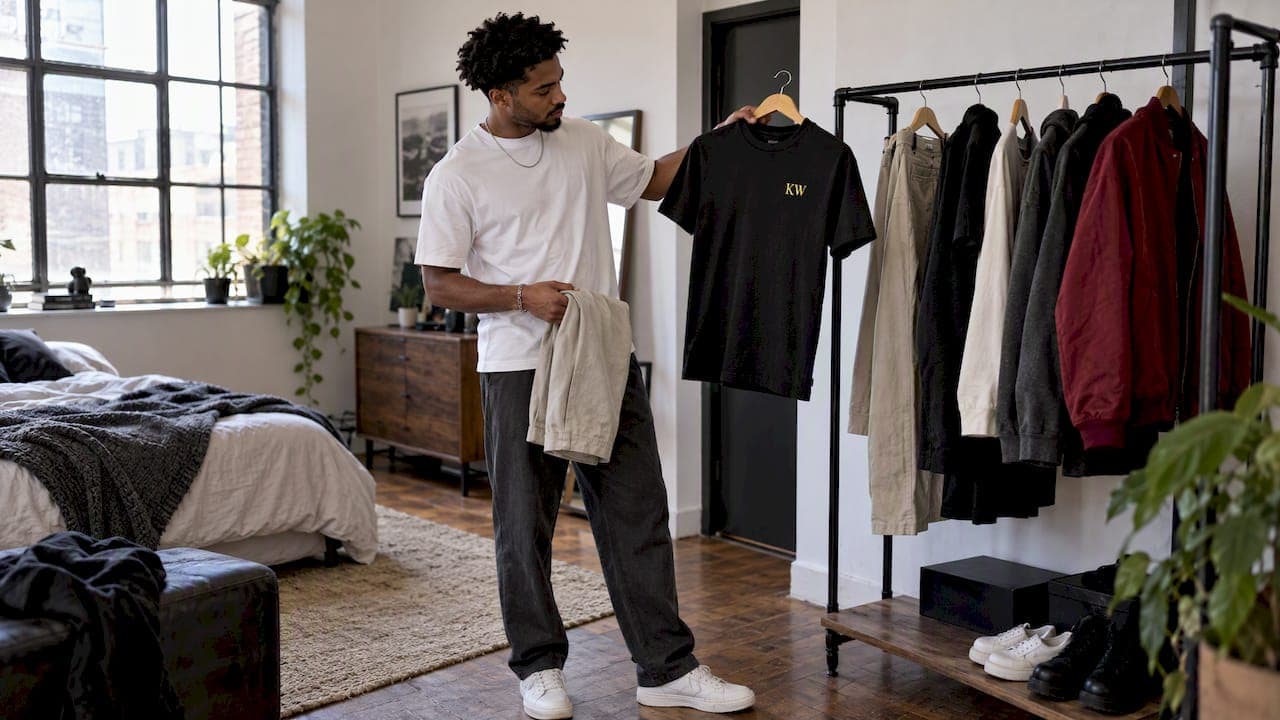
A capsule built on a white tee, a crisp white button-down, a tailored blazer, straight denim, a neutral knit, tailored trousers, a little black dress, a versatile coat, and neutral shoes solves most of your "what do I wear" moments without a cluttered closet. These pieces mix freely because they share a color story, so almost anything pairs with anything else. Below, we break down the palette, the exact pieces, and the outfit formulas that turn this list into real looks.
TL;DR:
- Building a neutral capsule wardrobe relies on high-quality fabrics like cotton, wool, and cashmere to ensure long-lasting, sharp-looking pieces.
- The 3-3-3 rule suggests selecting three tops, three bottoms, and three pairs of shoes that can be mixed into multiple versatile outfits.
- Fitting and fabric weight matter more than color palette, with focus on pieces that suit your body, lifestyle, and that can be worn in many combinations.
- Investing in foundational items such as a white tee, button-down, and tailored blazer creates a flexible system rather than chasing perfection in color.
- Texture mixing and proportion shifts, like pairing oversized tops with tailored bottoms, keep neutral outfits visually interesting and prevent flatness.
Table of Contents
- Why neutrals work and which palette to build around
- The 10 neutral wardrobe essentials
- Materials and quality: how to choose fabrics and where to invest
- How to build a small neutral capsule
- Styling formulas and outfit prompts to copy now
- Kenny Wade's formula-driven approach to neutral dressing
- The capsule wardrobe advice that misses the point
- Try these Kenny Wade pieces for your neutral capsule
- FAQ
- Sources
Why neutrals work and which palette to build around
Neutrals solve a math problem: fewer colors means more combinations. A wardrobe built on black, white, cream, beige, gray, navy, and brown lets every top work with every bottom, which cuts decision fatigue and stretches your cost per wear.
- Black and navy anchor outfits and read as formal or casual depending on fabric.
- White and cream brighten darker pieces and work as a base layer under knits or blazers.
- Beige and gray bridge warm and cool tones, making them the easiest pieces to add texture to.
- Brown adds warmth without breaking the neutral logic, especially in outerwear or shoes.
Once the base is solid, one accent color (a burgundy scarf, an olive jacket) lifts an outfit without threatening the system. Keep the accent to one piece per outfit so the neutral foundation still does the heavy lifting.
The 10 neutral wardrobe essentials
These are the pieces worth owning first. Each one earns its spot by working in multiple outfits, not just one.
- White tee. A clean crew or V-neck in a quality cotton works under blazers, alone with jeans, or layered beneath a coat.
- White button-down. Dresses up trousers for work, rolls up the sleeves for weekends, and layers under knits in cooler months.
- Tailored blazer. Black or gray works over tees, dresses, or trousers and instantly sharpens a casual outfit.
- Straight-leg jeans. A mid-wash or black pair suits most body types and pairs with heels or sneakers equally well.
- Neutral knit. A cream or gray sweater layers over shirts, under coats, or stands alone with trousers for an easy, polished look.
- Tailored trousers. Black or beige trousers move between office and evening with a simple shoe swap.
- Little black dress. One well-cut LBD covers dinners, events, and last-minute plans without extra thought.
- Versatile coat. A camel or black wool coat covers commutes, travel, and errands, and reads as the most visible piece of any outfit.
- Neutral shoes. White sneakers for daytime and a black boot or loafer for evening cover nearly every occasion.
- Minimal accessories. A simple leather belt, gold or silver jewelry, and one structured bag finish outfits without competing for attention.
Keep the list tight at first—our tips on how to create a luxury capsule wardrobe that lasts offer practical advice for a high-quality, long-lasting collection. Buying all ten pieces in quality fabric beats buying twenty in fast fashion, because the ten actually get worn.
Materials and quality: how to choose fabrics and where to invest
Fabric choice decides whether a neutral piece looks sharp for years or sags after a few washes. Vogue's reporting on capsule wardrobe staples points to natural fibers like cashmere, wool, silk, and cotton poplin for the pieces you wear most, since they hold shape, drape better with age, and look more finished than synthetic blends.
- Invest in: coats, blazers, and knitwear, since these touch your skin and your silhouette the most and show wear fastest in cheap fabric.
- Buy basic: tees and tanks can be replaced seasonally, so synthetic blends or budget cotton are fine here.
- Fit over price: the same reporting notes that a well-fitted inexpensive piece reads more polished than an expensive one that doesn't fit.
For tee-specific fabric choices, our guide to t-shirt fabric types breaks down which cotton blends hold up best for daily wear.
Pro Tip: Wash knits inside out on cold and lay them flat to dry; it cuts pilling and keeps the shape from stretching out.

How to build a small neutral capsule
Two simple rules make capsule building less abstract. The 3-3-3 method asks you to pick three tops, three bottoms, and three pairs of shoes you can mix into multiple outfits.
A sample 10 to 12 piece capsule looks like this:
| Category | Pieces |
|---|---|
| Tops | White tee, white button-down, neutral knit |
| Bottoms | Straight jeans, tailored trousers, little black dress |
| Outerwear | Versatile coat, tailored blazer |
| Shoes | White sneakers, black boots |
| Accessories | Leather belt, minimal jewelry |
A week of outfits from this list might run: jeans and the tee with sneakers on Monday, trousers and the button-down with the blazer on Tuesday, the knit over the dress for a dinner, and the coat layered over any of it once temperatures drop. Swap one or two pieces each season (a lighter knit, a trench instead of wool) and the rest of the capsule keeps working.
Styling formulas and outfit prompts to copy now
Outfit formulas remove the guesswork. Pick a formula, slot in your pieces, and adjust proportion and texture to keep things from looking flat.
- Airport: neutral knit, straight jeans, white sneakers, and the coat draped over your bag for easy layering through security.
- Work: button-down tucked into trousers, blazer on top, loafers to finish.
- Weekend lunch: white tee under the knit, jeans, and boots for a relaxed but put-together look.
- Evening: the little black dress with the blazer draped over your shoulders and one statement accessory.
Vogue's piece on understated dressing notes that texture mixing, like knit with silk or denim with wool, and proportion shifts, like an oversized top with tailored bottoms, keep neutral outfits visually interesting rather than flat. For more formula examples, our earth tone streetwear outfit prompts show the same approach applied to warmer neutrals.
Kenny Wade's formula-driven approach to neutral dressing
Our styling philosophy leans on repeatable formulas rather than one-off outfits, because a formula you can reuse is worth more than a single good look. That comfort-forward, music-influenced sensibility shows up across our outfit guides, where we treat neutral dressing as a system you build once and adjust piece by piece.

Our minimal streetwear outfit guide walks through formula-based looks that translate directly into a neutral capsule, and our guide to building all-black outfits applies the same logic to a monochrome palette. Both guides treat the wardrobe as a small set of interchangeable parts rather than a constant shopping list, which is the mindset that makes a neutral capsule actually work long term.
The capsule wardrobe advice that misses the point
Most capsule wardrobe content treats the challenge as a shopping list problem: buy these ten items and you're done. That misses what actually makes a capsule work, which is proportion and texture, not the items themselves. Two people can own the identical ten pieces and one will look put together while the other looks like they're wearing a uniform. The difference is almost always fit, fabric weight, and whether they mixed a stiff piece with a soft one.
The overrated part of neutral dressing is chasing the "perfect" palette before buying anything. Gray versus beige versus cream matters far less than people think. What matters more is buying pieces that fit your actual body and lifestyle, in fabric that holds up, and wearing them in enough combinations that you stop thinking about what to wear at all. Start with one good coat and one pair of shoes you'd wear daily. Everything else is easier to get right once those two anchors are in place.
— Kenny Wade
Try these Kenny Wade pieces for your neutral capsule
We offer a lineup of casual wear designed for comfort, styled to work across the formulas above. These pieces can move between a weekend look and a dressed-up one without needing a separate wardrobe for each.
If you want a starting point for your own capsule, browse Kenny Wade Clothing and build from a tee or coat you'll actually reach for every week.
FAQ
What is the 3-3-3 rule for a wardrobe?
The 3-3-3 rule means picking three tops, three bottoms, and three pairs of shoes that all mix with each other, giving you a small set of pieces that combine into many outfits. It works well as a starting point for a neutral capsule because it forces every piece to earn its place.
What are 10 essential pieces for a wardrobe?
A solid 10-piece neutral wardrobe includes a white tee, a white button-down, a tailored blazer, straight jeans, a neutral knit, tailored trousers, a little black dress, a versatile coat, neutral shoes, and minimal accessories. These pieces share a color palette, so they combine into dozens of outfits.
What is the 5-4-3-2-1 method of wardrobe building?
Definitions vary, but a common version breaks a capsule into five tops, four bottoms, three layers or outerwear pieces, two pairs of shoes, and one accessory category, building outward from a neutral base. The exact numbers matter less than the principle: fewer categories, more overlap between pieces.
What is the 70/30 rule for a wardrobe?
It keeps a capsule from feeling flat without letting trend pieces take over your closet.