
Pick 100% cotton if breathability, sensitive skin, or softness top your list. Pick poly cotton if you want fewer wrinkles, better shape retention, faster drying, and a lower price tag. Cotton wrinkles more and shrinks more; poly cotton breathes less and can pill. Neither fabric wins outright. The right pick depends entirely on what the garment or sheet set has to survive.
TL;DR:
- Cotton fabrics with higher GSM and lower yarn count tend to be softer and more breathable, while polyester blends offer more durability and resistance to wrinkles.
- Blends with a higher polyester ratio improve fabric strength and reduce wrinkling but decrease breathability and increase pill formation over time.
- Proper care involves washing cotton in cold or warm water and avoiding hot water, while polyester blends require lower drying temperatures to prevent heat damage to finishes.
- For hot weather or sensitive skin, pure cotton is preferable, whereas poly cotton is better suited for garments needing quick-drying and shape retention.
- Polyester fibers shed microplastics during wash cycles, and cotton's water and chemical-intensive cultivation contribute to environmental concerns, with recycled options mitigating some impacts.
Table of Contents
- Poly Cotton vs Cotton at a Glance
- Why Cotton and Polyester Behave So Differently
- Breathability, Strength, Pilling, and Wrinkles: The Real Trade-Offs
- Washing and Drying Without Ruining Either Fabric
- Matching the Fabric to the Job
- Three Home Tests to Identify Your Fabric
- The Environmental Trade-Offs Behind Both Fabrics
- How Kenny Wade's World Thinks About Fabric Choice
- Shop the Fabrics This Guide Actually Recommends
- Sources
- FAQ
Poly Cotton vs Cotton at a Glance
Before you dig into fiber science, here's the quick version you can use while standing in a fabric aisle or scrolling a shirt listing.
- Breathability: Cotton wins clearly; poly cotton traps more heat and moisture against skin.
- Durability: Poly cotton wins on abrasion and tear resistance, since polyester fiber reinforces the weave.
- Wrinkle resistance: Poly cotton recovers from creases fast; 100% cotton wrinkles almost on contact.
- Drying time: Poly cotton dries noticeably faster because polyester doesn't absorb water the way cotton does.
- Pilling: Poly cotton is more prone to pilling over repeated washes; quality cotton tends to soften instead.
- Cost: Poly cotton usually costs less to produce, which shows up in retail pricing.
Blend ratio changes all of this. A 50/50 blend splits the difference evenly, favoring easy care and durability at a lower cost. A 65/35 or 80/20 cotton-heavy blend keeps most of cotton's breathable, skin-friendly feel while still resisting wrinkles better than pure cotton.
Why Cotton and Polyester Behave So Differently
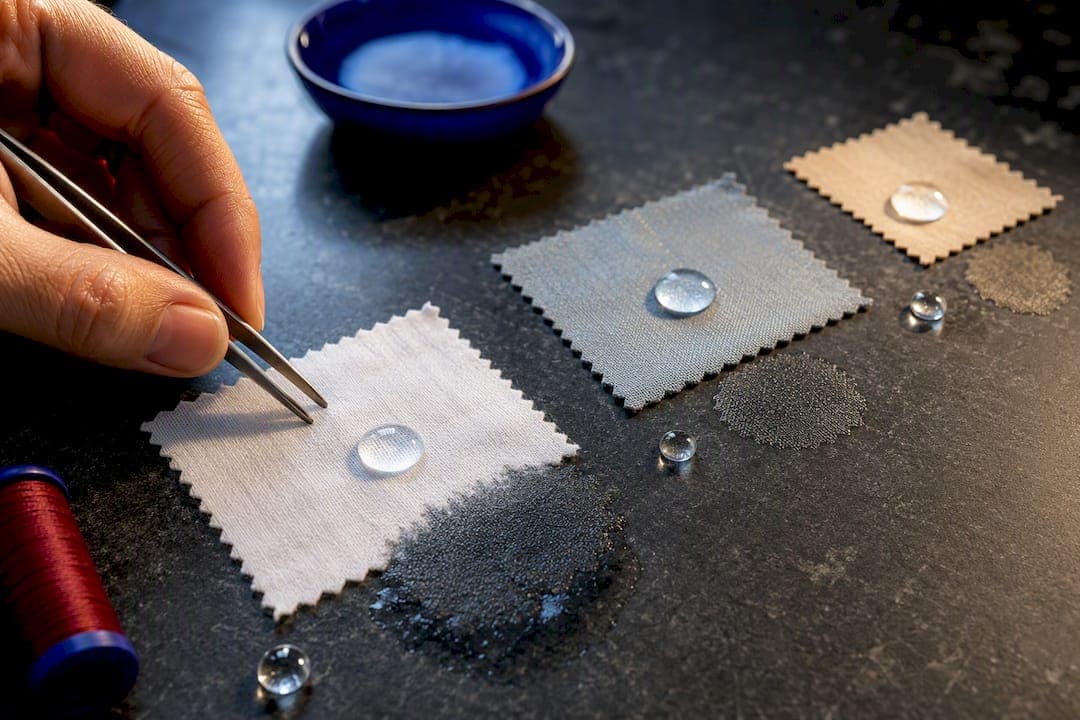
Cotton is a natural cellulose fiber pulled from the cotton plant's seed pod. It's absorbent by nature, which is exactly why it feels cool against skin and why it soaks up sweat instead of pushing it away. Polyester is a synthetic thermoplastic fiber built from petroleum-derived polymers. It's essentially plastic spun into thread, which makes it hydrophobic. Water beads on it rather than soaking in.
When you blend the two, you're not just averaging their properties. You're layering two fibers with opposite chemistries into one yarn, and the ratio determines which fiber's behavior dominates. Manufacturers also intervene at the yarn level. Combed or ring-spun cotton produces a smoother, stronger yarn than basic carded cotton, which changes how a 100% cotton shirt feels compared to another 100% cotton shirt at a different price point. Heat-setting polyester fibers during finishing locks in wrinkle resistance, a step industry guides point to as the real source of poly cotton's low-maintenance reputation.
Two more numbers matter more than most shoppers realize: GSM (grams per square meter) and yarn count. A 180 GSM tee behaves nothing like a 220 GSM tee, regardless of fiber content, and a tightly spun high yarn count fabric will outlast a loosely spun one made from the exact same cotton. Our breakdown of ring-spun cotton versus standard cotton covers this in more detail, and our GSM guide explains why weight often predicts durability better than fiber percentage alone.
Breathability, Strength, Pilling, and Wrinkles: The Real Trade-Offs
Textile testing backs up what your skin already tells you. Physico-mechanical tests comparing 100% cotton, cotton-polyester blends, and 100% polyester found that as polyester content rises, fabric strength, areal density, and drape all improve. As cotton content rises, air permeability and abrasion performance improve instead. Neither fiber does everything well; they trade strengths in opposite directions.
Statistic Callout: In that same study, boosting the polyester share consistently raises tensile strength and fabric density, while boosting the cotton share consistently raises breathability. The relationship runs in a straight line, not a curve, which is why manufacturers can dial in performance by adjusting the ratio rather than switching fibers entirely.
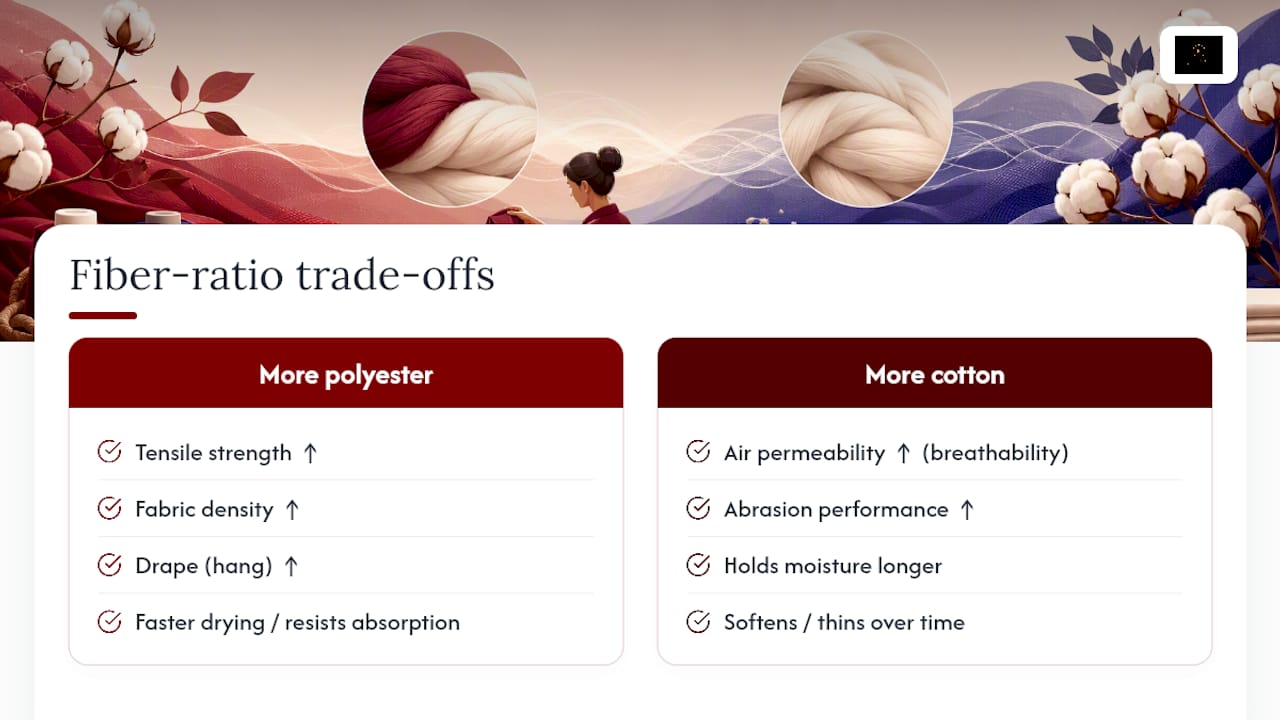
Moisture handling follows a similar split. Cotton absorbs sweat and holds onto it, which feels comfortable at first but leaves fabric damp longer. Polyester resists absorption, so blended fabric dries faster and often feels less clammy during activity, even though it doesn't wick moisture away from skin the way technical performance fabrics do.
Pilling is where poly cotton loses ground over time. Those little fuzzy balls that show up on a well-worn blend are mostly polyester fibers breaking and tangling at the surface. Pure cotton doesn't pill the same way. It tends to soften and thin instead, which is why a five-year-old cotton tee often feels better than a five-year-old poly blend tee, even if the blend held its shape longer. A simple fist test tells you a lot here: crumple a scrap in your hand for a few seconds and let go. Cotton holds the wrinkle. A poly cotton blend springs back toward flat.
Washing and Drying Without Ruining Either Fabric
Cotton and poly cotton don't need identical care, and treating them the same is how shrinkage and pilling happen.
- Wash 100% cotton in warm or cold water, never hot, since hot water accelerates shrinkage in untreated cotton fibers.
- Wash poly cotton blends in cold to warm water. The polyester component resists shrinking, but excess heat still stresses the cotton fibers inside the blend.
- Dry cotton on medium heat or line-dry when possible. High heat over many cycles is the biggest cause of cotton shrinkage complaints.
- Dry poly cotton on low to medium heat. Extended exposure to very high heat can relax the heat-set finish that gives the blend its wrinkle resistance, so cranking the dryer actually undoes the fabric's main advantage.
- For sewing projects, prewash all yardage before cutting. Cotton can shrink 3 to 5 percent on the first wash; poly cotton shrinks far less but still benefits from a test wash.
- Press cotton at a hot iron setting and poly cotton at medium, since polyester can scorch or glaze under high iron heat.
- Skip the dryer's high-heat "cottons" cycle for blends specifically, and use gentle cycles for both fabrics to slow pilling.
Our hoodie washing guide walks through temperature settings in more detail if you're working with heavier cotton or fleece blends.
Matching the Fabric to the Job
Choose 100% cotton for: summer tees, sensitive-skin garments like baby clothes and undershirts, absorbent bedding, and premium screen-printed apparel where ink needs to sit into natural fiber for a soft hand.
Choose poly cotton for: work uniforms and shirts that need to survive daily wear and frequent washing, budget bulk orders like event tees or team merchandise, and bedding aimed at quick-dry convenience over pure breathability.
For sewing specifically: poly cotton presses more predictably and holds seams with less shifting, which matters on garments with lots of piecing. Pure cotton wins when you need superior print clarity or a drape that only natural fiber delivers. Our t-shirt fabric guide breaks this down by garment type if you're shopping rather than sewing.
Three Home Tests to Identify Your Fabric
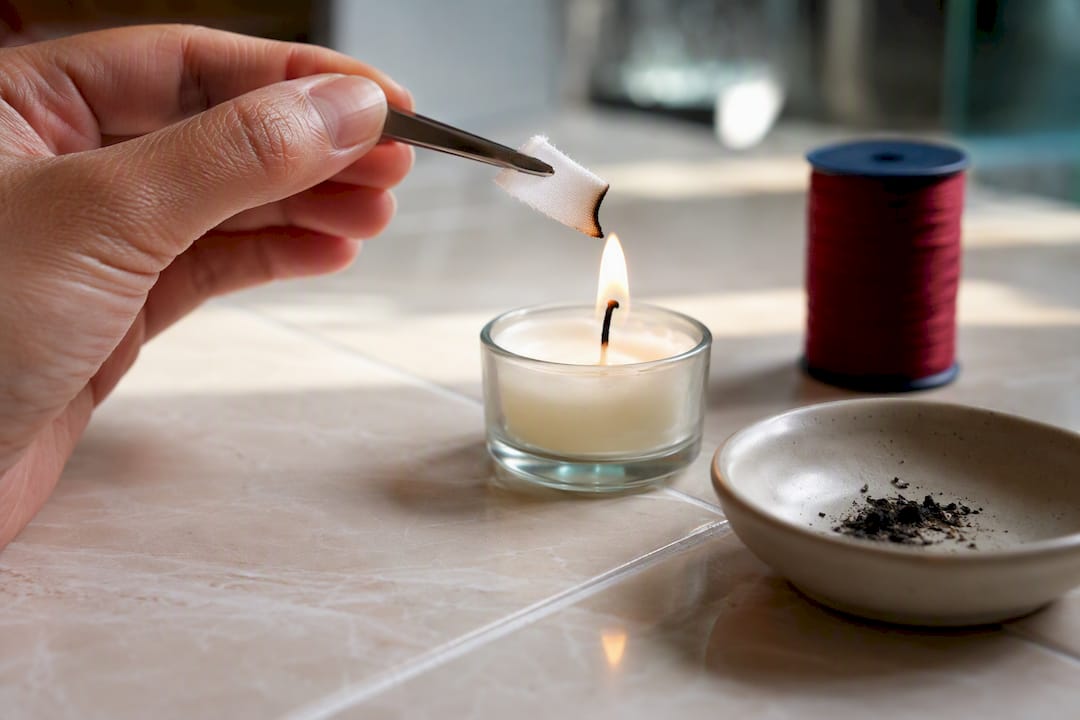
Labels lie sometimes, especially on secondhand or unmarked yardage. The fist test described earlier is your fastest check: cotton holds a crease, poly cotton springs back. A burn test settles it for good, done carefully and only on a small scrap you're willing to sacrifice. Cotton chars into a soft, crumbly gray ash and smells like burning paper. Polyester melts, curls into a hard bead, and smells like burning plastic. Keep in mind that finishing treatments like stiffening or wrinkle-resistant coatings can throw off the finger-feel test, so combine two methods before you trust the result.
The Environmental Trade-Offs Behind Both Fabrics
Cotton is a renewable, biodegradable plant fiber, but growing it is water-intensive and often chemically intensive depending on farming practices. Polyester skips the water-heavy farming step entirely since it's derived from petroleum, but it doesn't biodegrade in any meaningful timeframe, and polyester content is a well-documented source of microplastic shedding during washing.
Poly cotton blends inherit both fabrics' downsides at once. The breathability and pilling losses that come with adding polyester are a fabric-performance problem, but the blend also isn't biodegradable the way pure cotton is, since the polyester fraction persists in soil and water long after the cotton fraction breaks down. That makes end-of-life disposal genuinely more complicated for blended garments than for single-fiber ones.
Neither fabric is a clean environmental winner. Cotton's footprint is heaviest during growing and processing; polyester's footprint shows up later, in landfills and waterways, and in every wash cycle that sheds synthetic fibers into wastewater. If sustainability drives your decision more than performance, organic or recycled cotton reduces the farming impact, while recycled polyester blends reduce (though don't eliminate) the petroleum demand on the synthetic side. The honest answer is that fabric choice here is a trade-off between visible cost and hidden cost, not a simple better-or-worse call.
How Kenny Wade's World Thinks About Fabric Choice
We choose fabric the way a sewist should: hand feel first, then printability, then how the piece holds up after twenty washes. That usually means combed or ring-spun cotton for anything meant to feel soft against skin, and a cotton-forward blend when a design needs to survive heavy rotation. GSM matters as much as fiber content in that decision, which is why we treat weight and yarn quality as seriously as the cotton-to-polyester ratio itself.
— Kenny Wade
Shop the Fabrics This Guide Actually Recommends
Reading about ring-spun cotton and cotton-forward blends is one thing. Finding pieces actually cut from them is another, and that's the gap Kenny Wade's World is built to close. Every piece in the collection is chosen for the same balance this guide argues for: comfort you can wear all day, fabric that holds its shape past the fifth wash, and prints that sit properly into the weave instead of cracking off it.
Browse tees built from softer, cotton-forward fabric if breathability and print quality are your priority, or look for blended pieces designed to survive heavy rotation without wrinkling between wears. Fans who care more about fit and durability than fiber percentages tend to find what they need fast; sewists comparing swatches will get more out of the identification tests above before they buy fabric elsewhere. Either way, start at the Kenny Wade Clothing store and filter by what actually matters to you: how it feels, not just what it's made of.
Sources
- Effect of cotton‐polyester composite yarn on the physico‐mechanical and comfort properties of woven fabric - Akter - 2024 - SPE Polymers - Wiley Online Library
- Cotton Blend Fabric: Types, Benefits & How to Choose
- Is 100% Cotton or 50/50 Better for T-Shirts? Secrets Your Competitors Don’t Want You to Know - Social Media Max
FAQ
Which Is Better, Poly Cotton or Cotton?
Neither is universally better. Cotton wins for breathability and sensitive skin, while poly cotton wins for wrinkle resistance, durability, and cost. The right choice depends on whether comfort or low maintenance matters more for that specific garment.
What Are the Disadvantages of Polycotton?
Poly cotton breathes less than pure cotton and traps more heat and moisture, which can feel uncomfortable in hot weather. It's also more prone to pilling over repeated washes, and the polyester content means it doesn't biodegrade the way 100% cotton does.
Is 100% Cotton or Polyester Better?
For comfort and skin sensitivity, 100% cotton is the stronger pick since it absorbs moisture and breathes better. For durability, wrinkle resistance, and quick drying, polyester or a polyester-heavy blend performs better, though it sacrifices breathability to get there.
Is Poly Cotton 100% Cotton?
No. Poly cotton is a blend of cotton and polyester fibers, most commonly around 50/50 or in cotton-forward ratios like 65/35, not a pure cotton fabric. The blend name itself signals the mix, and checking the garment label confirms the exact ratio.
Does Kenny Wade's World Sell 100% Cotton or Poly Cotton Pieces?
The collection includes both cotton-forward and blended pieces, chosen for hand feel and print performance rather than fiber content alone. Current pricing and available fabric options are listed directly on the Kenny Wade Clothing store.