
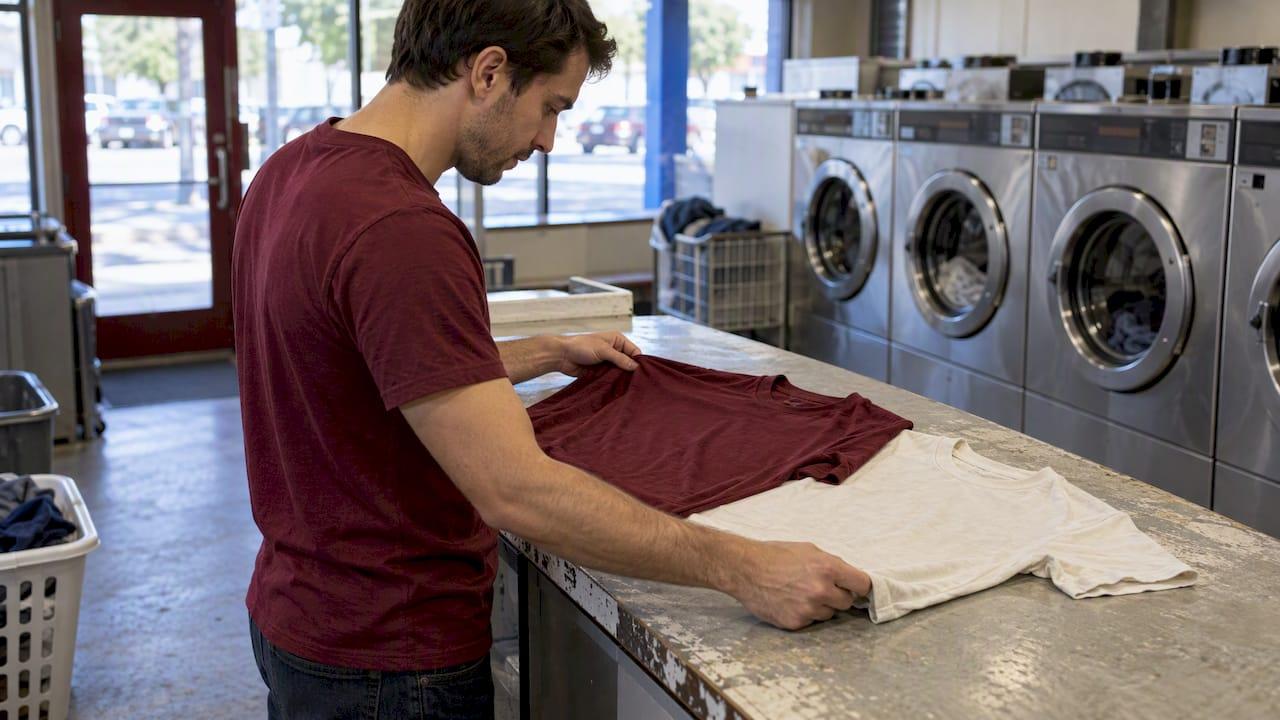
For a soft, drapey everyday shirt, tri-blend wins. For maximum breathability and the sharpest printed graphics, 100% cotton is the better base. Shrinkage and washing habits differ between the two as well, so check the label before you buy: we cover exactly what to look for below.
TL;DR:
- Blended shirts weigh 130 to 145 GSM and shrink 1% to 3%; cotton weighs at least 150 GSM and shrinks 3% to 5%.
- Choose cotton for hot weather, heavy sweating, or detailed graphics: it manages moisture better, tolerates hotter washing, and usually reproduces print detail more faithfully.
- Labels must list each fiber present at 5% or more, so check exact percentages rather than treating tri blend as a fixed recipe.
- A snug cotton tee may tighten after several washes, so consider sizing up; cold water and low heat or air drying limit shrinkage.
Table of Contents
- Tri Blend vs Cotton at a Glance
- What Tri-Blend Fabric Actually Is
- What 100% Cotton Brings to a T-Shirt
- Comfort, Drape, Breathability, and Durability Side by Side
- Care, Washing, and Shrinkage Expectations
- When to Choose Tri-Blend and When to Choose Cotton
- How to Check Fiber Content Before You Buy
- A Quick Buying Checklist
- Why Fabric Choice Shapes How We Design Casual Wear
- Find Your Fit in Kenny Wade Clothing
- FAQ
- Sources
Tri Blend vs Cotton at a Glance
Before getting into fiber science, here is the short version of how these two fabrics stack up against each other.
- Comfort and softness: tri-blend feels broken in right out of the package; cotton feels firmer but still breathable.
- Drape: tri-blend hangs loose and fluid against the body; cotton holds more structure.
- Breathability: cotton absorbs more moisture and lets it evaporate, which keeps skin cooler during the day.
- Durability: tri-blend resists creasing and holds shape well, though the polyester content can pill over time.
- Shrinkage: tri-blend shrinks about 1 to 3%, cotton shrinks about 3 to 5%.
- Printing: cotton typically produces higher-fidelity prints; blends sometimes need different ink or pretreatment.
- Typical weight: tri-blend runs 130 to 145 GSM; standard cotton tees run 150 GSM and up.
For everyday casual wear or band merch meant to be worn on repeat, tri-blend tends to be the crowd favorite. For hot climates, heavy sweat, or a shirt that doubles as a print canvas, cotton is the safer pick.
What Tri-Blend Fabric Actually Is
Tri-blend fabric mixes three fibers, most commonly polyester, cotton, and rayon, in a ratio built around 50% polyester, 25% cotton, and 25% rayon. That exact split is a common marketing example rather than a fixed rule: the actual percentages have to appear on the garment's label, since "tri-blend" by itself is a descriptive term, not a fiber disclosure.
Each fiber does a different job. Rayon gives the fabric its fluid, almost silky hand, which is one reason tri-blend tees can feel soft from the first wear. Polyester adds resilience and a bit of stretch recovery, helping the shirt bounce back into shape after wear. Cotton plays a smaller supporting role here, contributing some breathability without dominating the blend's overall feel.
Weight and shrinkage follow a predictable pattern. Tri-blend tees typically land in the 130 to 145 GSM range, which is lighter than most standard cotton shirts, and they shrink only about 1 to 3% after washing, largely because the synthetic content resists the fiber relaxation that pure cotton goes through. That lighter weight is part of why tri-blend shirts drape rather than hold a boxy shape, and it is also why they work well for a shirt you want to feel casual rather than crisp.

What 100% Cotton Brings to a T-Shirt
Cotton remains the default fabric for T-shirts because it checks nearly every box shoppers care about. It is breathable, absorbs moisture and releases it through evaporation, which helps keep skin cooler over the course of a day, and it is hypoallergenic and biodegradable, making it a comfortable choice for sensitive skin and a lower-impact one at end of life, according to the cotton industry fact sheet.
Weight is where cotton really distinguishes itself from tri-blend. Standard cotton tees typically weigh 150 to 180 GSM or more, and that added weight does real work: it reduces see-through in lighter colors, gives the fabric more structure on the body, and makes the shirt feel sturdier in hand, even before you consider how it holds up over time.
Cotton also tolerates higher wash temperatures than most synthetic blends, which matters for anyone who wants to sanitize heavily worn clothing without worrying about fiber damage. That same resilience, combined with its tight, even fiber structure, is a big reason cotton is often the preferred substrate for high-fidelity printing: ink sits on the surface more predictably, and the fabric holds detail better than many blends, per the FTC's labeling guidance and the cotton fact sheet.
Comfort, Drape, Breathability, and Durability Side by Side
Once you get past the basic descriptions, the real decision comes down to how each fabric behaves under the specific conditions you care about.
Comfort and hand feel split cleanly along fiber lines. Tri-blend feels broken in from the first wear because rayon gives it a fluid, almost liquid drape that neither cotton nor polyester produces on its own. Cotton feels firmer and a little more substantial against the skin, but it breathes well enough that firmness rarely reads as stiffness once the shirt has been washed a time or two.
Drape follows the same split. Rayon's fluidity means tri-blend tees fall softly against the body instead of standing away from it, which is part of why they photograph well for casual and stage wear alike. Cotton, by contrast, holds more shape and structure, which some shoppers prefer for a cleaner, less clingy silhouette.
Breathability and moisture management tip toward cotton. Cotton absorbs more moisture and lets it evaporate, which is what keeps skin cooler during activity or in warm weather, according to the cotton fact sheet. Tri-blend often dries faster in practice, since the synthetic content absorbs less water to begin with, but it does not pull moisture away from skin as effectively.
Durability and pilling come down to a trade-off. Polyester improves resistance to abrasion and helps a shirt hold its shape wash after wash, but that same fiber is the one most prone to pilling over time. Cotton resists certain wear patterns well and tolerates hotter washes, which extends its life in a different way, per the FTC guidance on textile labeling.
Printing compatibility usually favors cotton. Its even, absorbent surface tends to produce higher-fidelity direct-to-garment prints, while blended fabrics sometimes need different printing methods or pretreatment to get comparable results.
- Choose tri-blend when softness and drape matter more than print sharpness.
- Choose cotton when breathability, structure, or graphic quality is the priority.
Pro Tip: If you want both great drape and strong print results, look for a cotton-heavy tri-blend (closer to 50% cotton) rather than a standard polyester-dominant mix.
Care, Washing, and Shrinkage Expectations
Shrinkage is one of the most overlooked differences between these fabrics, and it affects what size you should buy. Tri-blend shirts shrink about 1 to 3% after washing, while 100% cotton shrinks more, typically in the 3 to 5% range.

That gap matters at the sizing stage. A cotton tee that fits snugly off the rack may feel noticeably tighter after a few washes, so many shoppers size up slightly or expect some relaxation in the fit over the shirt's first several washes. Tri-blend holds its original dimensions more closely, so true-to-size ordering is usually safe.
For both fabrics, cold water washing and low-heat or air drying preserve fit and feel the longest. High heat is the main driver of shrinkage and also the fastest way to flatten tri-blend's signature drape, so skip the high-heat dryer setting if you want the shirt to keep its original hang.
When to Choose Tri-Blend and When to Choose Cotton
Matching the fabric to how you will actually wear the shirt makes this decision simple.
- Pick tri-blend for everyday casual tees, band merch, or any shirt meant for repeat, all-day wear where softness and drape matter most.
- Pick cotton for hot climates, heavy-sweat activities, or workwear where breathability and moisture handling come first.
- Pick cotton when the shirt is primarily a canvas for a detailed printed design.
- Pick tri-blend when budget allows for a slightly higher price point in exchange for a softer, more premium feel from the first wear.
Value depends on what you are optimizing for. If longevity and print quality matter most, cotton typically delivers more for the money over the life of the shirt. If feel and drape are the priority, the extra cost of a quality tri-blend is usually worth it.
How to Check Fiber Content Before You Buy
Marketing terms like "tri-blend" are not a substitute for an actual fiber disclosure. Under Federal Trade Commission rules, labels must list the generic name and percentage by weight of every fiber present at 5% or more, in descending order of how much is in the fabric.
There is also a 3% tolerance allowed for fiber content claims, and any premium cotton name used in branding, such as Pima or Egyptian, has to be disclosed accurately on the label rather than implied through marketing language alone.
Before buying, check the product page for: exact fiber percentages, listed GSM, construction notes like "ring-spun" or "combed," and the care instructions. Those four details tell you more about real-world feel and longevity than any product photo can.
A Quick Buying Checklist
A few minutes of label-reading can save you from a shirt that disappoints after the first wash.
- Confirm the fiber percentages on the product page rather than relying on the fabric name alone.
- Note the GSM: lower numbers mean lighter, drapier fabric, higher numbers mean sturdier, more opaque fabric.
- Look for construction details like ring-spun or combed cotton, which usually signal a softer finish.
- Check customer photos for how the shirt actually drapes and fits across different body types.
If you want to dig deeper into any of these factors, our posts on poly cotton versus cotton home tests, T-shirt fabric types, and what GSM really tells you go further into testing and interpreting these numbers yourself.
Why Fabric Choice Shapes How We Design Casual Wear
We think about fabric the same way we think about a song's arrangement: every element has to earn its place. Comfort and style both come from the material first, which is why we weigh drape, breathability, and durability before anything else when we choose what goes into a new piece. A shirt someone actually wants to wear on repeat is the whole point.
— Kenny Wade
Find Your Fit in Kenny Wade Clothing
We build Kenny Wade Clothing around a balance of comfort and style, with pieces designed to move easily between casual days and stage-adjacent nights. Our clothing ties into Kenny Wade's musical identity, so picking up a piece means picking up part of that world too.
- Browse the current lineup and find the fit, drape, and feel that match your priorities.
- Check the product details on each listing for fiber content and fit notes before you order.
Ready to see the current lineup? Shop Kenny Wade Clothing and find your next favorite tee.
FAQ
What is the unhealthiest fabric to wear?
There is no single fabric widely labeled as unhealthiest, since comfort and skin reaction depend on individual sensitivity, weave, and finish. Natural fibers like cotton are generally considered breathable and hypoallergenic, according to the cotton industry fact sheet, while heavily synthetic fabrics can trap heat and moisture more than natural fibers do.
Does tri-blend fabric shrink?
Tri-blend typically shrinks about 1 to 3% after washing, compared with 3 to 5% for cotton, largely because the synthetic fiber content resists the relaxation that pure cotton fibers go through.
What do tri-blend shirts feel like?
Tri-blend shirts feel soft and already broken in from the first wear, with a fluid drape that falls against the body rather than standing away from it. That feel comes mainly from the rayon content, which gives the fabric a silky quality that cotton and polyester do not produce alone.
What is tri-blend fabric?
Tri-blend fabric combines three fibers, typically polyester, cotton, and rayon, often in a mix close to 50% polyester, 25% cotton, and 25% rayon. The exact ratio varies by manufacturer, so the real percentages always need to appear on the garment label rather than being assumed from the name.
Sources
- Threading Your Way Through the Labeling Requirements Under the Textile and Wool Acts | Federal Trade Commission
- FACT SHEET
- § 303.16 - Arrangement and disclosure of information on labels., Part 303 - Rules and Regulations Under the Textile Fiber Products Identification Act, SubChapter C - Regulations Under Specific Acts of Congress, Chapter I - Federal Trade Commission, Title 16 - Commercial Practices, Code of Federal Regulations