
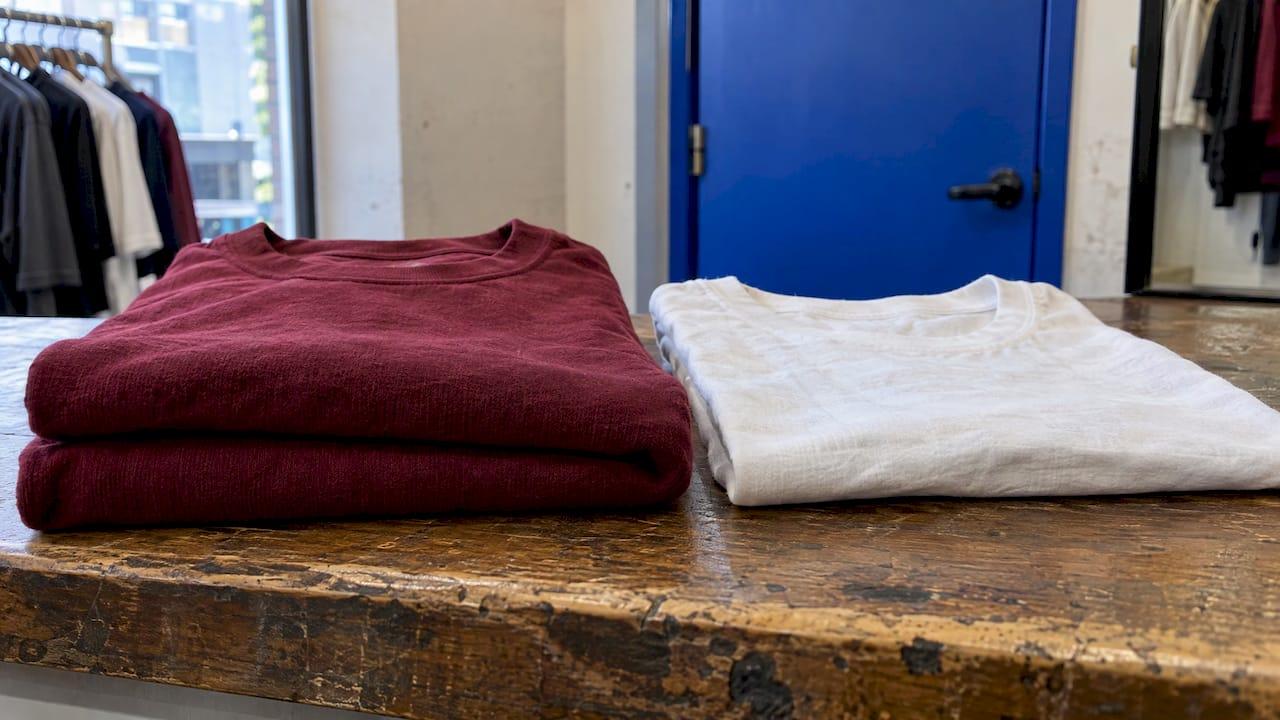
A heavyweight T-shirt is a tee cut from thicker, denser fabric than a standard one. In practice that usually means about 6 oz per square yard or more, which is roughly 200 GSM and up. The label is a fabric-weight category, not a fit, and no single rulebook sets it, so the number on the tag matters more than the word "heavyweight."
That is the short answer. The rest of this guide shows how the weight is measured, what each range feels like on your body, why a heavy shirt is not automatically a good one, and how to pick the right weight for the way you actually dress.
TL;DR
- A heavyweight tee generally starts around 6 oz/yd² (about 200 GSM) and runs up to roughly 9 oz, though brands draw the line in different places.
- Standard tees sit around 4 to 5 oz, so a heavyweight shirt is noticeably thicker, stiffer in drape and warmer.
- Weight is not quality: cotton type, yarn, stitching and finishing matter just as much.
- Heavyweight is not the same as oversized. Weight is the fabric, oversized is the cut.
- Choose weight by season and silhouette: lighter for heat and slim fits, heavier for structure, boxy shapes and cooler days.
Table of Contents
- What "heavyweight" actually means on a T-shirt
- Ounces vs. GSM: reading the number
- How a heavyweight tee feels and wears
- Is heavyweight the same as oversized?
- Is heavy cotton automatically good quality?
- How to choose the right weight
- Caring for a heavyweight tee
- Our perspective
- Shop casual wear built for comfort and style
- FAQ
- Sources
What "heavyweight" actually means on a T-shirt
The word describes how much a piece of fabric weighs for a fixed area. A heavier fabric has more yarn packed into every square yard, so it is thicker, denser and more opaque. That is all the term promises.
Here is where it gets slippery. According to GQ's guide to heavyweight tees, standard T-shirts commonly weigh around 4 to 5 oz, while heavyweight ones generally begin near 6 oz and go up to about 9 oz, or approximately 200 to 290 GSM. Yet Gear Patrol's roundup points out that there is no real definition separating heavyweight from regular tees, and the shirts it lists run from 6 to 13 oz.

So when you see "heavyweight" on a product page, read it as "heavier than the usual blank tee," then look for the actual figure. A brand that states its fabric weight is giving you something you can compare. A brand that only says "heavy" is leaving the comparison to your hands.
Ounces vs. GSM: reading the number
Two units show up on tags and product pages, and they describe the same thing.
- oz/yd² (ounces per square yard) is the common unit in US apparel specs.
- GSM (grams per square meter) is the metric version, used by many global brands and mills.
As Shopify's guide to shirt weight notes, one oz/yd² equals approximately 33.9 GSM. That gives you a quick way to translate:
| Ounces per sq. yard | Approx. GSM | Typical label |
|---|---|---|
| 4 oz | 136 | Lightweight |
| 5 oz | 170 | Standard or midweight |
| 6 oz | 203 | Entry-level heavyweight |
| 7.5 oz | 254 | Solidly heavyweight |
| 9 oz | 305 | Very heavy |
The GSM column is my own arithmetic from the 33.9 conversion, so small differences from a brand's published figure are normal. GQ's 200 to 290 GSM range for 6 to 9 oz is a rounder version of the same idea.
Typical weight bands
Brands and guides cut the bands in slightly different places. Shopify's 2026 guide puts lightweight tees at 3 to 4.5 oz/yd², midweight at 5 to 6 oz, and heavyweight at 6.5 to 8 oz or more, with super-heavy starting at 8 oz (240+ GSM). Other sources start heavyweight at 6 oz. Neither is wrong; they are different house rules for a term nobody regulates.
A practical way to hold it in your head:
- Under about 4.5 oz: light, drapey, breathable.
- About 5 to 6 oz: the everyday middle.
- About 6 oz and up: heavyweight.
- Above roughly 8 oz: the heaviest tees you will commonly find, with a firm, almost jacket-like hand.
If you are wondering whether 7.5 oz is heavy for a shirt, it is. At 7.5 oz you are roughly 254 GSM, above the 6 to 7 oz range many guides call heavyweight and below Shopify's 8 oz line for super-heavy. Expect a firm shirt that holds its shape when new.
For a deeper look at how the metric works across garments, our explainer on what GSM in clothing really tells you about quality goes through it in detail.
How a heavyweight tee feels and wears
Numbers are abstract. Here is what changes when you put the shirt on.
Thickness and opacity. A heavier fabric is thicker between your fingers and less see-through. White and light colors look cleaner because less skin tone shows through.
Drape. GQ reports that heavyweight fabric drapes more stiffly and less flowy than lighter fabric. A light tee clings and falls; a heavy one holds an outline away from your body. That stiffness is exactly what many people want from a boxy or relaxed shape.
Warmth. The same source notes that heavier fabric retains heat better, which makes it more useful in cooler months. In midsummer humidity, a 6 oz tee can feel like too much, so be realistic about your climate.
Durability. GQ describes the best heavyweight examples as tough and built to last. More material in the fabric generally means more to wear through at the collar, hem and seams, though construction decides how that plays out.
Break-in. New heavyweight tees often feel firm. They soften with washing and wear, then settle into your shape. If you buy one and it feels boardy on day one, that is normal.
Weight changes the silhouette
Two shirts cut from the same pattern will look different in different weights. A lighter fabric follows your body and gives a softer, more natural line. A heavier fabric stands off the body slightly and keeps its shape. That is why heavy fabric and boxy cuts show up together so often: the fabric has the backbone to hold the shape you drew.
The flip side is real too. Fabric that is too light can make a structured, oversized shape collapse, and fabric that is too heavy can feel stiff if what you want is an easy everyday drape. Pick the weight that matches the silhouette, not the biggest number you can find.
Is heavyweight the same as oversized?
No. Heavyweight describes fabric weight. Oversized describes the pattern.
An oversized tee is engineered with extra width through the chest, a dropped shoulder seam, roomier sleeves and a considered length. Buying a regular tee two sizes up is a different thing: it enlarges every measurement at once, so the sleeves hang to your elbows and the shoulders slump in the wrong place.
The two ideas pair well, which is why people confuse them. A heavyweight fabric supports an oversized shape and keeps it crisp. But you can find a light, flowy oversized tee, and you can find a slim-cut heavyweight one. If you want the boxy look, check both the weight and the cut description.
For help with proportions, our guides on streetwear for shorter men and plus size streetwear outfit formulas explain how roomy, structured tees sit on different frames. If you want to see how a clean heavyweight base works under a print, try these graphic tee outfit formulas.
Is heavy cotton automatically good quality?
Not automatically. This is the most common mistake shoppers make, and it is worth slowing down on.
GSM tells you how much the fabric weighs. It does not tell you what the fiber is, how well it was spun, how tightly it was knit or how it was finished. Two 240 GSM tees can feel completely different. One may be soft and smooth with a clean, dense knit; the other may be coarse and prone to pilling.
What to weigh alongside the number:
- Cotton and yarn type. Longer fibers and finer, better-prepared yarns tend to feel smoother and hold up better.
- Knit density. A tight, even knit resists stretching and twisting after washes.
- Stitching. Look at the collar, shoulder seams and hem for even, secure stitches. Our piece on stitch quality versus GSM in heavy and mid hoodies applies the same thinking to a heavier garment.
- Collar construction. A ribbed collar that bounces back keeps a tee looking right for years.
- Finishing and shrinkage. Pre-washed or pre-shrunk fabric behaves better after the first wash. See how fiber blends differ in our tri-blend versus cotton shrinkage comparison.
Fabric choice is its own topic. Our guide to T-shirt fabric types covers cotton, blends and when each makes sense.
How to choose the right weight
Start with where and when you will wear the shirt, then match the weight.
By season
- Hot, humid summers: stay near the lighter end of heavyweight, around 6 oz, or go midweight.
- Spring and fall: 6 to 7.5 oz works well alone or as a layer under an open shirt or jacket.
- Winter layering: heavier tees give a solid base layer with more warmth than a thin one.
By look
- Boxy, cropped or oversized silhouettes: go heavier so the shape holds.
- Slimmer, fitted looks: a midweight or lower-end heavyweight avoids a stiff, bulky feel.
- Graphic tees: a thicker fabric gives a stable canvas that keeps a print looking flat and crisp.
By use
- Daily wear: 6 to 7 oz is a comfortable range for most people.
- Long-lasting basics: pay as much attention to the knit and collar as the number.
- Statement piece: the heaviest weights read as more structured and intentional.
A quick in-hand check
When you can handle a shirt, hold the fabric up to a light. Even, dense cloth that does not show much through is a good sign. Pinch it: it should feel substantial but not stiff like cardboard. Turn it inside out and look at the seams. Then check the care label for fiber content, because the weight alone only gets you partway.

When you are shopping online, look for the fabric weight in the product details. If the page gives it in GSM, divide by about 33.9 to get ounces. If you want a worked example of the styling side, a garment-dyed heavyweight tee shows how a thick, relaxed shirt reads in a real fit.
Caring for a heavyweight tee
Heavy fabric is forgiving, but a few habits keep it looking its best.
- Wash cool and inside out. This protects color and any print.
- Go easy on heat. High dryer heat is the main cause of shrinkage in cotton, so use low heat or hang the shirt to dry.
- Do not overload the machine. Thick fabric needs room to rinse properly.
- Fold rather than hang. Hanging a heavy tee for long stretches can pull on the shoulders and stretch the neckline.
If you expect a bit of shrinkage, size with that in mind, especially for garment-dyed or untreated cotton.
Our perspective
We think heavyweight is one of the most misunderstood words in casual wear. People hear it and assume it means better. It means heavier. The part that makes a tee worth wearing is how the weight, the cut and the stitching work together.
When we design casual pieces, we start with comfort, then style, then versatility. A shirt should feel good enough that you forget about it, look sharp enough that you want to be seen in it, and work across more than one occasion. Weight is one tool for that, along with the cut and how the garment is finished.
That is why we keep writing about GSM, fabrics and stitching on our blog. A shopper who understands the numbers shops better, and a shopper who shops better ends up in clothes they actually wear. Fashion and music both come down to feel, and that is what we build around.
Kenny Wade
Shop casual wear built for comfort and style
Kenny Wade's World is a fashion platform for casual wear designed around comfort, style and versatility, with each piece meant to work across different occasions. Our clothing and merchandise carry Kenny Wade's musical identity, so what you wear connects to the music behind it.
Browse the full range of Kenny Wade clothing and find the pieces that fit your wardrobe.
FAQ
What is a heavyweight tee?
A heavyweight tee is a T-shirt made from thicker, denser fabric than a standard one. Most guides put the start at about 6 oz per square yard, or roughly 200 GSM. GQ places heavyweight tees between about 6 and 9 oz, while standard tees run around 4 to 5 oz.
Is 7.5 oz heavy for a shirt?
Yes. At 7.5 oz/yd², a tee is roughly 254 GSM, which sits above the entry point for heavyweight and just under the 8 oz mark where Shopify's guide begins calling shirts super-heavy. Expect a firm, structured feel that softens with washing.
Is heavyweight the same as oversized?
No. Heavyweight is about the fabric's weight and oversized is about the cut: wider chest, dropped shoulders and roomier sleeves. They often appear together because thick fabric holds a boxy shape well, but one does not guarantee the other.
Is heavy cotton good quality?
Not on weight alone. GSM measures how much the fabric weighs, not the quality of the fiber, yarn or stitching. Look at the knit, the collar, the seams and the finishing along with the number.
Are heavyweight tees too hot for summer?
They can be. Heavier fabric retains heat better, according to GQ, so it is most comfortable in cooler months. In hot weather, choose the lighter end of heavyweight, around 6 oz, or a midweight tee.
Sources
- The Best Heavyweight T-Shirts, Measured by Sheer Beefiness (GQ)
- The Best Heavyweight T-Shirts for Bulking Up Your Wardrobe (Gear Patrol)
- How Much Does a Shirt Weigh? (Shopify)