
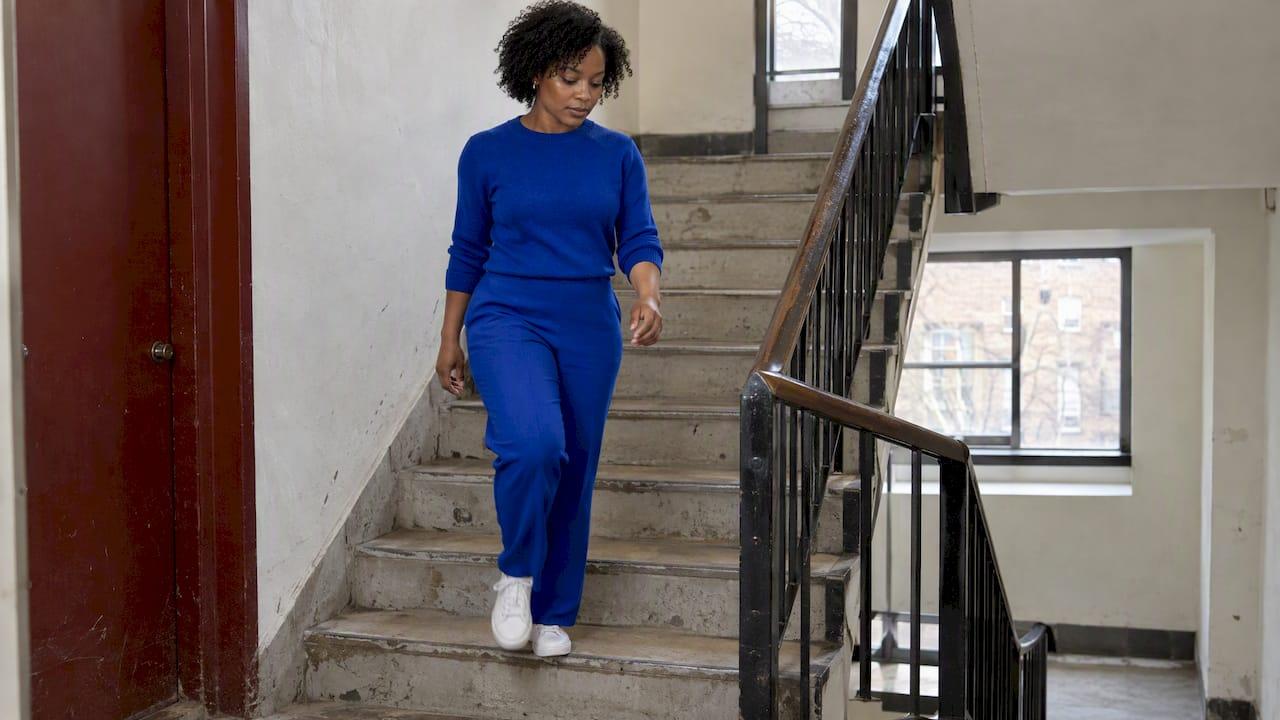
A monochrome outfit is built around a single color, or several shades of that color, from top to shoes. It looks polished because there is nothing to argue with: the eye reads the shape of the clothes instead of a clash of colors. It only works when you vary texture, proportion and shade. Do that and a plain tee and trousers start to look like a decision.
This guide covers how to choose your color, the rules that stop a one-color look from going flat, twelve outfit formulas you can copy, and what to wear for travel, work, and a monochrome party.
TL;DR
- Monochrome means one color throughout. Tonal dressing uses several light-to-dark values of one hue. Both work on the same principle.
- Texture does the work that contrast usually does. Mix at least two fabrics, such as knit with leather or silk with wool.
- Balance proportions: a roomy top goes with a slimmer bottom, or the reverse.
- Start from your darkest piece and add lighter values. Keep shoes neutral or tonal so the leg line stays long.
- Buy a few well-cut pieces in one palette and you get dozens of outfits.
Table of Contents
- Monochrome vs. tonal: what is the difference?
- Why one color works so well
- Choose your color first
- The rules that keep monochrome from looking flat
- 12 monochrome outfit formulas for women
- How to wear it in real life
- Mistakes that make one-color looks fall flat
- Our perspective
- Build your palette with Kenny Wade Clothing
- Quick checklist before you leave the house
- FAQ
- Sources
Monochrome vs. tonal: what is the difference?
People use the two words as if they were the same, and in practice they overlap. Strictly, monochrome means a single color throughout, while tonal dressing builds an outfit from one hue at different values, light to dark. A cream sweater with ivory trousers is tonal. A black sweater with black trousers is monochrome.

If you searched for tonal outfits, you are in the right place. Every rule below applies to both. The only practical difference is how much you can lean on shade changes to add interest. In a strictly one-shade outfit, texture carries all the weight. In a tonal outfit, you also have light and dark.
Why one color works so well
There are two reasons, one visual and one practical.
The visual reason: with no competing colors or loud prints, the cut and fabric of each piece take center stage. Observers of minimalist labels such as Céline have noted that this look depends on being sumptuous and stark at once. That means the tailoring has to be intentional, because there is nowhere to hide.
The practical reason: it makes getting dressed faster. Stylist Erin Walsh describes a color palette and uniform as a way to pack and dress with fewer decisions, and the idea works just as well at home. Pick a palette, buy multiples of the pieces you love, and combinations take care of themselves.
Choose your color first
Start with a color you already wear and feel good in. Here is a quick way to think about the options.
| Color family | Mood | Easiest first outfit | Watch out for |
|---|---|---|---|
| Black | Sharp, evening-ready | Knit top, leather trousers, boots | Fabrics that fade differently and look mismatched |
| White and cream | Fresh, expensive-looking | Ribbed tank, linen trousers, loafers | Sheer fabrics and stains |
| Gray | Soft, forgiving | Sweatshirt, wide-leg sweatpants, sneakers | Mismatched undertones (cool vs. warm gray) |
| Camel, tan, beige | Warm, polished | Turtleneck, trousers, trench | Washing out near the face |
| Olive or green | Relaxed, earthy | Utility jacket, cargo pants, tee | Greens with different undertones clashing |
| Bold (red, cobalt, pink) | Confident, high-impact | One statement dress or suit | Too many shades that do not quite match |
If you are new to this, go neutral. Neutrals are forgiving when two pieces are a shade off. Bolder colors punish a near-miss, so buy those pieces together or from the same dye lot when you can.
The rules that keep monochrome from looking flat
1. Mix at least two textures
This is the single most useful rule. Stylist Pernille Teisbaek calls monochrome one of her favorite ways to layer: one main color, then different fabrics and shapes. Think leather with cashmere, or silk with wool. The same source advises mixing at least two distinct textures to avoid looking like a bulky, shapeless stack when you layer.

Designers lean on this too. Michelle Rhee's approach, as described in T Magazine, pairs materials like satin with utility-inspired details, so a restrained palette still feels rich rather than basic.
2. Balance the silhouette
If the top is oversized, make the bottom fitted. If the trousers are wide, keep the top closer to the body. The Vogue layering guide above frames balance as the secret to a harmonious line. Two big pieces in one color can read as a tent, and two tight pieces can read as a uniform.
There is an exception. Going deliberately roomy on both can look sharp if the fabric has structure, such as a stiff cotton shirt over wide pleated trousers. Make sure the shoulder and hem lines are crisp.
3. Build from the darkest piece
In tonal outfits, practitioners suggest starting with the darkest garment and adding lighter values around it. The result is a gradient that looks planned. It also tends to lengthen the body, which is why many people put the darkest tone on the bottom half and go lighter on top.
4. Think about the ankle
With a head-to-toe look, shoes are where it can go wrong. Stylists in the Jil Sander circle have been noted for avoiding shoes in a starkly different texture or tone, because the contrast can cut the leg at the ankle. A neutral or tonal shoe keeps the line unbroken. Matching exactly is optional. Close is enough.
5. Keep accessories quiet
A bag, belt, or scarf can match the outfit or sit one shade away. Jewelry is the exception: metal tones add a bit of contrast without breaking the palette. Put your effort into the shape of the bag rather than its color.
12 monochrome outfit formulas for women
Each formula uses only a few pieces, so you can test it from your own closet before you buy anything.
- All-black, texture mix. Fine-gauge knit top, leather or faux-leather trousers, black ankle boots. Add a wool coat for cold days.
- All-white, summer. Ribbed tank, linen wide-leg pants, white leather sneakers. Keep fabrics opaque.
- Cream and ivory tonal. Ivory turtleneck, cream trousers, an oatmeal coat. The three values give the look depth.
- Gray sweats, upgraded. Heather gray hoodie, charcoal wide-leg sweatpants, a structured gray overcoat on top. The coat is what makes it look intentional.
- Camel head to toe. Camel knit, tan straight-leg trousers, a trench in a slightly lighter shade, brown loafers.
- Olive utility. Olive tee, olive cargo pants, utility jacket. For more on getting this right, our cargo pants outfit guide for women covers fit and proportion rules.
- Blue on blue. Light-wash denim shirt with dark-wash jeans, or a chambray top with navy trousers. Keep the washes clearly different, not almost the same.
- One-color dress and tights. A knit dress with matching opaque tights and boots. A tonal coat finishes it.
- Matching set, broken up. Wear a matching top and bottom as a pair once, then split them and wear each with white and black for more outfits.
- Red statement. A red dress with a red bag and neutral shoes. Let one piece be the loudest thing in the room.
- Pink tonal. Blush knit, rose trousers, a deeper pink bag. The depth of shade changes keeps it from looking like a costume.
- Monochrome streetwear. Oversized tee in one color, relaxed trousers, chunky sneakers, and a cap. Our post on monochrome streetwear outfits with better texture has ten more.
How to wear it in real life
For work
Tonal neutrals read as put-together without trying hard. A fitted knit with tailored trousers in the same family, plus a blazer one shade darker, is a safe formula for most offices. Stick to matte or lightly textured fabrics, which look more professional than shiny ones.
For travel
A single palette is a packing strategy. Walsh's advice is to start with three pieces that capture how you want to feel and build a color palette around them. Stylist Dianne Garcia packs jeans, a sweater, T-shirts, one pair of sneakers and one pair of basic heels or boots in her carry-on. If everything shares a palette, every top works with every bottom. See our five travel outfit formulas for women for how that looks in practice.

For a casual weekend
Matching sweats, a tonal denim look, or an all-white tee and trouser combination takes about as much effort as a basic outfit and looks sharper. If you want a base of reliable pieces, start with our neutral wardrobe essentials.
For a monochrome party or dress code
A monochrome party usually means everyone picks a color, or the host sets one. Choose the color you wear best, then spend your effort on texture: a satin skirt with a knit top, or a velvet blazer over a silk tee. If the invitation says black and white, treat it as two separate monochrome lanes and stay in one. Check the invitation or ask the host about any specific rules.
Mistakes that make one-color looks fall flat
- Near-matches. Two blacks that fade differently, or two creams with different undertones, look like an error. Either match closely or go clearly lighter and darker.
- One texture only. Cotton jersey top and cotton jersey bottoms in the same shade look like pajamas. Swap one piece for a different fabric.
- Skipping shape. If everything is baggy or everything is tight, the outfit loses its line.
- Wrong undertone for your skin. Colors near the face matter most. If a color drains you, put it on the bottom half and wear a better shade near your face.
- Too many details. Prints, logos, and heavy hardware compete with the one-color effect. Keep one detail at most.
Our perspective
We think monochrome is the easiest way to look like you planned your outfit. It is also the least forgiving, because the clothes have to do the talking. At Kenny Wade's World we build casual wear around comfort, style and versatility, and a one-color palette is where those three things meet. A piece that is comfortable enough for the day, cut well enough to stand alone, and neutral enough to repeat is a piece you will wear again and again.
Our advice is to stop treating monochrome as a special-occasion trend. Start with one color you already like, pick pieces with different textures, and get the proportions right. Wear it with sneakers on a Saturday and with boots on Monday. The same logic runs through our blog on minimal streetwear formulas and the music-meets-fashion culture we are building around Kenny's work.
— Kenny Wade
Build your palette with Kenny Wade Clothing
If you want casual pieces designed to mix and match, take a look at Kenny Wade Clothing. It is made for people who want trendy, comfortable clothes that work across occasions, with the music and community behind them. Start with a color you wear often and build outward from there.
Quick checklist before you leave the house
- Is there one clear color story, or a clear light-to-dark gradient?
- Are there at least two different textures?
- Is one piece roomy and the other closer to the body?
- Do the shoes keep the leg line, either neutral or tonal?
- Is there only one standout detail?
If you can answer yes to four of the five, you are ready. If you want to see how one-color dressing differs when you add a single contrasting block, read our color blocking guide for beginners. For a warmer palette, try earth tone streetwear. For a bright palette, see all-white streetwear and how to keep it clean. You can also browse our women's streetwear formulas.
FAQ
What is a monochrome outfit?
It is an outfit built around one color, or different shades of one color, from top to shoes. A white blouse with white pants is monochrome. So is a mix of light and dark gray. The look works best when you vary textures and proportions.
What is the 3-3-3 rule for outfits?
It is a capsule wardrobe method: three tops, three bottoms, and three pairs of shoes that all mix and match. Combined with a single color palette, nine pieces can produce a lot of monochrome looks. Choose pieces that work with each other, not just one outfit each.
Do my shoes have to match the rest of the outfit?
Not exactly. Shoes in a neutral or tonal color keep the leg line unbroken, which is why many stylists avoid a stark contrast at the ankle. A close shade in a different texture, such as a suede boot with a wool trouser, often looks better than a perfect match.
How do I wear a monochrome look without looking flat?
Mix at least two textures, such as knit and leather or satin and wool. Add light and dark values of your color, and keep proportions balanced, with a roomy piece against a slimmer one. A bag or jewelry in a slightly different tone adds detail without breaking the palette.
Can I wear monochrome in a bold color?
Yes. Start with one bold statement piece, such as a red dress or cobalt suit, and keep shoes and accessories neutral or in the same family. Bold shades are less forgiving than neutrals, so check that the pieces really match in daylight.
Sources
- Pernille Teisbaek's Tips on How to Layer for Fall, Vogue
- Dianne Garcia on her travel wardrobe, Vogue
- Anne Hathaway's Stylist Taught Me How (and What) to Pack, Wirecutter
- A New Line of Subtle, Glamorous Clothes, The New York Times
- Phoebe Philo and Her Disciples, The New York Times
- Tonal dressing: one colour, many values, GetStyleGo