
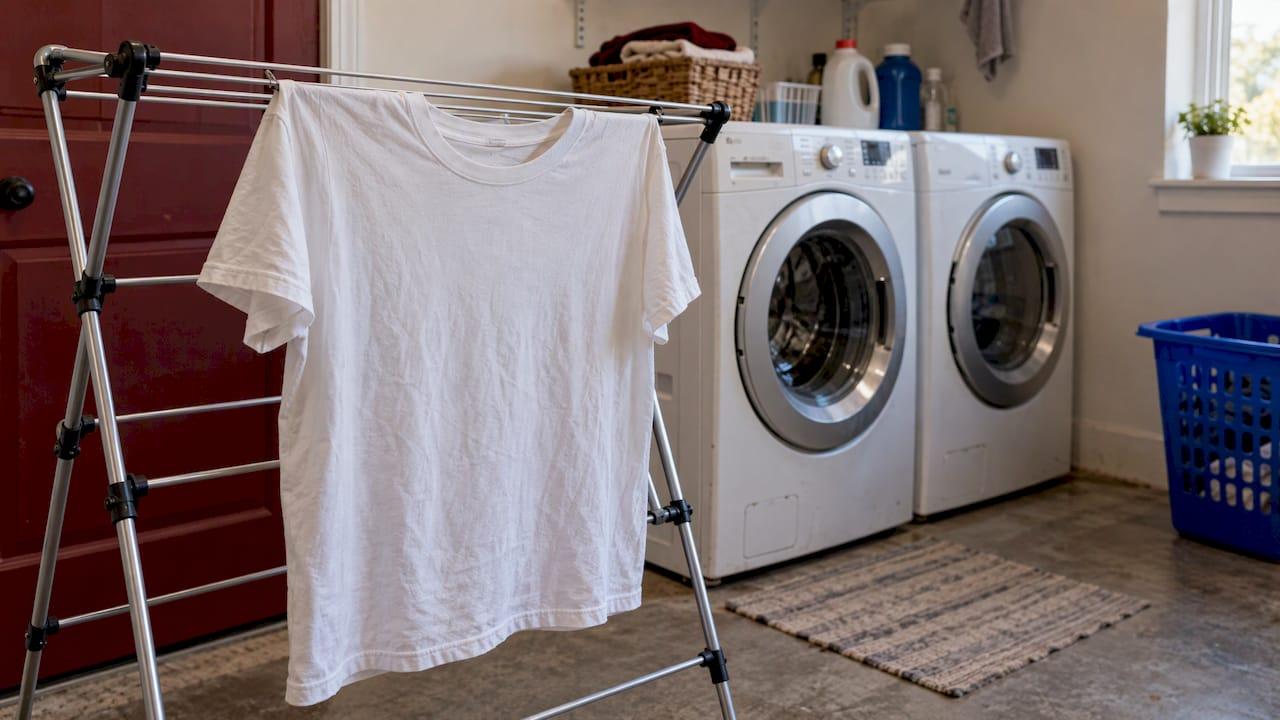
Preshrunk cotton is fabric, or a finished garment, that went through a shrinking step at the factory so it moves less once you start washing it. Cambridge's US dictionary puts it as clothes shrunk by washing before being sold. The catch is that "preshrunk" means less shrinkage, not zero shrinkage. How much your tee or hoodie still shrinks depends on the fabric and, mostly, on how you wash and dry it.
That matters if you buy casual wear online, where you can't try anything on first. Here is what the label means, how factories do it, how much movement to expect and how to keep the fit you paid for.
TL;DR
- Preshrunk means the fabric went through a shrinking process in manufacturing to minimize shrinkage after you buy it.
- It does not mean shrink-proof. Heat is the biggest factor left, and tumble drying releases all the remaining shrinkage.
- Knits like tees and hoodies tend to move more in length than in width, so size and care matter most there.
- Cold or warm wash and low heat or air drying are the simplest way to protect a preshrunk piece.
- Look at the care label and the fabric description before you buy: they tell you more than the word "preshrunk" alone.
Table of Contents
- What preshrunk cotton means
- How cotton gets preshrunk
- Does preshrunk cotton still shrink?
- A worked example: what a few percent looks like
- How to tell if a cotton garment is preshrunk
- How to wash and dry preshrunk cotton so it keeps its fit
- Preshrunk vs. shrink-to-fit
- How to shop for casual wear with shrinkage in mind
- Where Kenny Wade's World fits
- Perspective
- FAQ
- Sources
What preshrunk cotton means
Cotton fibers swell when they get wet and relax when they dry. During weaving, knitting and finishing, the fabric is pulled and held under tension. The first time it gets soaked and tumbled, those fibers and yarns try to return to their natural, relaxed shape, and the garment gets smaller. That is shrinkage.
Preshrunk cotton has already been through a controlled version of that. Dictionary.com describes preshrinking as subjecting textiles or garments to a shrinking process before marketing, to minimize later shrinkage. The key word is minimize. The factory removes most of the movement so you don't have to do it in your own washing machine.
So when you see "100% preshrunk cotton" on a tag, read it as two facts: the fiber is cotton, and the maker treated it to reduce shrinkage. It says nothing about the weight, the knit, the cut or the quality of the print. Those decide how a piece feels and hangs.
Preshrunk fabric vs. a preshrunk garment
You will see both phrasings, and they mean slightly different things. Some makers preshrink the fabric roll before cutting and sewing. Others wash the finished garment. The dictionary definition covers clothes washed before sale, while the fabric version is the more common route for mass-produced tees and sweatshirts. Either way, the goal is the same: the piece you receive should already have most of its shrinkage behind it.
How cotton gets preshrunk
You don't need the engineering to shop well, but a quick look explains why some pieces behave better than others.
Sanforization. This is the best-known method, patented by Sanford Lockwood Cluett in 1930. According to Wikipedia, it stretches, shrinks and fixes woven cloth in both length and width before it is cut and sewn. It is mostly associated with woven cotton such as denim and shirting. That is why jeans labeled "sanforized" are a familiar sight.
Relaxation, compaction and finishing. Knits, the stretchy jersey used for tees and hoodies, are handled differently. Cotton Incorporated's technical guide explains that modern finishing plants use relaxation drying, compaction and, in some cases, chemical processes to overcome processing shrinkage and reduce construction shrinkage. In plain terms: the factory lets the fabric relax, then mechanically compresses it so the loops sit closer together before the garment is ever cut.
Two takeaways for a shopper. First, the process is real and effective, which is why preshrunk basics hold their size so much better than untreated cotton. Second, it is a factory step with a target, not a guarantee, and the result varies from one fabric and finisher to another.

Does preshrunk cotton still shrink?
Yes, a little. This is the most common misunderstanding about the term, and it is why "preshrunk" and "shrink-proof" are different things.
The American Cleaning Institute notes that cotton shrinks in the wash unless it has been preshrunk in manufacturing, and that even with preshrunk fabric a garment maker may expect some residual shrinkage. Cotton Incorporated's guide adds that it can take several wet and dry cycles for fabric to reach fully relaxed dimensions, though a single cycle may remove around 90% of the total shrinkage available.
That last point is useful. Most of the change happens early. If a piece is going to tighten up, you will usually notice it after the first wash and dry, then it settles.

Heat is the deciding factor
The same guide states that care labeling and laundering practices have a direct influence on shrinkage performance. If the label calls for line or flat drying, mostly elastic shrinkage affects the garment. If tumble drying is suggested, all the available residual shrinkage will be realized. It also finds that below 20% moisture, the greatest relaxation happens during tumble drying.
Put simply, the dryer is where cotton does most of its final settling. The washing machine soaks the fibers, but the tumbling heat at the end is what pulls them in. A preshrunk tee that spends its life air-dried can look nearly unchanged, and the same tee on a hot dryer cycle can still lose some length.
Why a tee shrinks differently than jeans
There are two things to know about how fabric is built.
- Knits vs. wovens. Tees, hoodies and sweatshirts are knits, made of interlocking loops. Those loops are pulled long during production, and they tend to spring back lengthwise when washed. Wovens, such as denim and twill, are more stable.
- Length vs. width. Shrinkage is usually reported separately for length and width. On a knit tee, length is typically where you notice it first: a hem that rides up, a crop you didn't plan.
Our own guide to tri-blend versus cotton shrinkage lays out the typical ranges we work with, about 1 to 3% for tri-blends against 3 to 5% for cotton, which shows how much the fiber mix alone changes the outcome.
A worked example: what a few percent looks like
Percentages sound tiny until you apply them to a garment. Say a tee measures 28 inches from shoulder to hem.
- At 3% shrinkage it loses about 0.84 inches, under an inch.
- At 5% shrinkage it loses 1.4 inches.
- At 8% it loses about 2.2 inches, which is the difference between a regular tee and a cropped one.
For most people, under an inch is invisible. Past an inch and a half, you notice. That is why the label, the drying method and the size you choose belong in the same decision. If you like your tees slightly roomy or your hoodies boxy, a little shrinkage is easy to live with. If you want a precise length, treat the dryer as the part of the process you control.
How to tell if a cotton garment is preshrunk
No single test settles it from a photo, so use the clues that are available:
- Read the label and the product description. Phrases like "preshrunk," "sanforized" (woven fabrics) or "pre-washed" point to a factory treatment. A missing mention doesn't prove the opposite, but a stated one is a good sign.
- Check the care instructions. A label that allows machine washing and tumble drying suggests the maker expects the garment to hold up to a normal cycle. Care guidance that says line dry or tumble low tells you where residual movement is expected.
- Look at the fabric type. A stable, tightly knit jersey or a dense woven moves less than a loose, light knit. Heavier, well-finished fabric generally has less slack to give up, and our write-up on stitch quality versus GSM in heavy and mid-weight hoodies covers what to look for.
- Know the fiber mix. Pure cotton moves the most of the common options. Blends dilute it. Our comparison of poly-cotton versus cotton shows how that plays out.
- Mind the finish. Garment-dyed and pigment-dyed pieces go through extra washing in production. Here is how to tell garment dye from pigment dye.
How to wash and dry preshrunk cotton so it keeps its fit
You can't reverse the factory work, but you can avoid undoing it. These habits come straight from what the evidence says matters: heat, and the drying method.
Washing
- Use cold or warm water rather than hot. Hot water pushes cotton fibers to relax further.
- Turn printed tees and hoodies inside out. It protects the graphics and reduces abrasion.
- Don't overload the machine. Cramped garments tumble unevenly and can stretch in places and tighten in others.
- Follow the care label, since it reflects the conditions the garment was designed for.
Drying
- Air drying flat or on a line is the gentlest route. As Cotton Incorporated's guide indicates, a line or flat drying instruction leaves mostly elastic shrinkage, rather than the full residual amount.
- If you use a dryer, choose low heat and take the piece out while it is still slightly damp, then let it finish on a hanger.
- Dry heavy hoodies on their own so the thick hem and cuffs don't trap moisture and force you into a long hot cycle.
- Reshape the garment, smoothing the hem and sleeves, while it is damp.
For hoodies in particular, we wrote a full guide on how to wash hoodies the right way without shrinking them. If you ever want the opposite, a snugger fit, we also explain how to shrink a hoodie an inch or two without ruining prints.
What if a piece already shrank?
If a tee came out shorter than you wanted, a damp reshape can recover a little length. Lay it flat, gently ease the hem and sleeves back toward their original size, and let it dry. It won't undo a hot-dryer mistake entirely, but it often helps with mild tightening. Avoid pulling hard on printed areas, which can crack the graphic.
Preshrunk vs. shrink-to-fit
You may meet the opposite idea on denim. Shrink-to-fit jeans are sold unwashed, and you are meant to wash them once so they settle to your body. It is a deliberate choice, with a trade-off: you get a custom fit, but the first wash changes the size.
Preshrunk is the low-surprise option. For everyday casual wear, tees, hoodies, joggers and sweatshirts, most people want the size on the tag to be the size they wear after laundry day. That is the promise of preshrunk cotton, and it holds when the care routine matches the label.
How to shop for casual wear with shrinkage in mind
Fashion is about fit, so a few habits pay off when you are buying online.
- Check the size chart against a favorite piece. Measure a tee or hoodie that fits you well, lay it flat and compare shoulder width, chest and length to the chart.
- Decide how much room you want. If you like a relaxed or oversized look, a small amount of shrinkage barely registers. If you prefer a fitted cut, be careful with the dryer.
- Choose fabric for the job. Heavier jersey and well-constructed knits hold shape. Lighter, looser knits have more to give up. Our guide to jersey knit versus interlock shows how construction changes stability and feel, and the explainer on ring spun cotton versus regular cotton covers softness and yarn quality.
- Match the piece to the occasion. Versatile staples in comfortable fabric get washed often, so their shrinkage behavior matters more than a once-a-season piece.
- If you're choosing a hoodie, compare cotton hoodies and sweatshirts in terms of how the fabric is described, how thick it is and what the care label says.
Where Kenny Wade's World fits
We built Kenny Wade's World around casual wear that blends comfort and style and is versatile enough for different occasions, with the music that inspired it close by. If you want pieces that wear easily from a day out to a night show, start with Kenny Wade Clothing.
For care questions after you order, our blog guides on washing, drying and fabric choice are written for the same pieces you wear day to day.
Perspective
Fit is the first thing people judge in a piece of clothing, and it is the thing laundry can quietly change. That is why we talk about fabric and care as part of style, not as a footnote to it.
Kenny Wade's World is about comfort and versatility: clothing you reach for without thinking, that works for different occasions and still looks like you. A tee or hoodie only does that if it keeps its shape wash after wash. So we pay attention to how fabric is made, how it is washed and how it is dried, and we publish what we learn on our blog so you can use it on anything in your closet.
Our advice is simple. Read the label, wash cooler than you think you need to, and give the dryer a break. Do that and preshrunk cotton does what it promises: it lets you wear what you bought, at the size you picked, for a long time.
Kenny Wade
FAQ
Is preshrunk cotton good?
Yes, for everyday clothes it is a sensible choice. The factory step removes most of the shrinkage, so the size you pick stays close to the size you wear. It is still cotton, so it responds to heat, and a gentle wash routine keeps it looking the way it did out of the package.
Does preshrunk cotton shrink?
A small amount, usually in the first wash and dry. Cotton Incorporated's guide says one wet and dry cycle may remove around 90% of the shrinkage available. Tumble drying releases all the remaining shrinkage, while line or flat drying mostly leaves only elastic movement.
What does "100% preshrunk cotton" mean?
It means the garment is all cotton and the fabric or garment was treated at the factory to reduce later shrinkage. It does not describe thickness, softness or quality. Check the fabric weight, the knit and the care label for those.
Is preshrunk the same as sanforized?
Not exactly. Sanforization is one specific preshrinking process, patented in 1930 and used mainly on woven cotton such as denim. "Preshrunk" is the broader term and covers other methods, including those used on knit tees and hoodies.
Can I wash preshrunk cotton in hot water?
It is safer not to. Heat is what pulls cotton fibers in, and tumble drying in particular releases the remaining shrinkage. Cold or warm water with low heat or air drying keeps the fit most stable. Always follow the garment's care label.
Sources
- Cambridge English Dictionary: preshrunk
- Dictionary.com: preshrink
- Sanforization (Wikipedia)
- Cotton Incorporated: A Guide to Improve Shrinkage Performance of Cotton Fabrics
- American Cleaning Institute: When Clothes Are Really Dry Clean Only